
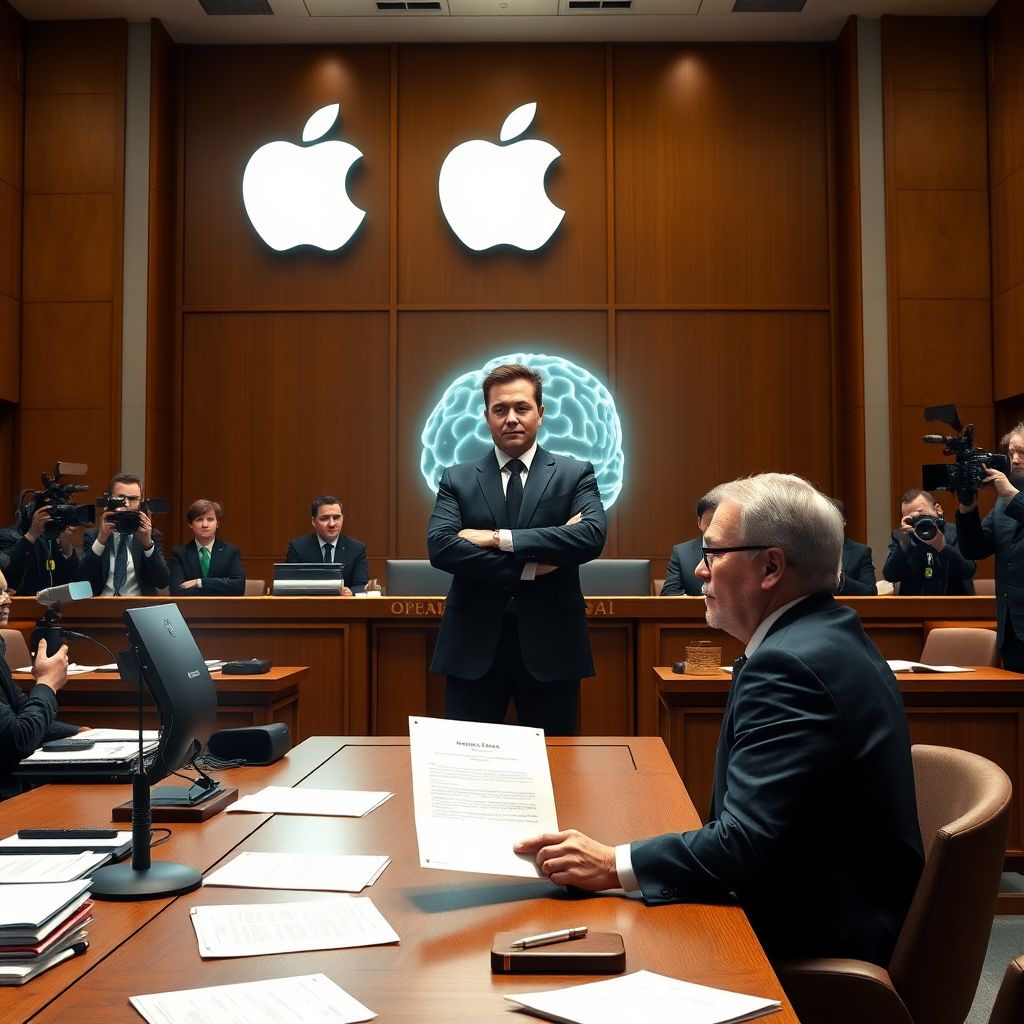
A federal judge has ruled against Apple and OpenAI’s efforts to dismiss an antitrust lawsuit brought by Elon Musk, allowing the case to proceed and raising critical questions about competition in the artificial intelligence and mobile ecosystems.
On Thursday, U.S. District Judge Mark Pittman denied the motions to dismiss filed by both Apple and OpenAI. The lawsuit, originally filed by Musk’s companies X Corp. and xAI in August, accuses the tech giants of monopolistic practices by allegedly restricting fair competition through Apple’s exclusive integration of OpenAI’s ChatGPT into iOS.
In his decision, Judge Pittman clarified that this ruling does not reflect a final opinion on the merits of the claims but instead signals that the allegations merit deeper scrutiny. “This Order should not be construed as a judgment (or pre-judgment) on the merits of this litigation,” the court noted. The case will now proceed to the discovery phase, where both sides will present evidence and arguments ahead of a potential trial or summary judgment.
At the center of the dispute is Apple’s June 2024 announcement that it would embed ChatGPT as the primary AI assistant across its iOS devices, a move Musk argues unfairly blocks alternative AI technologies—particularly those developed by his own ventures—from gaining access to Apple’s vast user base. The lawsuit contends that this exclusive partnership effectively creates a closed environment that stifles innovation and competition within the AI space.
Legal analysts point out that the outcome of this case could hinge on whether Musk’s legal team can prove that Apple’s integration of ChatGPT constitutes an unlawful restriction on competition. “The real impact now is where the facts will actually be tested,” said legal expert Alex Chandra. The court is expected to examine whether competitors face genuine barriers to entry within Apple’s tightly controlled ecosystem.
The case also raises broader implications for how Big Tech companies manage partnerships and platform access. If Musk’s claims are validated in court, it could lead to increased regulatory scrutiny over how companies like Apple structure relationships with AI firms and the extent to which they can prioritize certain technologies over others.
In the meantime, Apple and OpenAI maintain that their partnership does not violate antitrust laws. Apple argues that users retain control over which AI services they use on their devices and that integrating ChatGPT enhances the user experience without excluding competitors. OpenAI, for its part, claims the collaboration is non-exclusive and does not prevent other AI systems from being used on Apple devices.
Nevertheless, Musk’s lawsuit highlights a growing tension in the tech industry: as artificial intelligence becomes increasingly central to user experience, the platforms that control access to consumers wield enormous power. Critics argue that if unchecked, this control could result in a handful of companies dictating the future of AI development.
Beyond antitrust concerns, the case also touches on data privacy and user choice. Musk’s legal team alleges that the integration of ChatGPT may lead to the unauthorized collection and use of user data, particularly if consumers are not fully informed or allowed to opt out.
This case is not Musk’s first confrontation with OpenAI. Once a co-founder of the organization, Musk has become one of its sharpest critics, particularly after its transition from a non-profit to a capped-profit model. He has publicly accused OpenAI of straying from its original mission and becoming too closely aligned with Microsoft and other large corporations.
As the legal process unfolds, both Apple and OpenAI are expected to respond with additional court filings. Observers anticipate a drawn-out legal battle that could take months or even years to resolve, especially if the case proceeds to trial.
In the meantime, Musk’s companies continue to develop their own AI technologies, with xAI positioning itself as an open-source alternative to mainstream AI models. X Corp., which owns the social platform X (formerly Twitter), is also exploring new AI integrations aimed at challenging dominant players in the field.
The lawsuit could set a precedent for how AI technologies are distributed and accessed on major platforms. If the court ultimately sides with Musk, it may force Apple and other tech giants to reevaluate how they offer AI tools on their devices—potentially opening the door for greater diversity in AI assistants and reducing the dominance of a few key players.
The case also comes at a time when regulators around the world are increasingly scrutinizing the power of tech monopolies. The European Union, for example, has already launched investigations into Apple’s App Store practices, while U.S. lawmakers have proposed legislation aimed at promoting competition in digital markets.
As AI continues to reshape industries from healthcare to finance, the stakes of this lawsuit extend well beyond smartphones. At issue is not just one integration deal, but the broader question of who controls the future of artificial intelligence—and whether that future will be open or closed.
In the months ahead, all eyes will be on how the discovery process unfolds, what internal communications and contracts are revealed, and whether Musk’s legal strategy can withstand the defense mounted by two of the most powerful tech companies in the world.