
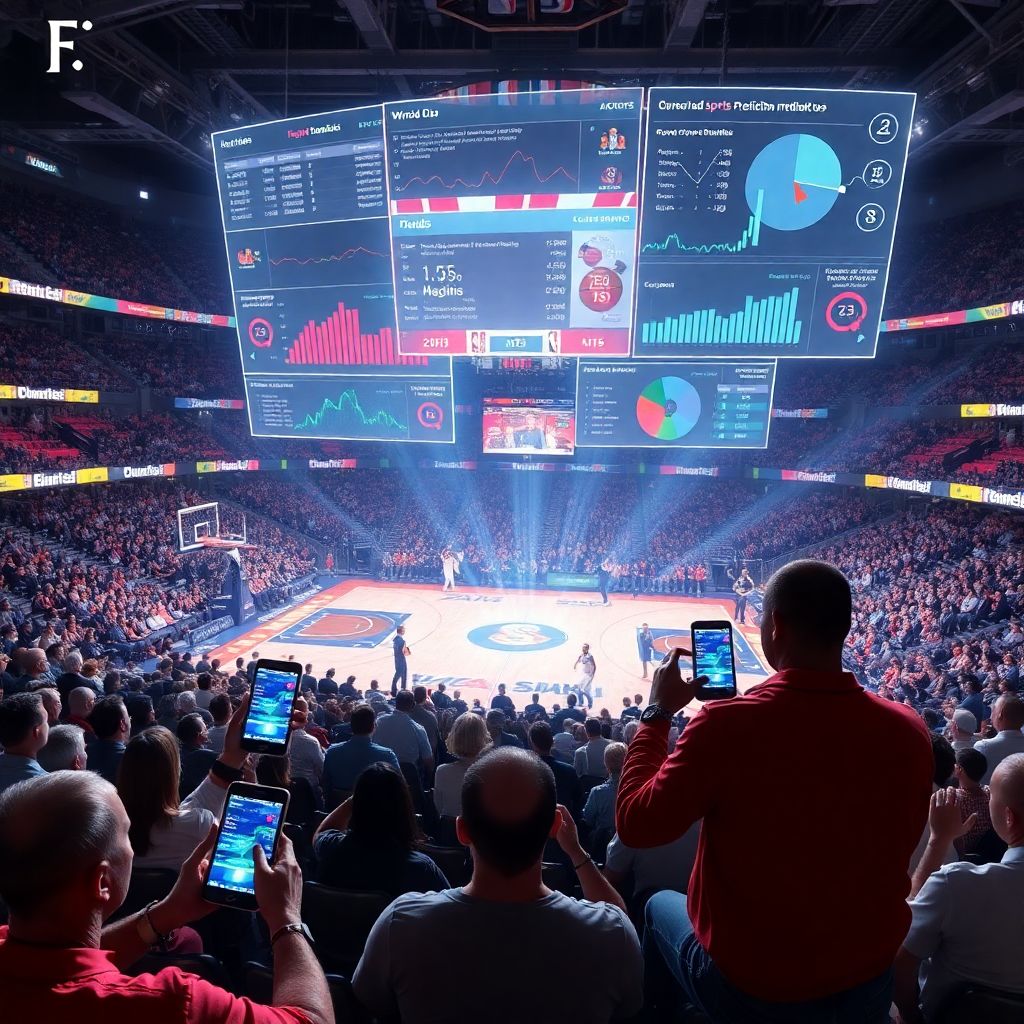
Prediction markets, once primarily associated with political forecasts, are rapidly gaining ground in the world of professional sports. NBA veteran Tristan Thompson believes this shift is not just inevitable—it’s already underway. He sees a future where fans don’t just watch the game, they interact with it in real time by speculating on outcomes, performances, and game dynamics through blockchain-based prediction platforms.
According to Thompson, platforms such as Polymarket are on the verge of becoming integral to how sports fans engage with their favorite teams and athletes. This evolution mirrors how television broadcasts began incorporating social media posts into live shows, connecting audiences to personalities like Shaquille O’Neal and Charles Barkley. He envisions a scenario where viewers see a dynamic prediction chart on their screen, updating live with every possession, substitution, or score.
Unlike the drawn-out nature of political events—such as the U.S. presidential election, which can stretch over weeks—sports are defined by rapid, high-stakes moments. Take, for instance, the fastest knockout in UFC history, which happened just five seconds into the fight. Thompson points out that prediction markets can capture this fleeting drama in real time, adding a new dimension to the viewing experience.
The UFC has already taken a leap in this direction. Its parent company recently inked a multi-year deal with Polymarket, incorporating fan-driven prediction dashboards into live broadcasts. These visual tools display real-time sentiment and forecasts, effectively turning every bout into a shared, interactive speculation event.
The surge in interest is also reflected in the betting numbers. In the first eight months of this year alone, Americans wagered a staggering $99 billion through commercial sportsbooks—a 12% jump from the previous year. Sports broadcasts already feature traditional odds, but prediction markets push the boundaries further by allowing for more nuanced and dynamic interaction.
One important distinction Thompson highlights is the difference between conventional gambling and prediction markets. While both involve risk and speculation, prediction markets offer the unique ability to exit a position before its resolution. This flexibility can prompt fans to maintain attention throughout the event, as the value of their prediction fluctuates with every play or action.
“It’s hard to really understand the momentum of a game just by looking at the score,” Thompson explains. Prediction markets, in his view, provide context that raw statistics often miss—such as sudden shifts in strategy, momentum, or player fatigue.
Thompson is not just an observer; he’s actively participating in this transformation. He’s backing a new platform called Basketball.fun, which enables users to speculate on NBA players in a manner similar to fantasy sports, but with the added thrill of real-time trading. This initiative follows the success of Football.fun, a platform blending fantasy gaming with trading card mechanics.
The trend isn’t isolated to basketball or the UFC. The NHL has also jumped into the fray, becoming the first professional league to form a multi-year partnership with both Polymarket and Kalshi, a rival prediction market platform. Even retail trading app Robinhood has entered the arena, allowing users to access sports prediction markets alongside financial instruments.
Meanwhile, DraftKings—best known for leading the fantasy sports revolution—acquired prediction market startup Railbird in October. Though the company announced it would initially focus on markets related to finance, culture, and entertainment, the move signals growing interest in the prediction model.
The rise of prediction markets in sports also raises legal and regulatory questions. Courts are beginning to grapple with whether these markets fall under existing gambling laws, which vary widely from state to state. Still, advocates argue that these platforms are fundamentally different from traditional sportsbooks, emphasizing their informational and entertainment value over pure wagering.
For fans, this shift could redefine how games are experienced. Instead of passively watching, they become participants—constantly interpreting data, adjusting positions, and reacting to the unpredictable nature of live sports. The emotional highs and lows of being a fan are now paired with the intellectual challenge of predicting outcomes in real time.
Moreover, prediction markets could have a significant impact on sports media. Broadcasters may start integrating prediction data into their coverage, offering a layer of analysis that reflects collective fan sentiment. This could make broadcasts more engaging and personalized, drawing in viewers who might otherwise tune out.
The economic potential is also vast. As more leagues and platforms adopt prediction-based interactivity, new revenue streams will emerge—not just for companies, but for content creators, influencers, and even athletes themselves. Players could have their performance metrics tied to market speculation, opening the door for branded prediction events or stat-based collectibles.
In the long run, prediction markets could even influence game strategies. Coaches and teams might begin monitoring market sentiment to gauge public perception or anticipate tactical shifts by opponents. While speculative, the feedback loop between fans, markets, and gameplay could create a more responsive and immersive sports ecosystem.
Ultimately, Thompson’s vision is one of greater fan empowerment. By giving audiences tools to interpret and act on what they see, prediction markets transform sports into a two-way experience—where spectators not only witness history, but actively participate in shaping its narrative.