
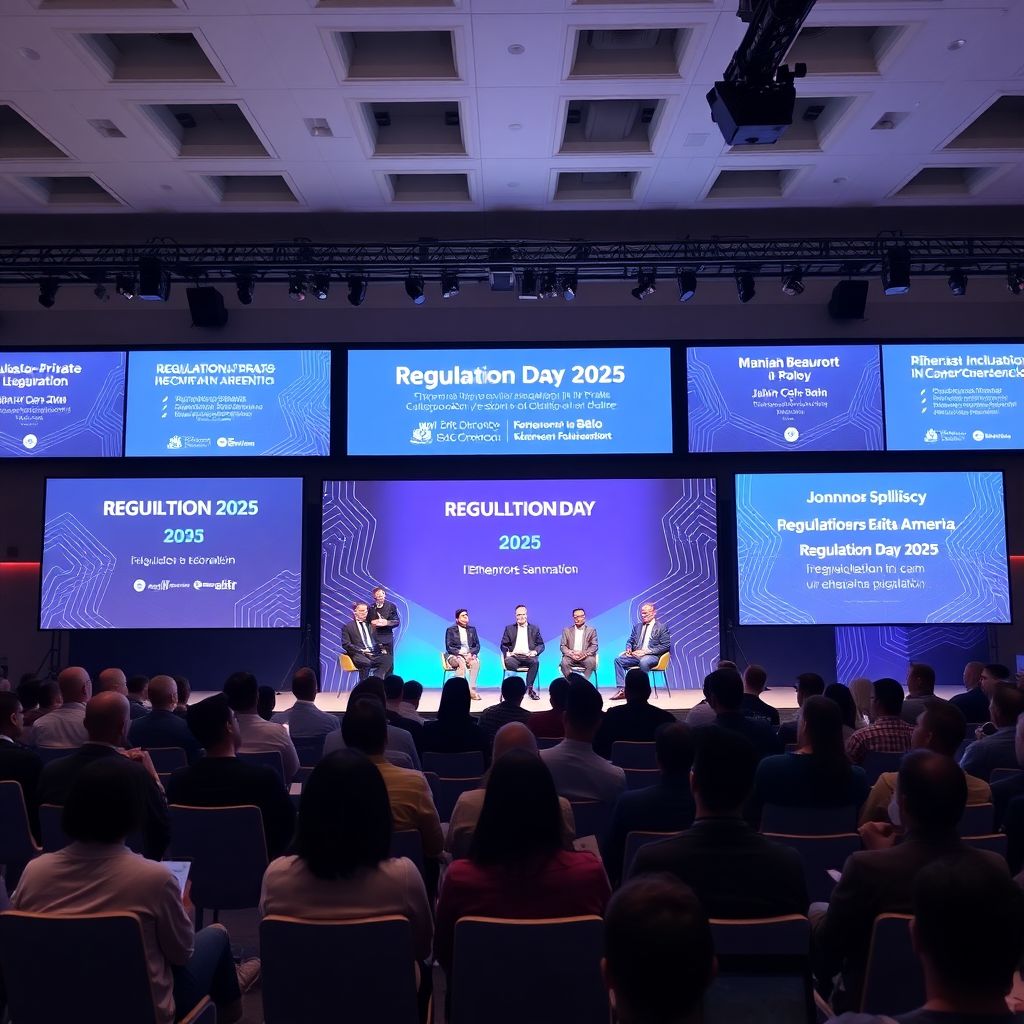
Bybit puts Latin American crypto regulation in the spotlight at Regulation Day 2025, using the Buenos Aires event to underline how clear rules are becoming a foundation for real-world adoption across the region.
The cryptocurrency exchange took part in Regulation Day 2025, held alongside Devconnect ARG in Buenos Aires, Argentina. The gathering, organized by Crecimiento, was staged as part of what has been described as the first “Ethereum World’s Fair” and brought together policy makers, regulators, founders and legal experts to debate how digital asset frameworks should evolve in Latin America.
Devconnect ARG hosted more than 75 initiatives across roughly 40 separate events, turning the Argentine capital into a temporary hub for Web3 and fintech policy discussions. Within that ecosystem, the fourth edition of Regulation Day stood out as a dedicated forum for regulatory dialogue, drawing around 1,500 participants. According to the organizers, the audience included legislators, central bank and financial authority representatives, as well as executives from exchanges, fintechs and infrastructure providers. Topics ranged from virtual asset oversight to the policy implications of artificial intelligence.
Bybit was represented by Patricio Mesri, CEO of Bybit LATAM, and Mykolas Majauskas, the company’s Senior Director of Policy. Both took part in sessions focused on how to build pragmatic, pro-innovation regulatory regimes without sidelining consumer protection. Their intervention reflected a broader industry push to replace ad hoc approaches to digital assets with more coherent, region-specific policy blueprints.
Majauskas joined a panel titled “Public-Private Collaboration in Crypto: VASP’s Role in Policymaking,” which examined how virtual asset service providers (VASPs) can help shape practical, enforceable standards. He shared the stage with Manuel Beaudroit, Co-founder and CEO of Belo, Julián Colombo, Senior Director for South America at Bitso, and Connor Spelliscy, Head of Global Policy Strategy at the Ethereum Foundation. The panel was moderated by Milagros Santamaria of Crecimiento, who steered the discussion toward concrete mechanisms for cooperation between industry and regulators rather than abstract theory.
During the session, Majauskas emphasized that in Latin America, crypto has already moved far beyond experimentation. In his view, digital assets in the region now function as everyday financial tools rather than speculative novelties. He argued that regulation which simultaneously protects users, enables responsible innovation and remains flexible enough to accommodate local realities is what will unlock crypto’s full potential for the “real” economy—small businesses, remittances, savings, and payments.
He highlighted Argentina as a case study in this direction, pointing to the authorities’ willingness to engage directly with market participants and study international best practices. According to Majauskas, Argentina’s readiness to adapt global standards to domestic conditions, instead of copying them wholesale, is key to creating a healthy and sustainable digital asset ecosystem. This collaborative stance, he suggested, may become a regional benchmark.
Argentina has recently taken steps to recognize cryptocurrencies as digital assets within a broader package of economic reforms rolled out in 2025. That policy shift comes against the backdrop of substantial on-chain activity. Between 2024 and June 2025, the country recorded an estimated 93.9 billion dollars’ worth of cryptocurrency transactions. That figure places Argentina second in Latin America in terms of crypto transaction volume, trailing only Brazil, underlining how central digital assets have become to its financial landscape.
Mesri underscored that, across Latin America, crypto is frequently associated with financial inclusion rather than exclusivity or niche speculation. He noted that a growing share of users are turning to stablecoins as everyday instruments—from saving in a more stable unit of account to paying for goods, services and salaries. For many households and small businesses, these assets are becoming practical tools to navigate inflation, currency controls and limited access to traditional financial products.
According to Mesri, this shift in user behavior is reshaping the perception of crypto in the region. Digital assets are increasingly seen as infrastructure rather than merely investments: rails for cross-border payments, alternative savings vehicles, and on-ramps to global capital. From his perspective, “financial inclusion is happening on-chain” as Latin American users tap blockchain-based solutions for smoother remittances, cheaper payments and new funding channels.
Mesri also emphasized the stabilizing function of clear rules. Predictable regulatory frameworks, he argued, help both consumers and businesses build confidence in digital assets. For retail users, rules establish assurances around custody, transparency and recourse in case of misconduct. For companies, they reduce legal uncertainty, making it easier to invest, hire and scale. That combination, in Mesri’s view, is what eventually drives mainstream adoption far beyond early tech-savvy communities.
Organizers of Regulation Day position the event as an emerging anchor point for technology policy discussions in Argentina. Each edition has tried to deepen dialogue between public institutions—such as financial regulators, tax authorities and legislative bodies—and private-sector innovators from the crypto, fintech and broader tech ecosystems. The stated objective is not only to respond to current developments, but to design agile regulatory approaches that can keep pace with rapid innovation in areas like blockchain, AI and digital identity.
The 2025 edition placed particular emphasis on cooperation between different stakeholders. Panels explored how regulators can make use of sandbox environments, pilot programs and structured consultations with industry to test rules before they are fully implemented. Speakers stressed that, in a domain where technical details matter, policymakers benefit from open channels with infrastructure operators, wallet providers, exchanges and developers, while industry actors must be ready to align with anti-money-laundering, consumer protection and market integrity requirements.
Latin America’s regulatory trajectory formed a recurring theme in discussions. Many participants described the region as a “laboratory” for crypto adoption, driven by macroeconomic volatility, high remittance flows and sizable unbanked populations. These structural factors have pushed citizens and businesses to experiment with alternative financial tools at a scale rarely seen elsewhere. As a result, the stakes for getting regulation right are higher: poorly designed rules might push users back into informal markets, while thoughtful frameworks could channel existing demand into safer, more transparent platforms.
Another key topic was harmonization across borders. While each country in Latin America is moving at its own pace, industry representatives argued that some degree of regional alignment—on definitions of virtual assets, licensing requirements for VASPs, and cross-border information sharing—would reduce fragmentation and regulatory arbitrage. Panels suggested that common baselines, even if implemented through local variations, could improve supervision and streamline compliance costs for firms operating in multiple jurisdictions.
The conversation also touched on the growing role of stablecoins. With many Latin American users relying on dollar-pegged tokens as a hedge against local currency weakness, speakers debated how to supervise issuance, reserves and redemption mechanisms. There was general agreement that transparency over backing assets and robust risk management are essential if stablecoins are to remain reliable tools for everyday economic activity rather than sources of systemic risk.
Artificial intelligence, another pillar of the event, was framed as both an opportunity and a regulatory challenge for the crypto industry. AI is increasingly used in risk scoring, transaction monitoring, market surveillance and customer support. At the same time, it raises questions about explainability, bias and accountability. The intersection of AI-based analytics and blockchain data was identified as a promising area for improving compliance with global standards, provided regulators and companies can agree on minimum safeguards.
While Latin American developments dominated the agenda in Buenos Aires, Regulation Day also briefly looked beyond the region. Attendees took note of ongoing efforts in the United States, where the Senate Banking Committee is preparing a vote on a broad bill to reshape the structure of the crypto market. Those discussions, together with regulatory initiatives in Europe and Asia, were cited as part of a global trend toward more comprehensive digital asset legislation, reinforcing the argument that Latin America should not lag behind but adapt international lessons to its own context.
For exchanges like Bybit, the emerging regulatory environment in Latin America represents both a responsibility and an opportunity. On one hand, stricter oversight imposes higher compliance standards and greater operational discipline. On the other, it can create a more level playing field, reduce the appeal of unregulated platforms, and signal to institutional investors that the region’s crypto markets are maturing. Bybit’s visible presence at Regulation Day 2025 suggests that the company intends to play an active role in shaping this next phase.
From a user perspective, the outcomes of such policy debates could determine how easily individuals and businesses can access digital asset services in the coming years. Licensing regimes, capital requirements, taxation rules and reporting standards will all influence which products are offered, how affordable they are, and how safely they can be used. As Latin American economies continue to digitize, the regulatory choices made today will help decide whether crypto remains a parallel system or becomes deeply integrated into everyday financial life.
Regulation Day 2025 in Buenos Aires therefore served as more than just another conference. It functioned as a barometer of where Latin American crypto policy is headed: toward more structured regulation, stronger public-private partnerships and a focus on inclusion rather than speculation. For actors like Bybit, and for millions of users across the region, the trajectory that emerges from these dialogues will shape the next chapter of digital asset adoption in Latin America.