
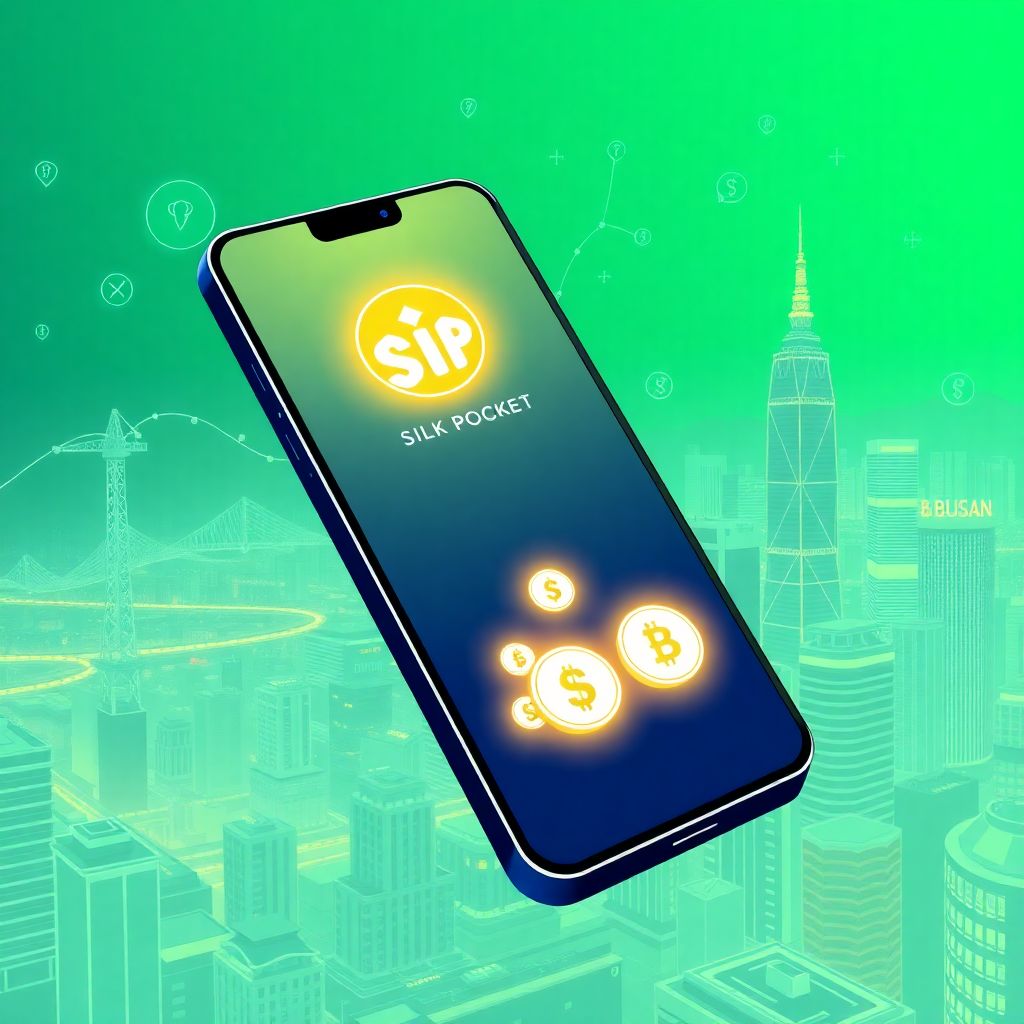
Naver Financial will roll out a new stablecoin wallet service next month, marking one of its most explicit moves yet into the digital asset space. The service, branded as “Silk Pocket,” is designed to let users hold and manage stablecoins with a focus on everyday usability and integration with existing financial services.
According to the company, Silk Pocket is being built in partnership with blockchain investment firm Hashed, which is contributing its technical and ecosystem expertise. The Busan digital exchange is also involved in the development, signaling that the wallet is being positioned not just as a consumer app, but as part of a broader digital asset infrastructure that connects trading venues, fintech platforms, and end users.
The timing of the launch underlines how aggressively South Korean financial technology firms are expanding into crypto-related products. While traditional banking institutions in the country have tended to move cautiously around digital assets, large internet and fintech players are increasingly treating blockchain-based services as a natural extension of their existing digital finance offerings.
Naver Financial itself operates as the financial services arm of Naver Corporation, one of South Korea’s largest internet conglomerates and the company behind the country’s dominant search engine. Over the past few years, Naver Financial has steadily built out payments, banking, and investment products. Adding a stablecoin wallet is the next step in positioning the company as a comprehensive digital finance provider rather than just a payment processor or tech-driven lender.
The Silk Pocket wallet is expected to focus on stablecoins—crypto assets pegged to fiat currencies—rather than volatile tokens. This aligns with a broader industry shift in Asia, where stablecoins are increasingly viewed as a bridge between the traditional financial system and blockchain-based services. By emphasizing price-stable assets, Naver Financial can target use cases such as remittances, e-commerce payments, digital savings, loyalty systems, and cross-platform transfers, without exposing mainstream users to the wild price swings often associated with cryptocurrencies.
Hashed’s involvement suggests the wallet could be built with interoperability and ecosystem growth in mind. As an active investor and participant in multiple blockchain networks, Hashed may help Naver Financial integrate Silk Pocket with a range of protocols, enabling users to move stablecoins between different apps and services. Meanwhile, the participation of the Busan digital exchange hints at potential future ties between retail users, trading platforms, and Busan’s ambitions to become a regional digital asset hub.
The wallet launch is unfolding against the backdrop of a major corporate transaction involving Naver Financial and Dunamu, the parent company of Upbit, South Korea’s leading cryptocurrency exchange. The two sides are working on a stock-swap merger deal valued at around KRW 20 trillion (approximately $14.5 billion), scheduled for November 26. This deal is poised to redraw part of the country’s digital finance map by bringing a dominant crypto trading platform into closer alignment with one of its biggest internet finance players.
In the run-up to the merger, the exchange ratio between the companies was a point of contention. It was ultimately revised to roughly 1:3.3–3.4 in favor of Dunamu after minority shareholders argued that earlier proposals significantly undervalued the crypto exchange operator. Their argument hinged on the fact that Dunamu’s profits have far outpaced those of Naver in recent years, driven largely by the explosive growth of Upbit’s trading business.
Dunamu’s financial performance underlines this shift. The company reported KRW 1.186 trillion in operating profit at the end of 2024, reflecting robust revenue from its core trading and related services. In the third quarter of 2025, Dunamu also posted $165 million in net income, a 300% year-over-year increase. These numbers underscore how central Upbit has become to South Korea’s broader financial and investment landscape, especially among younger and tech-savvy investors.
By launching Silk Pocket at the same time as it deepens its relationship with Dunamu, Naver Financial appears to be building a two-pronged strategy. On one side, it is creating consumer-facing tools to make stablecoins and digital assets accessible to everyday users. On the other, it is aligning with one of the country’s most profitable and systemically important crypto companies, potentially opening the door to integrated services like direct exchange access, crypto-based investment products, or seamless transfers between trading accounts and everyday wallets.
For users, a stablecoin wallet from a major internet brand could significantly lower the barrier to entry into digital assets. Many consumers remain wary of setting up accounts on standalone crypto exchanges, dealing with complex private key management, or navigating unfamiliar user interfaces. Naver Financial’s existing base of users, combined with its experience in user-friendly design and mobile payments, may help normalize stablecoin usage in a way that pure-play crypto firms have struggled to achieve at scale.
Regulation will play a crucial role in how Silk Pocket evolves. South Korea has tightened oversight of crypto exchanges, custody services, and token issuers in recent years, with a strong emphasis on consumer protection, anti-money laundering controls, and operational transparency. For a company of Naver’s size and visibility, compliance is not just a legal requirement but a reputational priority. This likely means that Silk Pocket will be launched with strict verification procedures, transaction monitoring, and safeguards designed to reassure both users and regulators.
From a strategic standpoint, stablecoins offer Naver Financial a set of advantages that traditional payment instruments cannot easily match. Cross-border transactions can, in theory, be handled faster and at lower cost than via legacy banking rails. Programmable payments—where conditions and logic are baked into the transfer itself—enable new forms of subscriptions, automated settlements, and digital commerce experiences. By controlling the wallet layer, Naver Financial can position itself at the center of these flows, collecting data, fees, and insight into how value is moving through its ecosystem.
Another important angle is competition. Other large tech and messaging platforms in Asia have been experimenting with digital wallets, loyalty tokens, and blockchain-based services. While each company’s approach differs, they all recognize the same core trend: users increasingly expect money to move as easily as messages, across platforms and borders. In this context, Silk Pocket is not just a technical product launch—it is Naver Financial’s answer to a regional race to define what the next generation of digital money will look like.
For merchants and partners, a Naver-backed stablecoin wallet could open new possibilities. E-commerce platforms, subscription services, and content creators might integrate Silk Pocket as a payment option, benefiting from instant settlement and potentially lower fees. Loyalty and rewards programs could migrate to tokenized models that are easier to track, exchange, and integrate across services. If Naver Financial chooses to connect Silk Pocket directly to its broader ecosystem—search, content, commerce, and digital banking—the wallet could become a central gateway for both spending and earning.
Consumers, meanwhile, will want to understand what practical benefits they gain. The appeal of stablecoins rests on three pillars: price stability relative to fiat currencies, 24/7 transferability, and compatibility with a growing number of digital platforms. If Silk Pocket can translate these technical features into simple, clear user advantages—such as cheaper overseas transfers, quick payments, or better rewards—it stands a much better chance of achieving mass adoption rather than remaining a niche tool for crypto enthusiasts.
Security will also be a key differentiator. Users are increasingly aware of the risks associated with hacks, phishing, and poor custody practices in the crypto world. As a mainstream brand, Naver Financial will be expected to implement robust protections: secure storage of private keys, strong authentication, clear recovery procedures, and transparent communication about risks and responsibilities. How well these elements are executed will strongly influence user trust, especially among those who are new to digital assets.
In the longer term, the combination of Silk Pocket, Naver Financial’s existing payment and banking products, and its deepening ties to Dunamu could help shape a hybrid financial environment in South Korea. In such a model, users would move fluidly between traditional bank accounts, stablecoin balances, and crypto investment portfolios, all within a single, integrated digital experience. For Naver Financial, that would mean not just participating in the rise of digital assets, but helping to define how they coexist with—and complement—the conventional financial system.