
DeFi Bridges: Why That “Shortcut” Deserves a Second Look
Bridges as Highways, Not Magic Portals

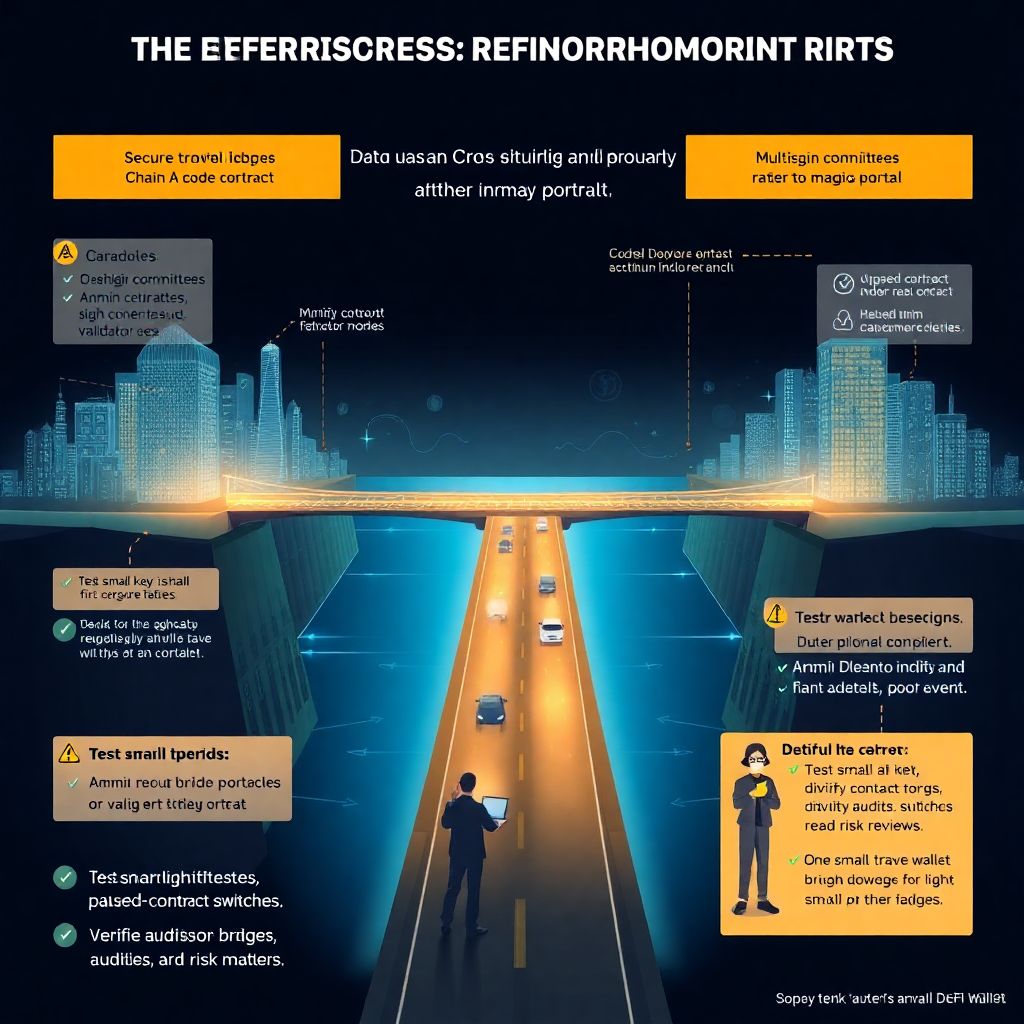
DeFi bridges look like magic: you lock tokens on one chain, get mirrored assets on another and suddenly yield farms, NFT markets and lending pools from multiple ecosystems are in reach. But every “teleport” of value passes through real code, real servers and very human assumptions. Under the hood most cross‑chain systems rely on oracles, multisig committees or light clients that verify other chains. If any of these layers breaks, the bridge can mint unbacked tokens or let attackers drain reserves. In 2025 the industry loudly markets best secure defi bridges 2025 rankings, yet even “battle‑tested” protocols operate under extreme complexity, where a single logic error can cost hundreds of millions in minutes.
Where the Hidden Risks Actually Live
The word “bridge” sounds simple, but security is scattered across several moving parts. Smart contracts on both chains must correctly lock and release collateral; relayers need to pass messages without being spoofed; and the economic design has to prevent validators from colluding. Many users worry only about gas fees and APY, ignoring attack surfaces like upgrade keys, admin backdoors and paused‑contract mechanisms. That’s why learning how to safely use crypto bridges for defi starts from reading more than just the landing page: you need to understand who signs messages, how keys are stored, what happens during chain reorgs, and whether there’s any automatic circuit breaker if something goes wrong at scale.
Inspiring Stories: People Who Crossed Carefully and Won
From One-Chain Farmer to Cross-Chain Strategist
Consider a mid‑sized DeFi user who began in 2022 as a simple liquidity provider on a single DEX. Over two years they gradually expanded across chains, but only after building a personal checklist: always test bridges with $50 first, never chase unsustainably high yields, and keep a dedicated “travel wallet” with limited funds. By 2025 this person quietly compounds stable returns using top cross chain bridges with lowest risk, combining blue‑chip stablecoin pools on Ethereum, Layer‑2 rollups and a few carefully researched alt‑L1s. Their edge isn’t secret alpha; it’s patience, skepticism and an almost boring discipline about risk management every time they move funds.
Teams That Turned Caution into a Competitive Edge

Some protocols have turned paranoia into a brand. A cross‑chain money market launched in 2023 made a radical promise: no new chain integration without a completed defi bridge security audit services package from at least two independent firms. It slowed their expansion, but they also avoided the painful exploits that hit several faster‑moving competitors. As bridges they used matured, the team negotiated deeper integrations, better fee tiers and insurance partnerships. Now in 2025 they’re seen as a safe default, proving that cautiously curating bridge connections can be a growth strategy, not just a defensive posture for anxious founders and conservative treasuries.
How to Build Your Own Risk Map Before You Cross
A Practical Checklist for Everyday Users
You don’t need to be a security researcher to protect yourself, but you do need a simple, repeatable playbook. Before touching a new bridge, treat it like a small security project in your pocket. At minimum, ask who controls upgrades, how long it’s been live without major incidents, and whether there’s any cross chain bridge insurance for defi users if things collapse. Check if contracts are verified on explorers, look for bug bounty programs and skim community discussions for red flags. This kind of informal due diligence might take ten minutes, but it can save months of stress arguing with anonymous devs in Discord after a catastrophic exploit.
Step‑by‑Step: From Curiosity to Confident Use
Here’s a straightforward routine you can adopt right now:
1. Start with the smallest possible test transfer and confirm redemption on the target chain.
2. Read at least one independent review or risk analysis thread about the bridge.
3. Check whether the project lists auditors, insurance partners or incident reports.
4. Diversify: prefer using two or three different bridges over concentrating all capital in one.
5. Re‑evaluate every few months; conditions, fees and threats change.
Following this rhythm won’t make you invincible, but it turns blind trust into measured experimentation and steadily improves your instincts around hidden failure modes.
Successful Projects: What the Survivors Have in Common
From Early Chaos to Mature Infrastructure
The bridge space of 2021–2022 was a Wild West: custodial multisigs holding billions, opaque validator sets and rushed token launches. The projects that are thriving in 2025 share a few traits. First, they moved from simplistic lock‑and‑mint designs to more robust architectures like native token transfers and light‑client based messaging. Second, they welcomed aggressive public scrutiny, publishing post‑mortems on near‑miss incidents instead of hiding them. Third, they baked in fail‑safes: withdrawal limits, kill switches and automatic fee hikes under stress. These habits aren’t glamorous marketing points, but they’re why some bridges now feel more like public infrastructure than speculative experiments.
Case Study: Turning a Scare Into a Strength
One well‑known bridge suffered a serious but contained bug in 2023 when a logic error could have allowed double claims under rare timing conditions. No funds were stolen, but the team chose to treat it as a live‑fire drill. They froze operations, refunded gas to impacted users and commissioned new audits from three independent firms. The episode spurred a redesign of their validator incentive model and incident‑response protocols. Two years later they’re frequently placed among the best secure defi bridges 2025 lists, not because nothing ever went wrong, but because they demonstrated that transparent failure handling can actually increase long‑term trust and user loyalty.
Learning Resources: Level Up Before You Bridge Up
Where to Study Without Getting Overwhelmed
If you’re serious about mastering how to safely use crypto bridges for defi, start with the “slow media” of the space. Long‑form blog posts from reputable auditing companies, conference talks on cross‑chain design and security‑focused podcasts offer more nuance than hypey Twitter threads. From there, dig into open‑source bridge repositories on GitHub to see real‑world code and comments. Pair that with security primers about multisig wallets, threshold cryptography and light clients. As patterns repeat, you’ll recognize which warning signs matter and which are just background noise, making every subsequent bridging decision calmer and more grounded in understanding.
Communities and Services Worth Knowing
You don’t have to navigate everything alone. Many research DAOs host channels dedicated to bridge discussions, with volunteers tracking exploits, updates and parameter changes in real time. Following them turns raw news into curated context. For builders, specialized defi bridge security audit services and red‑team engagements are becoming a norm, not a luxury—investors increasingly expect them before backing major launches. Meanwhile, new insurance protocols are experimenting with coverage products tailored to bridges, giving both users and dApps additional layers of protection. Tapping into these networks shifts you from isolated trial‑and‑error to collective, continuously updated risk intelligence.
The Road Ahead: Forecast for DeFi Bridges in 2025 and Beyond
Consolidation, Regulation and Smarter Risk Tools
Looking forward from 2025, the messy proliferation of bridges is likely to give way to consolidation around a handful of top cross chain bridges with lowest risk, similar to how a few major payment networks dominate traditional finance. Regulators are starting to view major bridges as systemically important, nudging them toward clearer disclosures and more formal audits. Expect more standardized insurance frameworks, user‑friendly risk dashboards and on‑chain monitoring that can automatically throttle transfers during suspicious activity. At the same time, attackers will keep adapting, probing economic incentives and governance structures rather than just searching for naive coding bugs.
Why a Careful Mindset Will Age Better Than Any Single Bridge
No matter how advanced the infrastructure becomes, the most durable asset you can cultivate is your own skepticism, paired with curiosity. Bridges will evolve, merge, rebrand or disappear, but habits like testing with small amounts, diversifying paths, demanding transparency and watching how teams respond under stress will keep paying dividends. The future of DeFi isn’t chain‑maxi or bridge‑maxi; it’s optionality‑maxi—having the ability to move where opportunities are, without betting your entire net worth on opaque black boxes. Build your personal map now, keep updating it and you’ll be ready to cross new frontiers without blindly jumping into the abyss.