

Why This Month’s DeFi News Actually Matters
If you follow defi news today for more than a week, it can feel like drinking from a firehose: new defi protocols launching this month, bridges spinning up and shutting down, yield farms with insane APYs, and – of course – the occasional hack that wipes millions in minutes.
Let’s walk through what really matters right now: which updates are worth your time, how to read bridge launches and incentives, what “risk alerts” usually hide, and how to build a simple, repeatable process for staying on top of it all without turning it into a full‑time job.
I’ll mix in real-world style cases based on typical events from the last couple of cycles: they’re simplified, but grounded in things that have actually happened in DeFi over 2020–2024.
—
Necessary Tools Before You Touch Anything
1. Wallets and Basics
You don’t need 20 wallets and 50 networks. You need a tight core setup:
– A main browser wallet (MetaMask, Rabby, or similar) for EVM chains
– A hardware wallet for long‑term storage and high‑value transactions
– Optional: a mobile wallet (e.g., Rainbow, Trust) for on-the-go checks, not for serious size
Keep your hardware wallet as your “cold brain”: it’s where you confirm transactions, not where you experiment.
2. Essential Data Dashboards
To filter the noise around the best defi projects to invest in (or at least to research seriously), you’ll want:
– DefiLlama / DeBank – TVL, fees, chain activity, protocol overviews
– DEX aggregator (1inch, OpenOcean, Matcha) – to compare swap prices and fees
– On-chain explorers (Etherscan, Arbiscan, SnowTrace, etc.) – for verifying contracts, transactions, and bridge addresses
These tools are your “reality check” layer. Hype without on-chain data is just marketing.
3. News, Alerts, and Security Layers
To follow top defi news this month without living on CT 24/7:
– A curated newsletter or two (research-style, not pure shill)
– A security-focused feed (PeckShield, CertiK alerts, Chainalysis blog, etc.)
– A portfolio tracker with risk warnings (Zerion, DeBank, Rotki for local)
And the non‑negotiable tools:
– Revocation manager (revoke.cash or your wallet’s built-in): to clean old approvals
– Phishing protection (browser security extensions, hardware wallet confirmations)
—
Step‑by‑Step: How to Navigate DeFi News This Month
Step 1. Scan Updates, But Start With the Boring Stuff
Before chasing yields, glance at:
– Protocol governance updates
– Stablecoin peg health
– Bridge uptime and incidents
If a stablecoin that powers a whole ecosystem has depeg rumors, that’s more important than some new farm promising 200% APR.
Case: The Silent Governance Vote
A mid‑cap lending protocol (call it “LendX”) passed a governance vote to reduce collateral factors for several volatile tokens after a risk team report. The vote barely made headlines.
Traders who read governance forums realized: some collateral types were about to become less borrowable. They unwound levered positions *before* the change, avoiding forced liquidations.
Lesson: even small governance changes can flip your risk profile overnight.
—
Step 2. Filter: What Counts as “Top” DeFi News for You?
You need a personal filter, or everything looks important. Rough rule:
– You’re a farmer → focus on top defi yield farming platforms, emissions schedules, and lockup mechanics
– You’re conservative → watch stablecoins, blue-chip lending, LSTs, and bridges with long uptime and audits
– You experiment with new stuff → track new defi protocols launching this month but treat them as options, not savings accounts
Make a list (even in a note app) of:
– Your main chains (e.g., Ethereum, Arbitrum, Optimism, Solana)
– Max % you’re willing to put into *any* new protocol (e.g., 1–3% of portfolio per experiment)
If news doesn’t touch your chains, your assets, or your risk budget – it’s background noise.
—
Step 3. Analyzing Protocol Updates Like a Pro
When a “protocol upgrade” drops, go beyond the tweet thread. Check:
– What changes in risk?
– New asset listings?
– Looser collateral terms?
– Leveraged strategies being enabled?
– What changes in revenue?
– New fee source?
– Better capital efficiency?
– Incentives that may dry up later?
Case: Yield Boost That Hid Leverage Risk
A popular money market introduced a new “loop” vault: deposit stables, auto‑borrow more, redeposit, and farm boosted rewards. APRs spiked, and the vault trended as one of the top defi yield farming platforms overnight.
Users loved the numbers, ignored the risk disclosure. When the underlying stable temporarily lost its peg by 2–3%, the leveraged positions got hammered, liquidations fired, and the net realized yield for many early “farmers” went negative.
If you had read the docs and risk section, you’d have seen: “strategy uses recursive borrowing, subject to liquidation if collateral devalues.” High APR was just leveraged exposure in disguise.
—
Step 4. Evaluating New DeFi Protocols Launching This Month
Not all launches are equal. For new defi protocols launching this month, check:
– Team and backers – not just “who tweeted about them” but:
– Do they have prior protocol or infra experience?
– Any reputable auditors or known investors?
– Code and audits – at minimum:
– Public GitHub
– Audit reports from a known firm
– Bug bounty or security disclosure program
– Token incentives – ask:
– How long do emissions last?
– Is your yield mostly tokens that can nuke in price?
– Any vesting / decay mechanics?
If you can’t answer those in 15–20 minutes, the protocol is too opaque for serious size.
Case: The Over‑Incentivized DEX
A new DEX on an L2 launched with massive liquidity mining rewards. Volume was low, but TVL ballooned as farmers chased “relatively safe” stablecoin pools with eye‑popping yields.
On paper, it became one of the best defi projects to invest in – huge TVL growth, strong liquidity, top of the “gainers” lists.
Two months later, emissions halved according to the schedule. Liquidity rushed out, token price slid, and the APR dropped below blue-chip levels. Those who only farmed and dumped were fine; those who held the token as “investment” based on TVL charts watched it bleed.
Metrics were real, but misunderstood: TVL driven by mercenary incentives is not the same as organic traction.
—
DeFi Bridge Platforms: What to Watch and How to Compare
How to Think About Bridges
Bridges are the arteries of DeFi. They move liquidity, but they’re also frequent attack vectors. A single exploit can wipe out nine figures.
When you read a defi bridge platforms comparison or see announcements like “New cross‑chain bridge is live!”, think in layers:
– Security model – multisig, light clients, optimistic, zk?
– Custody model – who holds funds while “in transit”?
– History – uptime, previous incidents, response quality
Bridge Launch Case: The Incentive Trap
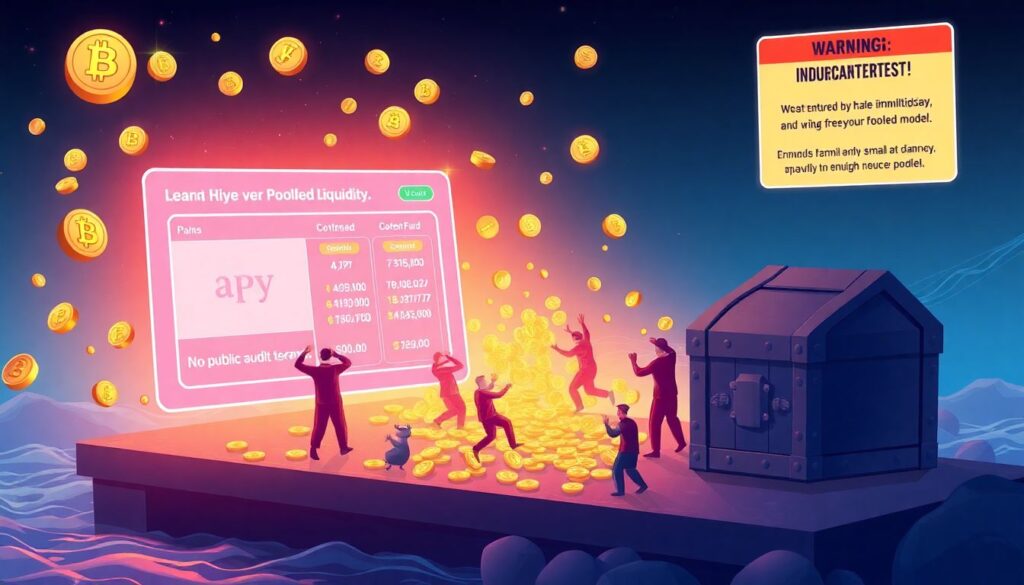
A new bridge offered huge rewards for providing liquidity to their pooled model. Fees seemed attractive, plus bonus tokens. Liquidity providers rushed in.
The catch:
– The bridge was controlled by a small multisig with anonymous signers
– No public audit at launch
– Insurance fund was undercapitalized
A few weeks later, the bridge paused due to “suspicious activity.” Even without a full exploit, capital was frozen for days. Some LPs had funds stuck while markets moved, incurring big opportunity cost and stress.
Practical takeaway:
New bridges with high rewards are not “free yield.” They’re you underwriting bridge smart contract and operational risk for a fee. Price it like that.
—
Step‑by‑Step: Handling a New Bridge or Cross‑Chain Opportunity
1. Verification Phase
Before you touch a new bridge:
1. Get the official link from the project’s main site or docs
2. Verify contract addresses via:
– Official docs / GitHub
– On-chain explorers, checking for:
– Contract verification
– Transaction history
3. Check if there’s a known exploit history or warnings from security accounts
If those pieces are missing or fuzzy, move to the next opportunity.
2. Test Transaction Phase
When everything looks legit:
– Start with a tiny amount (enough to test gas + basic function)
– Confirm:
– Funds arrive on target chain
– Any “wrapped” or synthetic assets behave as expected in DEXes and protocols
Never start by bridging your whole stack “to save gas.” Gas is cheaper than a loss.
3. Integration Phase
Only after successful tests and due diligence:
– Decide if you’re using the bridge just to move funds
– Or if you’ll also LP on the bridge for yield
Treat LP on bridges as a *separate* risk bucket from plain bridging. LP risk is strictly higher.
—
Common Problems and Troubleshooting in DeFi
Problem 1: Stuck or Delayed Bridge Transfers
Sometimes funds seem to disappear between chains. Before panicking:
– Check the bridge UI for any status page or incident banner
– Look up your transaction hash on both source and destination chain explorers
– See if there’s a minimum confirmation time or challenge window (for optimistic bridges)
If everything looks stuck and there’s no info:
– Go to official Discord/Telegram (only via links from the official site)
– Look for a support channel or pinned incident messages
Do not trust random DMs offering “help.” That’s how people get phished.
—
Problem 2: Unexpectedly Low or Negative Yield
You joined a farm advertised as one of the top defi yield farming platforms and, somehow, your USD value is lower after a month despite positive APR.
Checklist:
– Is your reward token price down?
– Did you underestimate impermanent loss in volatile pairs?
– Did you include gas costs and performance fees in your calculations?
Troubleshooting steps:
– Pull basic numbers: starting value vs. current value in stable terms
– Break down: how much of the loss is token price vs. IL vs. fees
– Consider exiting if:
– Emissions are decaying
– Liquidity and volume are dropping
– No new real usage is emerging
Yield without sustainable demand is just slow dilution.
—
Problem 3: Contract Interactions Failing
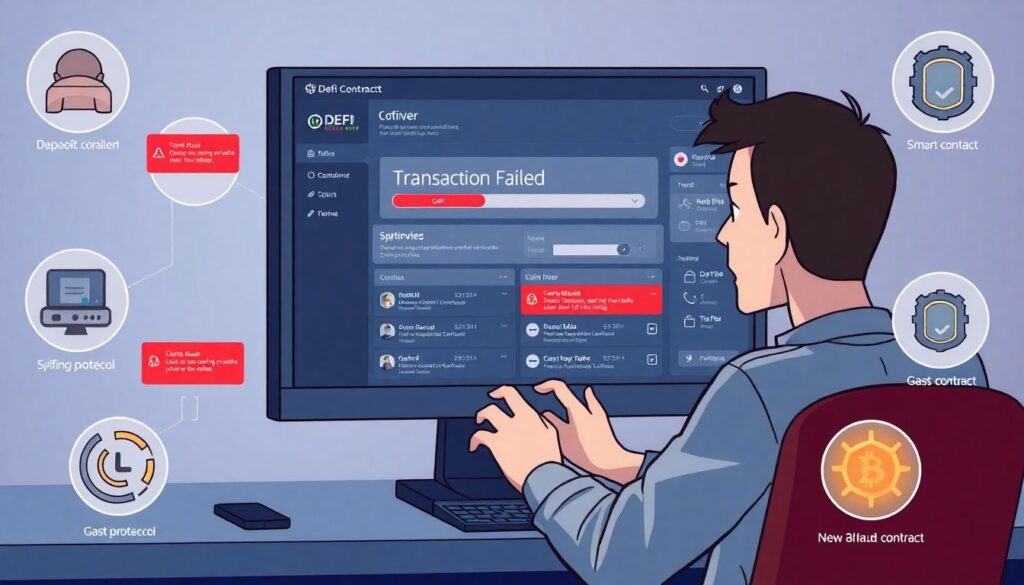
You try to deposit, withdraw, or claim rewards and the transaction keeps failing.
Quick checks:
– Is the network congested? Try raising gas or waiting.
– Did the protocol pause functions? Check announcements.
– Is there a new contract version? Old UIs sometimes point to deprecated contracts.
If in doubt:
– Try a different front-end (if the protocol has multiple)
– Or interact directly with the contract via a block explorer, if you know how
If this sounds too technical, treat it as a sign not to keep a lot of money in “DIY-only” protocols.
—
Putting It All Together: A Simple Weekly DeFi Routine
To avoid burnout while still taking advantage of defi news today:
– Once a week (30–60 min):
– Scan major DeFi dashboards for TVL/volume shifts
– Check your main protocols for governance updates and incident reports
– Review your yields: remove capital from underperforming or increasingly risky pools
– Once a month:
– Re‑assess bridges and cross‑chain exposure
– Decide if any new defi protocols launching this month deserve a tiny test allocation
– Use a revocation tool to clean old approvals
You don’t need to catch every opportunity. You just need to avoid the *worst* blow‑ups and systematically capture the small set of solid ones.
—
Final Thoughts: Curate Ruthlessly, Size Conservatively
DeFi evolves fast, but the core patterns repeat: new protocols launch, incentives spike, bridges expand, risks accumulate, and then a few highly visible incidents reset everyone’s risk tolerance.
If you:
– Use the right tools
– Treat each protocol and bridge as a business with a balance of risk and reward
– Size new positions as experiments, not convictions
– Keep an eye on real fundamentals, not just shiny APR banners
…you’ll be positioned to benefit from the next wave of innovation instead of becoming another “I was in the wrong bridge at the wrong time” story.
In other words: let the hype pass through your feed – and let your process decide what, if anything, deserves your capital.