
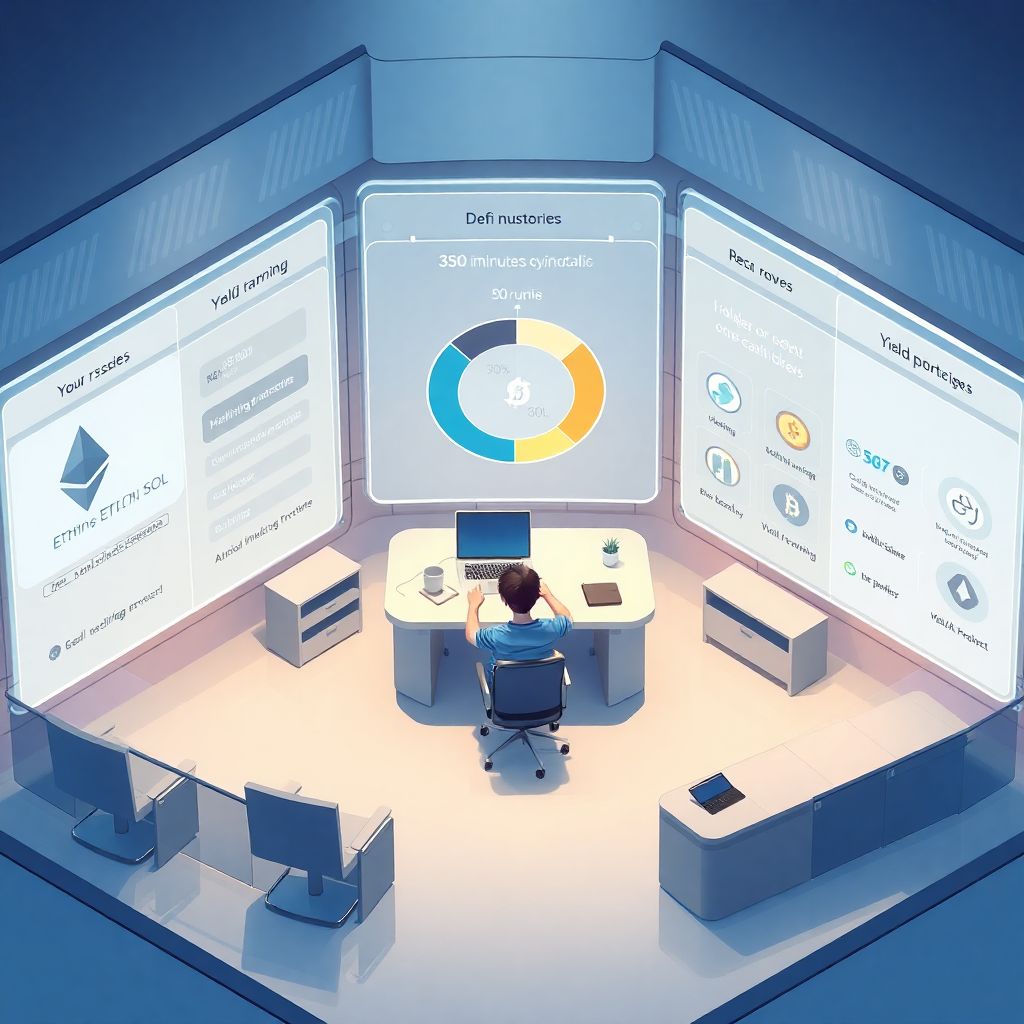
DeFi looks scary from the outside, but you can actually sketch a solid, beginner-friendly DeFi portfolio in about 30 minutes if you stay disciplined and ignore the hype. Think of it less like casino speed‑trading and more like assembling a small, automated money system: a few blue‑chip protocols, some yield, and strict risk limits. Below is a practical walk‑through: by the time you’re done, you’ll know how to build a crypto defi portfolio that doesn’t rely on luck or constant screen‑watching.
—
Step Zero: Define Your 30‑Minute Game Plan
Before touching any wallet, decide what “success” means. For most people looking for the best defi portfolio for beginners, the goal isn’t 100x gains, it’s: don’t blow up, learn fast, and beat a basic HODL strategy over time. That means you need constraints: what chains you’ll use, how much you’re willing to lose if everything goes wrong, and how actively you want to manage positions. Set a fixed dollar amount you can afford to lose completely, limit yourself to one or two ecosystems (e.g., Ethereum L2 + one alt L1), and agree that you won’t chase memes during this setup session, no matter how shiny Twitter looks.
—
Choosing the Right On‑Ramp and Wallet
A 30‑minute portfolio dies instantly if you get stuck on KYC or clunky UX. The trick is to combine a centralized on‑ramp with beginner friendly defi investment platforms that abstract away scary DeFi plumbing. Use a reputable CEX to buy stablecoins and a major asset like ETH or BTC, then push funds to a non‑custodial wallet with hardware‑wallet support. From here, connect to an aggregator like Zapper, DeBank, or Rabby that lets you see your entire stack in one place. You avoid half the usual chaos by standardizing on one EVM address and one dashboard instead of juggling five apps and twenty RPC endpoints.
—
H2: Core Approaches to a Beginner DeFi Portfolio
H3: Passive Indexing vs Curated Blue‑Chip Set
There are two dominant ways to structure DeFi for newcomers: passive indexing or a manually curated “blue‑chip” basket. Passive indexing uses tokenized indices or vaults that track baskets of assets or strategies, similar to ETFs. Curated blue‑chip sets instead choose a small number of high‑liquidity, battle‑tested protocols. For 30‑minute setup, indexing is faster but less customizable; blue‑chip curation takes a bit more thought but gives sharper control over risk surfaces, yields, and smart‑contract exposure. Many people mix both: one index product as a core, plus 2‑3 direct positions in infrastructure protocols they understand.
—
H3: Comparing Yield‑Farming, Staking, and Simple Holding
To decide how to invest in defi for beginners, it helps to compare three basic modes: holding, staking, and yield‑farming. Simple holding (wallet storage) has lower smart‑contract risk but no native yield; you only benefit from price appreciation. Staking (L1/L2 tokens or liquid staking derivatives) lets you earn protocol rewards with moderate smart‑contract risk and is operationally simple. Yield‑farming—pairing assets in AMMs or lending them on money markets—adds complexity and potential impermanent loss, but can increase returns. In a 30‑minute build, you generally want 60–80% of your stack in simple holding plus staking, and only a controlled slice in yield strategies you actually understand.
—
H2: Choosing Chains and Protocols in 2025
H3: L1 vs L2 vs App‑Chains
In 2025, the L1/L2 landscape is crowded, so restraint pays off. Large L1s like Ethereum and Solana offer deep liquidity and strong security assumptions, while L2 rollups (Arbitrum, Optimism, Base, zk‑based solutions) cut fees drastically and host many beginner‑friendly dApps. App‑chains and modular ecosystems (Cosmos, Celestia, EigenLayer‑aligned rollups) promise specialization but can fragment liquidity and raise bridge risk. For a first‑time DeFi setup, focus on one L2 plus, optionally, one high‑throughput L1: this keeps gas costs low, reduces mental overhead, and still gives you access to most of the top defi coins to buy now without chasing every new chain narrative.
—
H3: Pros and Cons of Key DeFi Technologies
Different primitive types carry different failure modes. AMMs (like Uniswap‑style DEXes) offer permissionless trading and LP yields but expose you to impermanent loss and MEV. Lending protocols (Aave, Compound and newer risk‑engine designs) provide collateralized borrowing and passive lending APY, yet can suffer from oracle risk and liquidation cascades. Liquid staking tokens (LSTs) unlock staked capital but introduce extra smart‑contract layers and de‑pegging risk. Stablecoins look “safe,” but algorithmic or under‑collateralized variants have blown up before. A robust beginner portfolio combines at most one AMM, one money market, and one LST issuer, all with multi‑year security audits and large TVL.
—
H2: Concrete 30‑Minute Portfolio Blueprint
H3: A Simple Allocation You Can Execute Fast
Here’s a pragmatic structure you can usually assemble within half an hour, assuming you already passed exchange KYC:
– 50% in major assets (ETH, BTC via wrapped versions, or SOL) held or staked
– 30% in high‑quality stablecoins, partly deposited into a lending protocol
– 20% in a diversified DeFi index or 2–3 blue‑chip governance tokens
This isn’t the best defi portfolio for beginners in some absolute sense, but it’s realistic, debuggable, and easy to expand later. The large major‑asset slice anchors you to long‑term crypto beta, stablecoins dampen volatility and give optionality, and the DeFi slice lets you participate in protocol upside without scattering funds across twenty micro‑caps you’ll never monitor.
—
H3: Unconventional but Sensible Tweaks
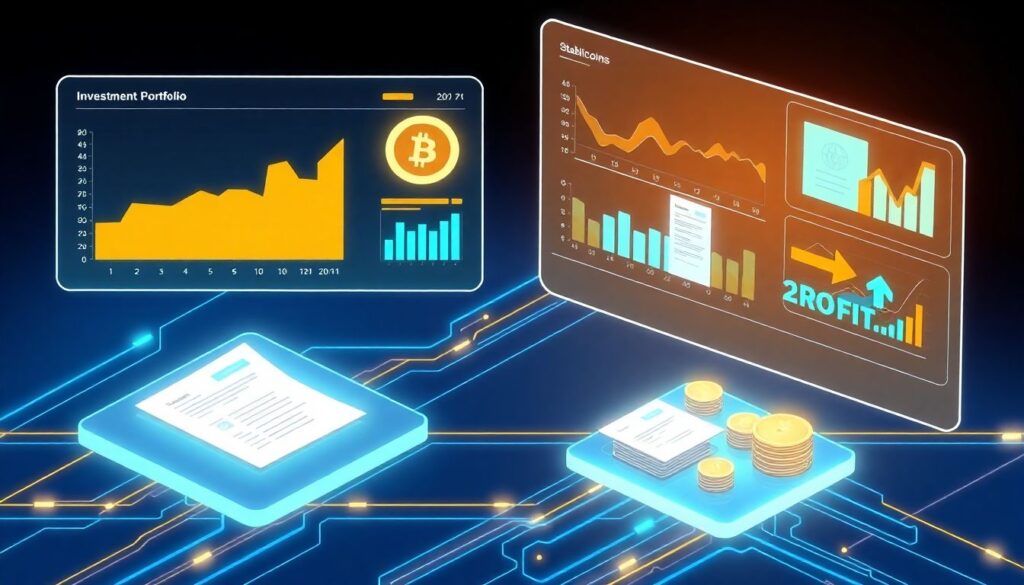
To add a bit of edge without going off the rails, you can introduce a few non‑obvious moves. One option is to allocate a small chunk of your “stablecoin” portion to real‑world‑asset (RWA) yield products that hold short‑term treasuries or invoices, giving you TradFi‑backed yield via DeFi rails. Another twist: instead of directly yield‑farming, use auto‑compounding vaults that token‑wrap complex strategies; you cap your downside exposure to whatever you deposit but outsource the daily micromanagement. Finally, maintain a “learning slice”—say 5%—reserved only for experiments, with the strict rule that once it 2x’s, profits are rotated back into your boring core.
—
H2: Platform Choices and UX Optimizations
H3: Picking Beginner‑Friendly Platforms Without Sacrificing Security
Beginner friendly defi investment platforms in 2025 tend to bundle multiple functions: swaps, staking, bridging, sometimes even RWA access. The danger is over‑reliance on opaque aggregators. A balanced approach: use aggregators for discovery and routing quotes, then route final transactions through official UIs or well‑audited front ends when possible. Look for open‑source code, public audits, bug bounty programs, and transparent docs. Prefer platforms that support hardware‑wallet signing and explicit simulation of transactions before approval. If a dApp hides critical info like slippage, lock‑up periods, or protocol fees behind cute graphics, treat it as a red flag no matter how aggressive the yields look.
—
H3: Risk Management That Actually Fits into 30 Minutes
You don’t need a PhD‑grade risk model. You do need a checklist you can run in under five minutes per protocol. Basic items: contract age and TVL, audit history, whether the team is doxxed, dependency on exotic oracles or bridges, and concentration of token supply. Cap exposure to any single protocol at, say, 20–30% of your DeFi slice, and to any single stablecoin at 50% of your stable stack. Keep an off‑exchange, cold backup of your seed phrase, and verify that you can restore your wallet before sending serious amounts. These tiny, boring steps do more for survival than chasing any narrative coin.
—
H2: 2025 DeFi Trends to Bake into Your Portfolio
H3: What’s Changing and How to Position
Current 2025 trends shift where opportunity and risk live. Restaking and shared security layers are turning ETH into an even more central collateral asset, which strengthens the case for having it as your primary base asset. RWA protocols are pulling in institutional capital and may compress DeFi yields toward TradFi rates but with more transparency. Meanwhile, account abstraction and smart‑contract wallets are simplifying UX, allowing safer defaults like spending limits and social recovery. When thinking about how to invest in defi for beginners today, prioritize assets and protocols that align with these structural trends instead of chasing purely speculative narratives that might vanish next cycle.
—
H2: Keeping It Simple, Iterative, and Boringly Effective
H3: Evolve, Don’t Constantly Rebuild
A good beginner portfolio isn’t something you perfectly optimize on day one; it’s a base layer you refine. Start with your 30‑minute setup, monitor it monthly, and make one small change at a time. As you learn, you can rotate some stablecoin exposure into curated yield strategies, or upgrade from a generic DeFi index into hand‑picked governance tokens. Keep written notes about why you entered each position, what assumptions you’re making, and what would make you exit. By treating your portfolio as a slow, transparent system rather than a slot machine, you turn how to build a crypto defi portfolio from a one‑off event into an ongoing, controlled experiment.