
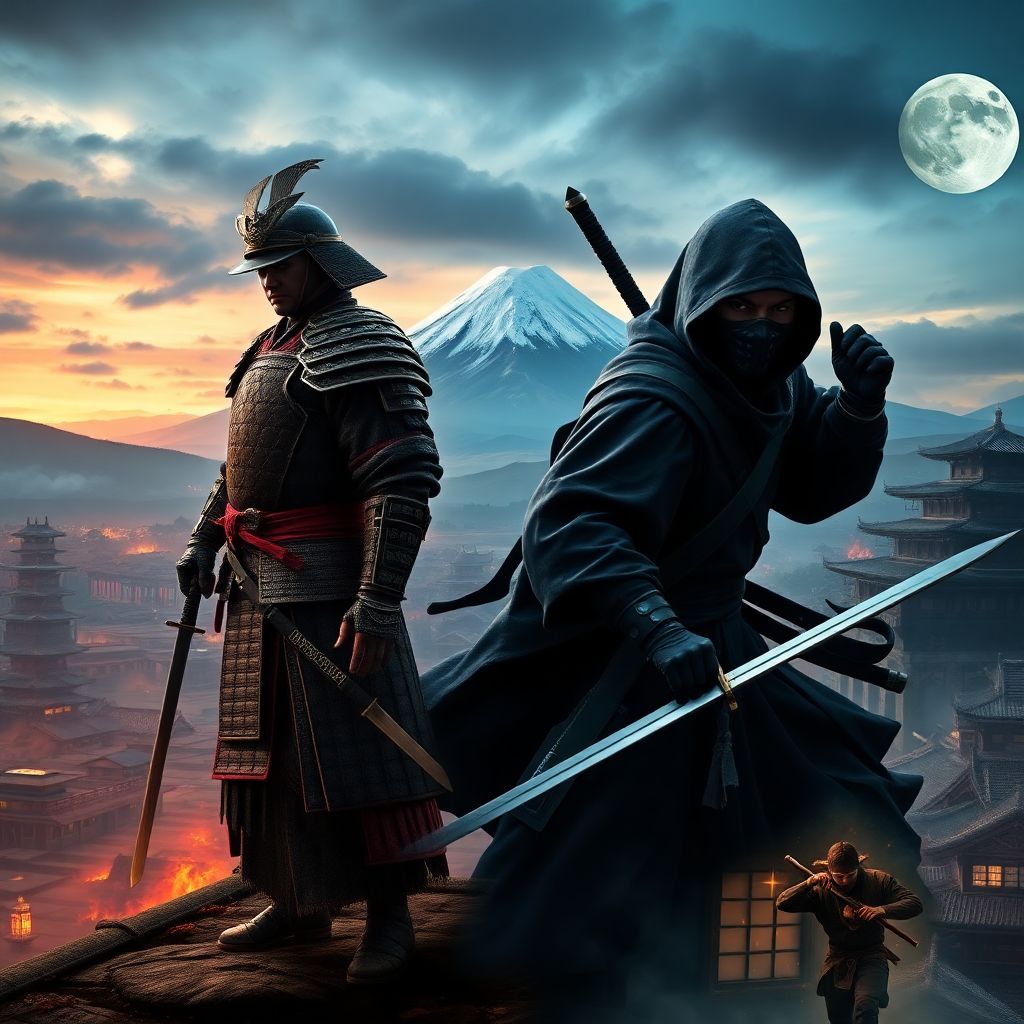
This was the year stealth met spectacle, and blades were everywhere. If you have even a passing fondness for ninja or samurai games, 2025 felt like an all‑you‑can‑eat buffet of katanas, kunai, and stylish takedowns.
Publishers large and small seemed to converge on the same idea: it was finally time to give players the historical Japan and shadow‑warrior power fantasies they’ve been asking for. Counting a remaster and a fresh platform release for an older title, we saw eight major ninja and samurai games land this year alone—nine, if you’re willing to include a tactical spin on Teenage Mutant Ninja Turtles.
Here’s a deep dive into the standouts of 2025’s ninja takeover.
—
Assassin’s Creed Shadows
Platforms: PC, PS5, Xbox
For years, fans begged for an Assassin’s Creed set in feudal Japan. Assassin’s Creed Shadows is the moment Ubisoft finally gave in—and it shows.
Instead of tossing a hooded assassin into a generic “samurai backdrop,” Shadows leans hard into dual identities. You alternate between a disciplined samurai and a stealth‑driven shinobi, each with distinct movesets, gear, and mission approaches. One moment you’re walking through a castle in full armor, leveraging status and intimidation; the next, you’re perched on rooftops, slipping through paper walls and vanishing into darkness.
The game mixes:
– Large, open‑region exploration across war‑torn provinces
– Social stealth in bustling towns and fortified estates
– Brutal, weighty sword duels that punish button‑mashing
– Flexible infiltration routes that reward planning over chaos
What makes Shadows stand out is how it treats “ninja fantasy” not as a costume, but as a playstyle. Missions often support multiple resolutions: political manipulation as a samurai, surgical assassination as a ninja, or a messy hybrid of both. Long‑time series fans finally got the Japanese setting they wanted, and stealth diehards got one of the most flexible assassination sandboxes in years.
—
Ghost of Yotei
Platforms: PS5, PC
Ghost of Yotei takes the cinematic approach, sliding closer to prestige drama than power fantasy. Set around the looming shadow of Mount Yotei, this is a story‑driven samurai epic that borrows the visual grammar of classic film: long tracking shots, stark lighting, and quiet, lingering scenes between battles.
You play a disgraced retainer pulled back into conflict as rival clans clash over trade, land, and honor. The game’s hook isn’t just its swordplay—though duels are meticulous and punishing—but its commitment to mood:
– Weather and time of day shift the tone of encounters
– Duels feel like intimate set pieces rather than random fights
– Moral choices actually color how your legend spreads
Unlike many action games that bury narrative beneath constant combat, Ghost of Yotei slows things down. It lets you soak in villages, mountain shrines, and snow‑covered fields before hurling you into tense standoffs. For players who prefer emotional weight and atmosphere to nonstop action, this was 2025’s essential samurai experience.
—
Ninja Gaiden II Black (Remaster)
Platforms: PC, Current‑gen consoles
Ninja Gaiden II Black is both a time capsule and a wake‑up call. This remaster drags one of the most notorious action games of the 2000s into the modern era, with sharper visuals, improved performance, and quality‑of‑life tweaks—without sanding off its signature brutality.
Core elements remain intact:
– Lightning‑fast combat with an absurdly high skill ceiling
– Enemy waves that punish sloppy inputs and bad positioning
– Weapon mastery that actually feels earned, not handed out
The updated textures, refined lighting, and improved camera work make it easier to appreciate what the original was trying to do: deliver a pure, mechanically demanding ninja action game. On PC, uncapped framerates turn Ryu Hayabusa’s combos into something almost balletic—if you can keep up.
For long‑time fans, this version is a victory lap. For newcomers raised on more forgiving action titles, it’s a reminder that “ninja” once meant learning patterns, dying a lot, and slowly, methodically mastering a system that never bends to you.
—
Ninja Gaiden 4
Platforms: PC, PS5, Xbox
If the remaster is a history lesson, Ninja Gaiden 4 is the bold attempt to make that legacy feel current.
Rather than simply chasing modern trends, the game tries to bridge old‑school challenge with contemporary expectations:
– Multiple difficulty tiers that respect both newcomers and purists
– Larger, semi‑open levels with secrets and optional challenges
– A deeper skill system that expands your moveset without diluting precision
Ninja Gaiden 4 keeps the series’ trademark aggression: enemies swarm, bosses hit like trucks, and every encounter can go sideways fast. But new animation cancel windows, clearer telegraphs, and more responsive controls help the game feel demanding instead of unfair.
Crucially, it doesn’t discard the core ninja fantasy. Wall‑running, aerial juggles, and flashy ultimate techniques are back, but grounded in systems that reward muscle memory and spatial awareness. For players who feared Ninja Gaiden would return as a watered‑down brand extension, this entry landed as one of the year’s most satisfying comebacks.
—
Ninja Gaiden: Ragebound
Platforms: PC, PS5, Xbox
Ragebound takes the Ninja Gaiden formula and routes it through a darker, almost horror‑inflected lens. While still part of the broader Gaiden universe, it feels more like a spin‑off experiment than a straightforward sequel.
Instead of sleek city skylines, you get corrupted temples, nightmare realms, and twisted versions of familiar Japanese folklore. Combat emphasizes:
– High‑risk, high‑reward “rage” mechanics that amplify your power as you dance on the edge of death
– Parry‑focused encounters where timing trumps button mashing
– Environmental hazards that turn arenas into deathtraps
Ragebound is intentionally more claustrophobic. Tight corridors, surprise ambushes, and vicious minibosses pile on pressure. Yet the game also introduces measured recovery systems that reward perfect execution: well‑timed counters restore health, flawless runs build momentum.
For players who thrive under pressure and enjoy dark fantasy aesthetics wrapped around razor‑sharp gameplay, Ragebound became a cult favorite almost immediately.
—
Shinobi: Art of Vengeance
Platforms: Switch, PC, PS5, Xbox
Shinobi: Art of Vengeance aims at a slightly different fantasy: the surgical, unseen assassin. Where some 2025 releases leaned into cinematic sword duels or explosive combo play, this one puts stealth front and center.
Key features include:
– Compact, tightly designed stages with multiple infiltration routes
– Heavy emphasis on sound, light, and line‑of‑sight management
– Tools that support non‑lethal or low‑profile playstyles
You can race through levels in a blur of blood and smoke bombs, but the game truly shines when you slow down and think like a professional infiltrator. Disabling lanterns, distracting guards, slipping through ceiling gaps, and leaving no witnesses behind becomes its own puzzle.
Visually, Art of Vengeance nods to classic 2D and early 3D ninja games, mixing stylized environments with clean, readable silhouettes. It’s approachable enough for newer players, but its scoring systems and challenge modes provide plenty of depth for veterans chasing perfect, ghost‑run clears.
—
The Ninja Turtles Tactics Game
Platforms: PC, Switch, consoles
Strictly speaking, this is a mutant‑ninja game rather than a feudal one—but if you’re counting blades and stealth, it belongs in the 2025 conversation.
This tactics title drops the Turtles into grid‑based, turn‑by‑turn combat. Rather than button‑mashing, every move is a decision:
– Positioning matters: flanks, elevation, and cover all factor into combat
– Each Turtle has a unique role—ranging from crowd control to high‑damage single‑target strikes
– Environmental interactions—knocking enemies into hazards, triggering traps, or using verticality—are crucial
What keeps it firmly “ninja” at heart is its focus on coordination and planning. Missions reward setting up ambushes, synchronizing attacks, and disabling threats before they react. If your idea of a good ninja game is less about finger dexterity and more about tactical thinking, this might have been your standout of the year.
—
Why 2025 Became the “Year of the Ninja”
The sudden flood of ninja and samurai games wasn’t just coincidence. Several trends converged:
– Player demand: For years, the most requested historical setting in large action franchises has been feudal Japan.
– Streaming and spectacle: Sword duels, stealth takedowns, and dramatic standoffs translate incredibly well to short clips and live streams.
– Mature tech: Modern hardware easily handles dense towns, dynamic lighting, and cloth/armor physics, all of which elevate historical and stealth aesthetics.
Publishers saw both a clear appetite and an opportunity to differentiate these games visually and mechanically from more generic open‑world releases. The result: a cluster of titles that all orbit the same theme, but feel surprisingly distinct in tone and design.
—
Choosing the Right Ninja Game for You
With so many releases in a single year, it’s worth breaking down who each game best serves:
– Story‑first players:
Go for Ghost of Yotei or Assassin’s Creed Shadows. Both prioritize narrative, character arcs, and cinematic presentation.
– Combat purists:
Ninja Gaiden II Black (Remaster) and Ninja Gaiden 4 are ideal if you want demanding, mechanically intense action that pushes your reflexes.
– Stealth fanatics:
Shinobi: Art of Vengeance and the stealth path in Assassin’s Creed Shadows scratch the itch for careful, methodical infiltration.
– Tactics and planning lovers:
The Ninja Turtles tactics game gives you ninja fantasy without requiring reaction‑time excellence.
If you’re simply a genre enthusiast, each of these offers a different facet of what “ninja” can mean in a modern video game—from introspective samurai drama to high‑octane combo ballets.
—
The Future of Ninja and Samurai Games After 2025
With this many high‑profile releases landing successfully in the same year, it’s hard to imagine publishers retreating from the theme any time soon. Expect to see:
– More experimental hybrids—combining ninja mechanics with horror, co‑op, or roguelike systems
– Deeper historical takes that move beyond the most familiar eras and regions
– Expanded stealth tools and AI behaviors as studios compete to make the most reactive, believable infiltration sandboxes
2025 proved there’s room for multiple interpretations of the ninja fantasy at once. Instead of one “definitive” ninja game, we now have a spectrum—from grounded historical intrigue to over‑the‑top supernatural action.
For players, that’s the real win. Whether you want to slip unseen across tiled roofs, stand honorably in a snowy field before a duel, or juggle enemies in mid‑air in a blur of steel, this year gave you options—and in doing so, quietly set a new standard for what ninja and samurai games can be.