
South Korea pushes landmark digital asset law to 2026 as regulators clash over stablecoin control
South Korea has delayed the implementation of its long-awaited Digital Asset Basic Law until 2026, extending a period of legal uncertainty for one of Asia’s most active cryptocurrency markets. According to legislative insiders, the decision stems from an unresolved power struggle between the country’s top financial watchdogs over who should oversee stablecoins and their reserves.
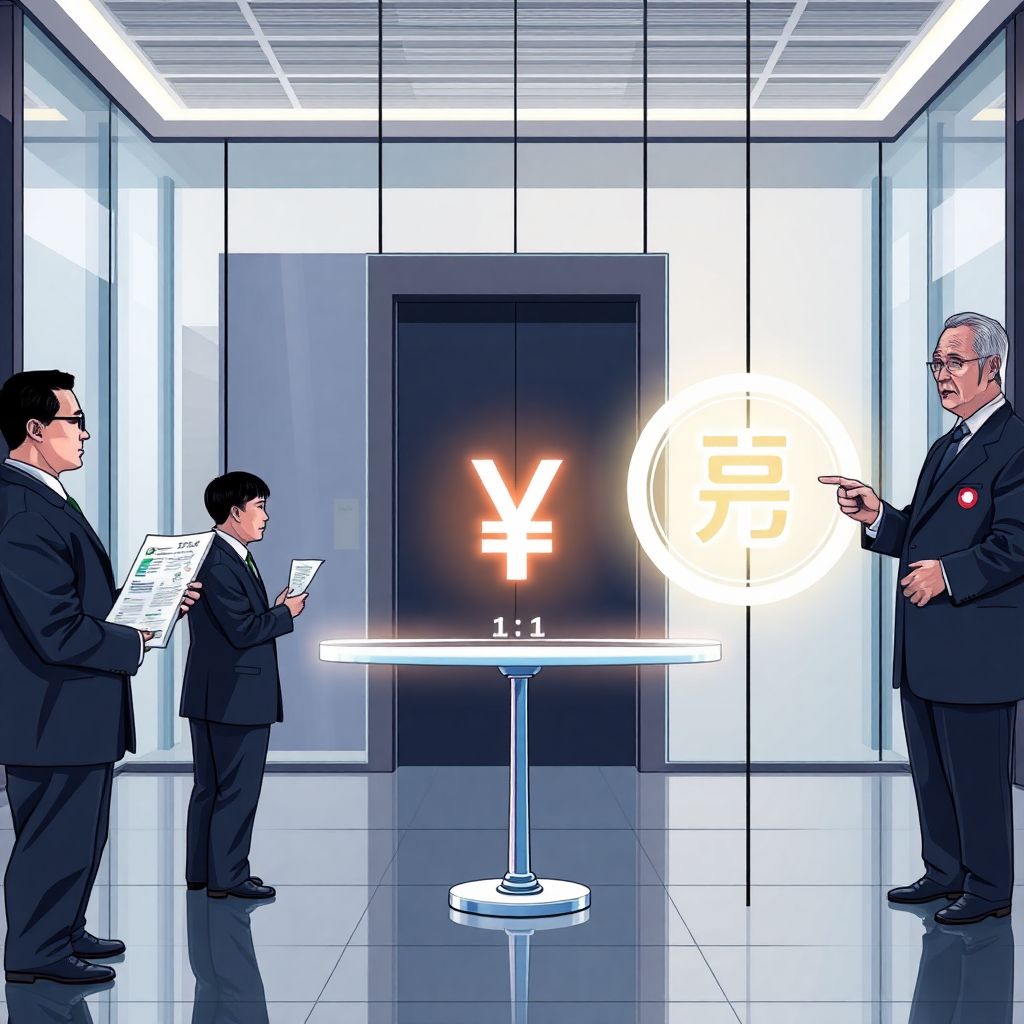
At the heart of the dispute is a turf battle between the Financial Services Commission (FSC) and the Bank of Korea (BoK). Both institutions agree that stablecoins need tighter scrutiny after several high-profile global failures, but they remain at odds over who should supervise reserves, grant licenses, and wield enforcement powers. Rather than push through a fragmented framework, lawmakers have opted to pause the process and attempt a more coherent realignment of regulatory roles.
The Digital Asset Basic Law is intended to become the cornerstone of South Korea’s crypto regulation, forming a second phase of the country’s broader digital asset policy. While the first phase, already in effect, focuses primarily on policing unfair trading practices such as market manipulation and insider trading, the postponed law is designed to address structural risks, investor protection, and prudential oversight on a deeper level.
One of the most consequential features of the draft is the introduction of no-fault liability for digital asset service providers. Under this standard, exchanges and other operators could be held responsible for user losses even if regulators cannot prove negligence or wrongdoing. The objective is to shift more risk away from retail investors and place a heavier duty of care on platforms that custody or manage customer funds.
Another central pillar of the bill is a stringent regime for stablecoin issuers. The draft requires issuers to maintain reserves exceeding 100 percent of the total outstanding stablecoins, ensuring full backing at all times plus a safety buffer. These reserves would need to be held at banks or other approved financial institutions, ring-fenced from the issuer’s own assets and protected in the event of insolvency. By separating reserves from corporate balance sheets, policymakers aim to minimize contagion from a single failure spreading through the wider financial system.
It is precisely this stablecoin framework that has exposed rifts within the regulatory establishment. The Bank of Korea, as the central bank, is pushing for a strong mandate over stablecoin reserves, arguing that assets pegged to sovereign currencies are effectively part of the broader monetary and payment ecosystem. The FSC, meanwhile, views stablecoins primarily as financial products and wants to maintain primary oversight in line with its existing role supervising securities and financial services.
This disagreement has spilled over into debates about core design questions: how reserve assets should be classified, what capital and liquidity standards should apply, and which authority would step in during crises. Without a clear division of labor, lawmakers fear overlapping mandates, inconsistent enforcement, and gaps in investor protection. As a result, they have chosen to delay the legislation rather than enshrine an unstable regulatory architecture.
The postponement is already affecting digital asset businesses operating in South Korea. Crypto exchanges, payment companies, wallet providers, and stablecoin issuers had been preparing for a new era of licensing, capital requirements, and compliance obligations. Many firms had delayed product launches or strategic investments in anticipation of clear rules. Now, with the framework pushed back to 2026, they must continue to navigate a patchwork of existing laws and guidelines, complicating long-term planning and risk management.
Industry participants warn that prolonged uncertainty could discourage innovation or drive activity offshore. Without clarity on issues such as stablecoin backing, custody standards, and liability rules, companies face difficulty in designing compliant products or attracting institutional capital. At the same time, the market remains exposed to regulatory shocks, as authorities may still intervene case by case when they perceive risks but without a fully codified playbook.
Politically, the ruling Democratic Party is trying to regain momentum by consolidating multiple draft proposals from individual lawmakers into a single, more comprehensive bill. The goal is to present a unified vision that satisfies both financial stability concerns and the government’s ambition to position South Korea as a leader in digital finance. Negotiations will focus not only on regulatory perimeter and oversight but also on how to foster innovation in areas such as tokenized securities, blockchain-based payments, and real-world asset tokenization.
President Lee Jae Myung has repeatedly emphasized that a Korean won-backed stablecoin should be treated as a strategic national project. He contends that a robust, well-regulated won-pegged stablecoin could reduce South Korea’s dependence on US dollar-linked tokens that currently dominate global cryptocurrency markets. Such a move, in his view, could improve monetary sovereignty in the digital economy and offer domestic businesses a stable, local-currency instrument for cross-border trade and on-chain settlement.
However, turning this vision into reality requires precisely the regulatory clarity that is now delayed. For a sovereign-currency stablecoin to gain trust at scale, market participants will need transparent rules on reserve management, redemption rights, bankruptcy protection, and interoperability with existing financial infrastructure. Any perception of regulatory infighting or weak safeguards could undermine confidence before the project even launches.
The delay also highlights a broader problem: the inactivity of South Korea’s Virtual Assets Committee (VAC). Established a year ago with the mission to coordinate digital asset regulation and policy, the committee has effectively gone dormant. Its paralysis has left a vacuum at a time when coordination between agencies is most needed. Critics argue that a revitalized, empowered VAC could act as an arbiter between the FSC and the BoK, streamlining decision-making and preventing duplicated oversight.
From a global perspective, South Korea’s struggle mirrors a wider debate unfolding in many jurisdictions. Regulators around the world are grappling with how to classify and supervise stablecoins: Are they payment instruments, deposit-like liabilities, securities, or something hybrid? South Korea’s choice of model—whether leaning toward central bank-led oversight, market-regulator control, or a shared framework—will influence how attractive its market becomes to international issuers and institutional investors.
For South Korean consumers, the implications are mixed. On one hand, the delay means they will not immediately benefit from the enhanced protections envisioned in the Digital Asset Basic Law, such as stronger custodial safeguards and clearer rights in the event of platform failures. On the other hand, taking additional time to refine the rules may reduce the risk of rushed legislation that could create loopholes or unintended consequences, such as driving legitimate activity into grey areas.
In the interim, market participants can expect regulators to rely on existing financial and capital markets laws, as well as targeted guidance, to police abuses and address systemic threats. Enforcement actions may continue to be reactive and case-specific rather than guided by a single, integrated framework. This ad hoc approach can be effective in isolated incidents but does little to provide the predictability that businesses and investors typically demand.
Looking ahead to 2026, the success of the Digital Asset Basic Law will likely be judged on several fronts: whether it protects retail investors without suffocating innovation, whether it clearly allocates responsibilities between the FSC and the BoK, and whether it gives sufficient legal certainty for large financial institutions to enter the digital asset space at scale. The law will also be a test of South Korea’s ability to align with emerging global standards while addressing local market characteristics and political priorities.
For now, the postponement underscores that digital asset regulation is as much about institutional power and governance as it is about technology. Stablecoins—seemingly simple instruments promising one-to-one redemption—sit at the intersection of payments, banking, capital markets, and monetary policy. Until the country’s key financial authorities can reconcile their approaches to that intersection, South Korea’s flagship crypto law will remain stuck in legislative limbo.