
The Year of Reckoning for Bitcoin and Crypto ATMs in 2025: Crackdowns, Scams, and Demands for Reform
In 2025, Bitcoin and crypto ATMs stopped being a niche curiosity and became a regulatory flashpoint. What had long been marketed as a fast and accessible way to buy digital assets with cash suddenly found itself under the microscope, as law enforcement, consumer advocates, and lawmakers confronted a disturbing rise in scams tied to these machines across the United States.
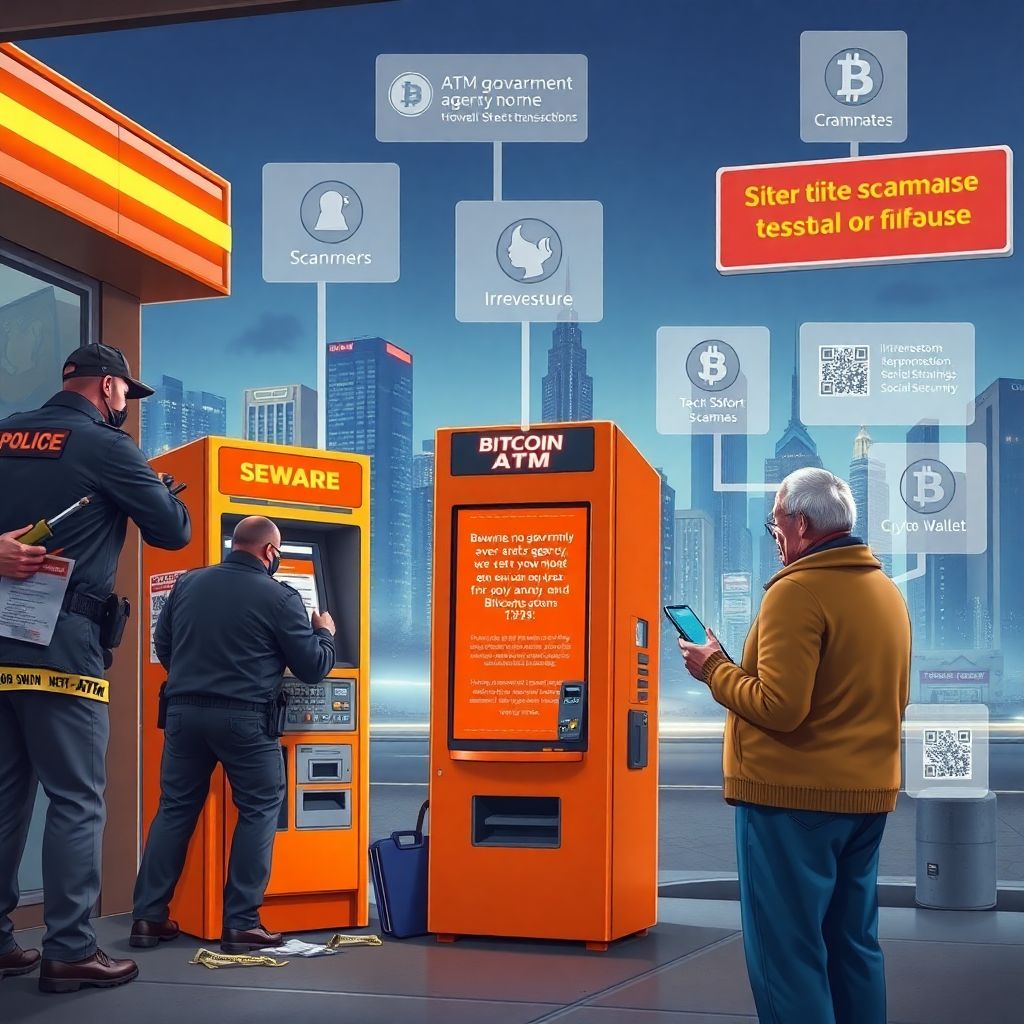
Authorities didn’t just issue statements. In some cases, officials literally brought out power tools and physically removed machines they believed were operating illegally or enabling fraud. At the same time, two state attorneys general filed high-profile lawsuits against several of the largest crypto ATM operators, accusing them of failing to protect vulnerable users and of profiting from criminal activity routed through their networks.
Government agencies and local organizations also pushed out a wave of consumer warnings, many of them targeted specifically at older Americans. These alerts repeatedly highlighted a core pattern: scammers convincing victims—often seniors—to withdraw cash from their bank accounts and feed it into a nearby Bitcoin or crypto ATM, sending funds to a wallet controlled by the criminals under the guise of “paying taxes,” “securing Social Security benefits,” or “resolving an urgent problem.”
A Service Built on Accessibility—With a Dark Side
Crypto ATM companies insist they’re filling a genuine need. Their pitch is simple: not everyone wants to or can connect a bank account to an online exchange, complete complex identity checks, or navigate trading interfaces. A physical machine on a street corner or in a convenience store allows anyone with cash to purchase Bitcoin or other cryptocurrencies in minutes. For the unbanked or underbanked, operators say, these machines may be one of the few on-ramps into the digital financial system.
Critics counter that the same traits that make these ATMs convenient—cash-based, fast, and sometimes lightly monitored—also make them a magnet for abuse. They argue that many operators have been slow to introduce strong safeguards like spending limits, robust identity verification, or scam-specific warnings at the point of transaction, even as evidence mounted that seniors and other vulnerable groups were being targeted at scale.
Behind the scenes, law enforcement reports and incident data told a consistent story: crypto ATMs were frequently appearing as the final step in romance scams, fake tech support schemes, government impersonation fraud, and investment cons. Once the cash was converted to crypto and sent, it became nearly impossible to reverse the transaction or trace the funds back in a way that would help victims recover their money.
Power Tools and Public Theater
Nothing captured the tension around crypto ATMs in 2025 quite like the images of officials dismantling machines with power tools. In a handful of jurisdictions, local regulators and law enforcement physically removed kiosks they said were unlicensed, noncompliant, or directly connected to ongoing investigations.
To industry advocates, these scenes looked like overreach and political theater—actions meant to send a message rather than solve the underlying issues. But to many policymakers and consumer advocates, the machines had become a visible symbol of what they saw as a lax, poorly regulated corner of the crypto ecosystem that was causing real harm in their communities.
These public takedowns had a secondary effect: suddenly, residents who had never used a crypto ATM were asking what they were, how they worked, and why they were being targeted. The resulting media coverage amplified concerns about scams and intensified calls for a comprehensive regulatory framework around the sector.
Lawsuits From Attorneys General
Two attorneys general escalated the fight by bringing lawsuits against some of the most prominent names in the crypto ATM business. Their complaints focused on several core allegations:
– Inadequate protections for elderly users, despite clear evidence that scammers were exploiting the machines.
– Insufficient or misleading disclosures about fees, exchange rates, or how irreversible crypto transactions really are.
– Weak or inconsistent compliance controls, raising questions about money laundering and the use of ATMs to move illicit funds.
– Business models that allegedly benefited from high-risk activity, with operators profiting from large, urgent cash transactions that bore the hallmarks of fraud.
These cases are still unfolding, but they already sent a message: regulators are increasingly willing to treat crypto ATM operators not just as technology providers, but as financial intermediaries with a duty of care toward their customers—especially those who may not fully understand what they’re doing at the moment of transaction.
Elderly Victims at the Center of the Debate
At the heart of 2025’s crypto ATM controversy was a sobering reality: older Americans were disproportionately represented among the victims. Scammers frequently targeted seniors with phone calls or messages that played on fear and urgency—claims that their bank accounts were compromised, that they owed back taxes, or that a loved one was in legal trouble.
The script often ended the same way: the victim was instructed to go to a specific location, find a Bitcoin or crypto ATM, and follow detailed steps to send funds to a QR code or wallet address dictated by the scammer. To someone unfamiliar with crypto, the machine looked like an official payment terminal rather than a gateway into a volatile, irreversible asset class.
Consumer alerts urged families to talk with older relatives about these tactics. Agencies stressed that no legitimate government agency, bank, or utility company would ever demand payment via Bitcoin or through a crypto ATM. But advocates argued that education alone was not enough; they insisted that operators must redesign the user experience to anticipate and interrupt obvious scam patterns.
Industry Response: Value, Compliance, and Pushback
Crypto ATM operators pushed back on the narrative that their sector was uniquely dangerous. They emphasized their role in expanding access to digital assets, particularly for people without traditional banking relationships or stable internet access. Many highlighted investments in compliance: know-your-customer checks, transaction monitoring, and limits at the machine level.
Some companies began adding more prominent on-screen warnings about scams, especially in jurisdictions where regulators signaled that such steps might soon be mandatory. Others voluntarily lowered per-transaction limits or required extra verification for high-risk patterns, such as large first-time purchases by older users.
Yet operators also warned that overly aggressive rules could simply drive the activity underground, pushing users toward unregistered kiosks or peer-to-peer cash trades with even less oversight. They argued for what they called “balanced, common-sense guardrails” that distinguish between legitimate use and criminal exploitation, rather than treating all cash-to-crypto activity as suspect.
Calls for Clear Federal Standards
One theme that surfaced repeatedly in 2025 was the patchwork nature of regulation. Crypto ATMs were subject to different rules depending on the state, with licensing regimes ranging from strict to nearly nonexistent. At the federal level, money services business laws applied, but specific guidance for crypto kiosks was often vague or outdated.
Policy experts increasingly called for a unified framework that would:
– Clarify licensing and registration requirements for operators nationwide.
– Set minimum standards for identity verification, transaction limits, and record-keeping.
– Mandate explicit, standardized warnings at machines about common scam scenarios.
– Define responsibilities when a transaction is clearly linked to fraud—without turning operators into full-time investigators.
Supporters of a national rulebook argued that consistent expectations would protect consumers, give honest operators more certainty, and make it harder for bad actors to exploit gaps between jurisdictions.
The Economics Behind the Machines
Beneath regulatory debates lies a fundamental business tension. Crypto ATMs often charge higher fees than online exchanges, especially for cash transactions. For some operators, a significant share of volume comes from users making large, urgent, one-off purchases—exactly the pattern that frequently overlaps with scam activity.
Critics argue that this creates a perverse incentive: clamping down on suspicious behavior may directly reduce revenue. That, they say, is why some firms were slow to introduce strict limits or intrusive prompts that might cause a panicked user to stop and question what they’re doing.
Industry defenders counter that many legitimate customers also value speed and privacy, and that not every fast, cash-based transaction is fraudulent. They insist that it’s possible to balance consumer protection with user autonomy, but acknowledge that the line is not always clear.
How Users Can Protect Themselves
For individuals considering using a Bitcoin or crypto ATM—whether to buy assets or send funds—2025’s events underline a few practical rules:
1. Never send crypto as a form of “payment” to a government agency, bank, or utility. They do not take Bitcoin or other coins via ATMs.
2. If someone pressures you to use a crypto ATM immediately, treat it as a red flag. Scammers rely on creating urgency so you don’t stop to think.
3. Talk to someone you trust before making a large transaction, especially if you are new to crypto or being guided step-by-step by a caller or stranger.
4. Understand that crypto transactions are generally irreversible. Once sent, there is no “cancel” or “chargeback” like with a credit card.
5. Use machines from operators that clearly display fees, limits, and support contacts, and that show visible scam warnings on-screen.
These steps cannot eliminate risk, but they significantly reduce the chances of becoming the next case in a law enforcement report.
What Comes Next for Crypto ATMs
By the end of 2025, it was clear that the era of quiet, largely unregulated expansion for Bitcoin and crypto ATMs was over. Legal actions had drawn national attention, regulators were more assertive, and the public conversation had shifted from novelty and convenience to safety, responsibility, and accountability.
In the near term, operators can expect more inspections, licensing scrutiny, and data requests from authorities. New rules around identity verification, transaction caps, and fraud alerts are likely, either at the state level or, eventually, nationwide. Some smaller players may exit the market rather than invest in compliance, while larger firms position themselves as “safer,” more regulated options.
Longer term, the future of crypto ATMs will hinge on whether the industry can demonstrate that it can be both accessible and secure. If operators embrace stronger protections—not just when forced to by lawsuits, but as a core part of their business model—these machines could remain a key on-ramp to digital assets. If not, more jurisdictions may reach for power tools, bans, or outright prohibitions.
A Turning Point for Physical Crypto Infrastructure
The story of Bitcoin and crypto ATMs in 2025 is ultimately about more than just kiosks. It reflects a broader struggle over how emerging financial technologies should interact with everyday people, especially those least equipped to navigate complex, high-risk products.
On one side is the promise of open access: anyone, with nothing more than cash and a few minutes, can participate in a global digital market. On the other is the risk that this same openness becomes a weapon in the hands of scammers and criminals.
How regulators, businesses, and consumers respond in the years following 2025 will determine whether crypto ATMs are remembered as a temporary, problematic phase in the evolution of digital finance—or as a durable, trusted bridge between the physical and digital economies, rebuilt with stronger guardrails and a clearer sense of responsibility.