
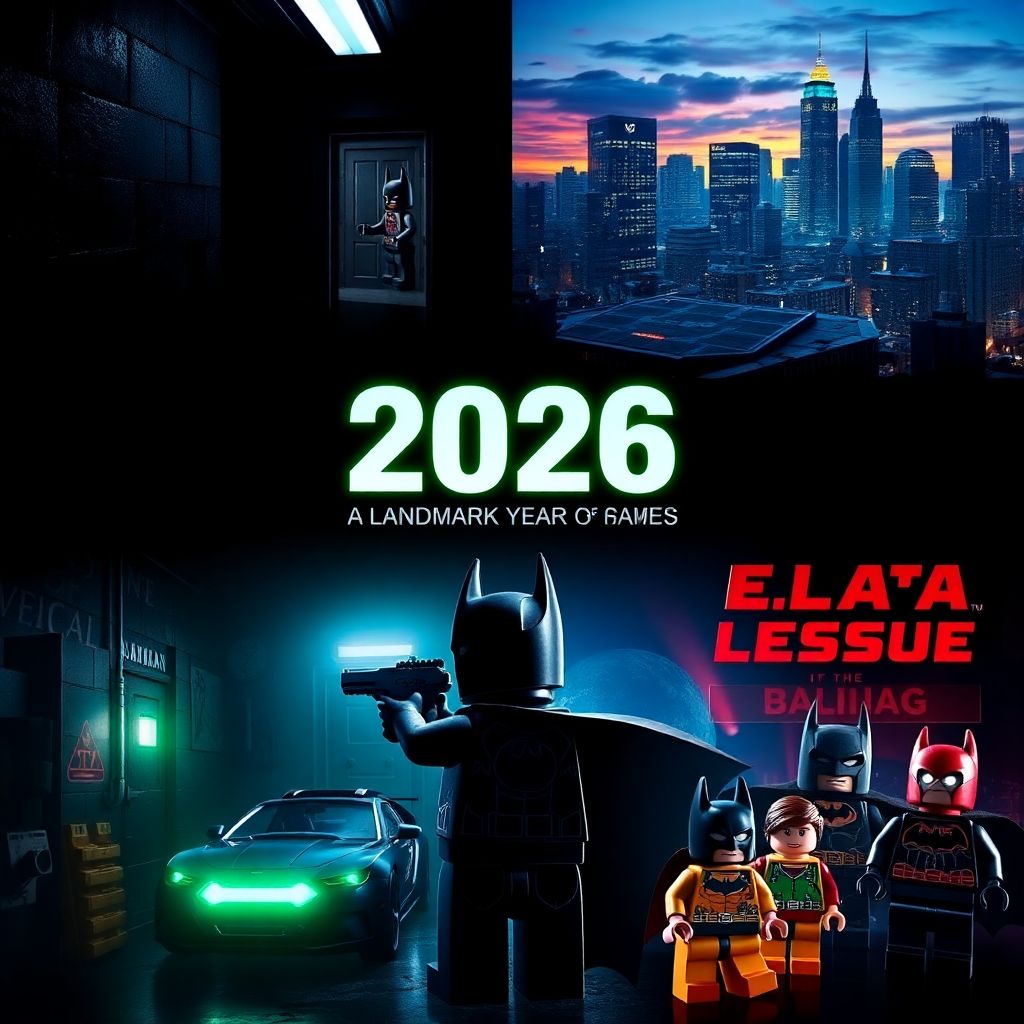
The Most Anticipated Games of 2026
2026 is already lining up to be a landmark year for gaming. Long-promised blockbusters are nearing the finish line, classic franchises are returning in bold new forms, and several ambitious new IPs are vying to define what the next generation of consoles and PCs can really do. Even if only a portion of the currently announced projects make their release windows, players are in for an unusually packed calendar.
Below is an overview of the biggest “traditional” games on the horizon—titles built on familiar platforms and business models, with no crypto or blockchain layers attached. They’re pure Web2 experiences, focused on storytelling, polish, and gameplay depth.
—
Resident Evil: Requiem
Capcom’s horror juggernaut shows no signs of slowing. Resident Evil: Requiem is widely expected to push the series even further into cinematic survival horror, with a heavier emphasis on atmosphere and psychological tension rather than pure action.
Early teases suggest tighter, more interconnected environments reminiscent of the series’ golden age—think intricate level design, locked doors that loop back to earlier areas, and puzzles woven directly into the narrative. Fans are also expecting a renewed focus on resource management, where every bullet and herb matters again.
With the franchise riding high from recent remakes and new entries, Requiem may become the definitive showcase of what current hardware can do for horror: advanced lighting, dense environmental detail, and audio design built to keep players permanently on edge.
—
LEGO Batman: Legacy of the Dark Knight
The LEGO formula might be familiar, but combining it with Batman’s decades of lore is a powerful draw. LEGO Batman: Legacy of the Dark Knight is poised to be both a celebration of DC’s iconic hero and a family-friendly co-op adventure.
What sets this one apart is the rumored focus on multiple eras of Batman history. Players may jump from campy, colorful interpretations of Gotham to darker, noir‑inspired arcs—all rendered in LEGO’s trademark slapstick style. Expect a huge roster of playable heroes and villains, from household names to deep-cut fan favorites, plus an emphasis on replayable levels and collectible hunting.
If done right, Legacy of the Dark Knight could become the go-to couch co-op game of 2026, appealing to both comic obsessives and younger players discovering Batman for the first time.
—
Phantom Blade 0
Phantom Blade 0 has already turned heads with its hyper-stylized combat and moody, Eastern gothic aesthetic. Positioned as a fast-paced action RPG, it leans heavily into acrobatic swordplay, intricate combos, and tight parries.
The game’s world blends steampunk machinery, martial arts mythology, and supernatural elements into a bleak, dreamlike landscape. What excites many players is its promise of demanding, skill-based combat without sacrificing narrative ambition. Instead of a purely cryptic story, Phantom Blade 0 aims for a more cinematic structure with clear character motivations and dramatic set-pieces.
If the studio can deliver on its performance and control promises—fluid 60+ FPS action and precise input response—it could become a new standard-bearer for stylish action games, sitting comfortably alongside modern favorites in the genre.
—
Grand Theft Auto VI
The juggernaut. Grand Theft Auto VI is arguably the most anticipated game on this list, and likely of the decade. After years of speculation and delays, 2026 is widely expected to be the year it finally lands in players’ hands.
GTA VI is rumored to feature an evolved open world that’s not just visually lavish, but deeply reactive. Dynamic weather, shifting economies, evolving neighborhoods, and more nuanced AI behavior are all said to be in play. The game will almost certainly push narrative ambition as well, building on the multi-protagonist structure and satirical storytelling that made its predecessor a cultural touchstone.
Beyond spectacle, the big question is how GTA VI will modernize the open-world formula it helped define—especially in a landscape now crowded with rivals. Its release alone could define 2026 for mainstream audiences.
—
Marvel’s Wolverine
Following the success of modern superhero adaptations in gaming, Marvel’s Wolverine is positioned as a darker, more grounded counterpoint to quippier comic heroes. Instead of a sprawling open world, early indications point to more focused, tightly directed levels that highlight brutal combat and character-driven storytelling.
Anticipation centers on how the developers will handle Wolverine’s unique toolkit: regenerative health, lethal claws, and feral senses that could inform stealth and tracking mechanics. Players are expecting visceral melee combat, impactful dismemberment (within ratings limits), and a tone that respects the character’s more mature comic arcs.
If Marvel’s Wolverine nails its pacing and combat feel, it could stand alongside the very best superhero games, not just as a licensed tie-in but as a top-tier action title in its own right.
—
Control Resonant
Control Resonant is set to expand the mind-bending universe of the original Control, this time with even more emphasis on reality-warping environments and paranormal powers. The first game won acclaim for its brutalist architecture and strange, shifting spaces; Resonant is anticipated to go further, making the environment itself a core mechanic.
Players are expecting deeper telekinetic combat, more flexible build customization, and a heavier focus on unraveling the Federal Bureau of Control’s many mysteries. There’s also speculation that Resonant will offer more open-ended exploration, blending Metroidvania-style progression with larger, more interconnected hubs.
If the studio can pair its signature weird-fiction writing with technical improvements and richer gameplay systems, Control Resonant could become a cult favorite that breaks into the mainstream.
—
Forza Horizon 6
For racing fans, Forza Horizon 6 is high on the must-play list. The Horizon series has built a reputation for open-world driving playgrounds that are equal parts festival and racing simulator, and the sixth entry is expected to double down on that formula.
The big talking points are next-gen visuals and environmental variety: vast, densely detailed landscapes, more realistic weather systems, and a truly massive car roster. Online features are also likely to see a major overhaul, with seamless drop-in events, improved social tools, and expanded customization options for players’ cars and in-game festivals.
Forza Horizon 6 could easily become the de facto “show this off” title for players looking to demonstrate what their hardware can do, while still being accessible enough for casual racers.
—
Max Payne 1+2 Remakes
Few announcements have sparked as much nostalgic excitement as the Max Payne 1+2 remakes. These classic neo-noir shooters are being rebuilt with modern visuals and physics, but the heart of the project lies in preserving their gritty atmosphere, hardboiled narration, and iconic bullet-time mechanics.
Fans are hoping for a faithful reinterpretation rather than a complete overhaul: updated shooting, tighter controls, and expanded environmental detail, all while keeping the original stories and tone intact. The remakes have the potential to introduce a whole new generation to Max Payne’s tragic arc while giving long-time fans the definitive way to revisit it.
If they land, expect these remakes to become a benchmark for how to modernize older titles without losing their identity.
—
Tomb Raider: Legacy of Atlantis
Tomb Raider is no stranger to reinvention, and Tomb Raider: Legacy of Atlantis appears to be the next big step for the franchise. The title alone signals a return to grand, mythic archaeology—lost civilizations, elaborate tombs, and puzzle-driven exploration.
Players are looking for a balance between cinematic action and the slower, more methodical tomb raiding that defined earlier entries. Complex environmental puzzles, multi-stage platforming challenges, and a renewed emphasis on discovery over constant combat could help Legacy of Atlantis stand apart from recent action-heavy installments.
With modern tech, ancient underwater cities and colossal ruins could become some of the most striking locations of 2026, provided the developers lean into verticality, environmental storytelling, and meaningful rewards for exploration.
—
Honorable Mentions and Emerging Contenders
Beyond the headliners, 2026 is filling up with promising smaller and mid-budget titles: experimental indies, AA projects with focused visions, and expansions to existing hits. While they don’t all carry the same name recognition as GTA or Resident Evil, these games often end up being the year’s biggest surprises.
Roguelikes, survival crafting titles, tactical RPGs, and co-op experiences are particularly worth watching, as these genres have thrived on creativity rather than sheer budget. Many of these projects are still under wraps or only quietly announced; expect more to be revealed as showcases and presentations throughout 2025 and early 2026 roll around.
—
A Note on Release Windows
At least one of the major titles on this list is already aiming for a February 2026 release window, setting the tone for a crowded first quarter. As always, dates are provisional—delays have become standard across the industry as studios prioritize polish and working conditions.
Still, even accounting for inevitable slippage, the current schedule suggests there will be few quiet months. Large-scale action games, narrative adventures, racers, horror titles, and superhero epics are all vying for attention across the calendar.
—
Pure Web2 Experiences in a Changing Landscape
It’s worth underscoring that every game highlighted here is a traditional product in a rapidly evolving industry. No token-gated access, no blockchain-based economies—just straightforward purchases or conventional free-to-play models on consoles and PC.
For many players, that’s reassuring. After years of experimentation with new monetization schemes and emerging technologies, there’s still enormous appetite for classic, controller-in-hand experiences that prioritize strong design over financial engineering. 2026 looks set to deliver exactly that across multiple genres and platforms.
—
Why 2026 Matters for Players
Taken together, these projects point to a year that could redefine expectations in several key areas:
– Technical ambition: Ray tracing, advanced physics, and AI-driven systems are moving from novelty to baseline.
– Narrative depth: Many of these games promise richer character work, more sophisticated themes, and branching player choice.
– Genre evolution: From open worlds to action RPGs, long-standing formulas are being challenged and refined.
– Franchise stewardship: Iconic series like GTA, Resident Evil, Tomb Raider, and Max Payne face a crucial test—can they stay relevant without losing what made them beloved?
For players, that means more options, higher standards, and a real chance that 2026 will be remembered as a high point of this console generation.
—
Looking Ahead
As always, the most exciting projects may be the ones we still don’t know about. Surprise reveals, shadow drops, and breakout indie hits routinely reshape “most anticipated” lists over the course of a year. But even if nothing else were announced, the current lineup alone would make 2026 one of the most crowded and competitive gaming years in recent memory.
If even two-thirds of these titles arrive in a polished state by year’s end, players will have more than enough to keep their backlogs overflowing—and countless reasons to keep a close eye on every new trailer, teaser, and update along the way.