
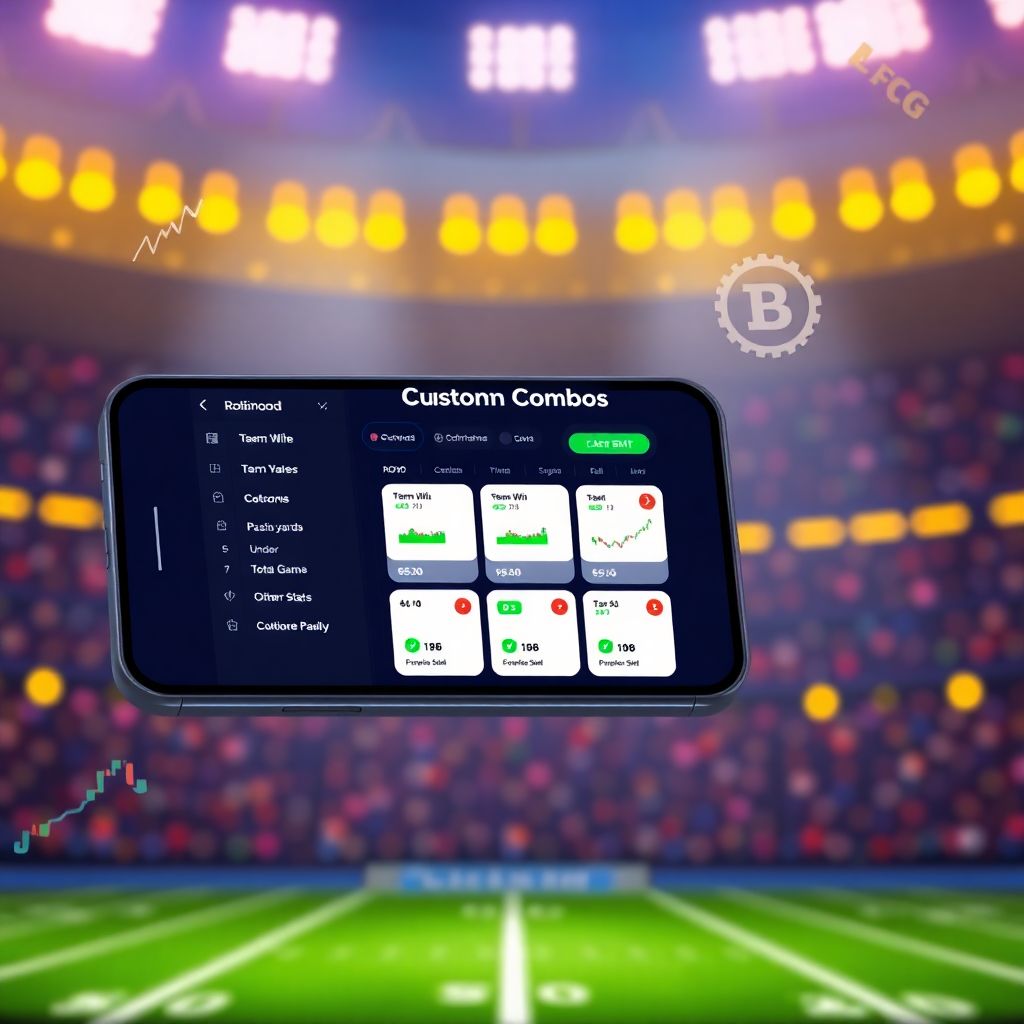
Robinhood Rolls Out Prediction Market ‘Custom Combos’—Insists They’re Not Parlays
Robinhood is rolling out a new feature called “Custom Combos” for users who want to wager on professional football, expanding its relatively young prediction market product just as betting activity intensifies during the NFL postseason.
These new offerings let users bundle multiple predictions into a single contract—such as team outcomes and individual player performance—creating a structure that looks very similar to the same-game parlays popularized by major sportsbooks. But despite the resemblance, Robinhood stresses that these are not traditional parlays in the gambling sense.
Instead, Custom Combos sit within a framework of regulated prediction contracts. The products are offered under the oversight of the U.S. Commodity Futures Trading Commission (CFTC), through Robinhood’s partnership with Kalshi, a federally regulated prediction market platform. That regulatory structure is a key part of how Robinhood is positioning the product as distinct from classic sports betting.
What Custom Combos Actually Are
Custom Combos allow users to combine up to 10 separate predictions into a single position. Each leg of the combo represents a discrete, CFTC-regulated event contract: for example, whether a team will win, whether a quarterback will surpass a certain passing yard threshold, or whether a game will exceed a given point total.
Instead of functioning like a parlay ticket at a sportsbook, where odds are set by bookmakers and payouts are framed as gambling wins, these contracts are structured as event-based derivatives. Traders are essentially buying or selling positions based on the probability that a combination of outcomes will occur, and contract prices reflect market expectations rather than house-set odds.
Kalshi plays the central role here. It operates the underlying markets, matches counterparties, and ensures that each leg of a combo is part of a regulated event contract. Robinhood, in turn, provides the retail-facing interface and customer experience, embedding these prediction tools into its broader app alongside stock, options, and crypto trading.
Why Robinhood Doesn’t Want Them Called Parlays
The comparison to parlays offered by companies like DraftKings and FanDuel is hard to avoid:
– Both formats involve combining multiple outcomes into a single position.
– Both allow users to zero in on specific player and game stats.
– And both tend to appeal to users who want high-upside, narrative-driven bets around big games.
But Robinhood is deliberately drawing a line between Custom Combos and conventional gambling products. The difference isn’t only about branding; it’s about regulation, structure, and economic design.
Parlays are gambling instruments governed by state-level gaming laws. Odds and payouts are controlled by the sportsbook, which effectively acts as the house. Custom Combos, by contrast, are built from regulated event contracts approved by the CFTC, with prices determined in markets where participants trade against each other rather than against a house.
That distinction helps Robinhood frame these products as financial contracts in a prediction market, not as casino-style bets—even if, from a user’s perspective, the experience may feel very similar when they’re building a multi-leg position on a Sunday playoff slate.
Kalshi’s Expanding Role—and the Dominance of Sports
Kalshi has quickly become a central infrastructure player for event-based trading in the U.S. Recently, sports-related contracts—especially those tied to football—have dominated activity on the platform, accounting for roughly 91% of trading volume over a recent period.
That number underscores how powerful sports can be as an entry point into prediction markets. While platforms like Kalshi can support contracts on economic data, politics, and other real-world events, the week-to-week rhythm of football, combined with its huge fan base, makes it a natural engine for engagement and liquidity.
For Robinhood, tapping into that existing activity through a partnership allows it to expand beyond its traditional equities and crypto core without having to build the entire regulatory and exchange infrastructure from scratch.
How the Partnership With Kalshi Works
Robinhood’s collaboration with Kalshi, which began with college and professional football markets in the summer, effectively layers Robinhood’s consumer interface on top of Kalshi’s regulated exchange.
Kalshi:
– Lists and manages the event contracts.
– Handles order matching and settlement.
– Operates under CFTC oversight as a designated contract market.
Robinhood:
– Integrates these contracts into its app.
– Creates features like Custom Combos that package existing markets in user-friendly ways.
– Leverages its large retail base to drive participation.
By using Kalshi’s regulated rails, Robinhood can offer products that sit closer to the “financial markets” side of the spectrum than to the “casino betting” side—something that matters in the U.S., where the legal landscape for sports gambling is fragmented state by state, but derivatives and event contracts fall under federal oversight.
Why This Matters for Robinhood’s Strategy
Robinhood built its brand on lowering barriers to trading stocks and options, then expanded heavily into crypto. Prediction markets are a logical next frontier: they let the company offer exposure to real-world outcomes without needing to list new securities or tokens.
Custom Combos fit neatly into several of Robinhood’s priorities:
– Engagement: Sports events are time-bound, frequent, and emotionally charged, keeping users coming back.
– Cross-sell potential: A user who opens the app for NFL predictions might also trade stocks or crypto.
– Differentiation: Framing these as regulated event contracts rather than bets helps Robinhood stand apart from conventional sportsbooks and reinforces its identity as a financial platform, not a casino.
This move also aligns with a broader industry trend: the blurring of lines between speculative finance and entertainment. Meme stocks, options trading, and crypto have already shown how quickly financial products can become cultural phenomena. Prediction markets on sports and other events extend that trajectory.
How Custom Combos Compare to Classic Parlays in Practice
From a user’s standpoint, the overlap with parlays is real. Both products:
– Let you pick multiple legs tied to a single game or set of games.
– Increase potential payout (or return) when you chain outcomes together.
– Become invalid or lose value if one of the legs fails.
However, there are subtle but important functional differences:
– Pricing: In a prediction market, each leg has its own market-driven price, which feeds into the overall economics of the combo. In a sportsbook, odds and parlay multipliers are set by the house.
– Counterparty: Users are effectively trading against other market participants rather than betting against a centralized house.
– Regulation: CFTC oversight imposes specific rules on how events are defined, resolved, and reported, which differs from state-level gaming regulation.
For sophisticated users, that may open up strategies that feel more like trading than betting—such as adjusting exposure as prices move, or using event contracts as a hedge against other positions.
The Regulatory Tightrope
Operating at the intersection of finance and sports outcomes is not risk-free. Event contracts, especially those closely resembling bets on games, have drawn regulatory scrutiny in the past. The CFTC has repeatedly evaluated how far such markets can go without crossing into prohibited gambling territory.
By building on Kalshi’s already-approved contracts and insisting on language that distinguishes Custom Combos from parlays, Robinhood is trying to stay on the right side of that line. The positioning emphasizes:
– Transparent, rules-based settlement of contracts.
– Market-driven pricing instead of house-managed odds.
– A framing of these tools as speculative financial products rather than entertainment wagers.
Still, as volumes grow and more retail traders get involved, regulators may revisit where they believe the boundary lies between prediction markets and de facto sports betting.
What This Means for Users Right Now
For a typical Robinhood user interested in the NFL postseason, Custom Combos add a new layer of optionality:
– You can express views on game outcomes and player stats in one bundled position.
– You engage with a product that lives inside your existing trading app, alongside your portfolio.
– You interact with a regulated market structure instead of a traditional sportsbook account.
At the same time, the mechanics of risk don’t change just because the product is wrapped in financial language. Multi-leg combinations—whether called parlays or Custom Combos—are inherently harder to win or profit from because every additional leg increases the number of things that must go right.
Users will need to understand how contract prices reflect implied probabilities, how settlement works if one leg voids or changes, and how much capital they’re actually putting at risk when they build a complex combo around a marquee playoff matchup.
The Bigger Picture for Prediction Markets
The rise of sports-focused prediction markets hints at a broader shift in how people might interact with information and events in the future. If markets can efficiently price the odds of a team covering the spread, the same infrastructure can, in theory, be applied to:
– Economic data releases, like inflation or jobs numbers.
– Policy outcomes, such as rate decisions.
– Cultural or tech events, like product launches or box office results.
Robinhood’s entry into this space via football may be just the first step. As users grow comfortable trading event outcomes, the platform could introduce new categories of contracts, offering more ways for people to speculate on—or hedge against—real-world scenarios.
For now, though, the focus is squarely on football, the postseason, and using Custom Combos to capture the surge of interest that accompanies high-stakes games. Whether users think of these positions as trades or bets, Robinhood is betting on one thing itself: that the future of speculation will look a lot like prediction markets—and that sports will be the gateway that gets millions of people through the door.