
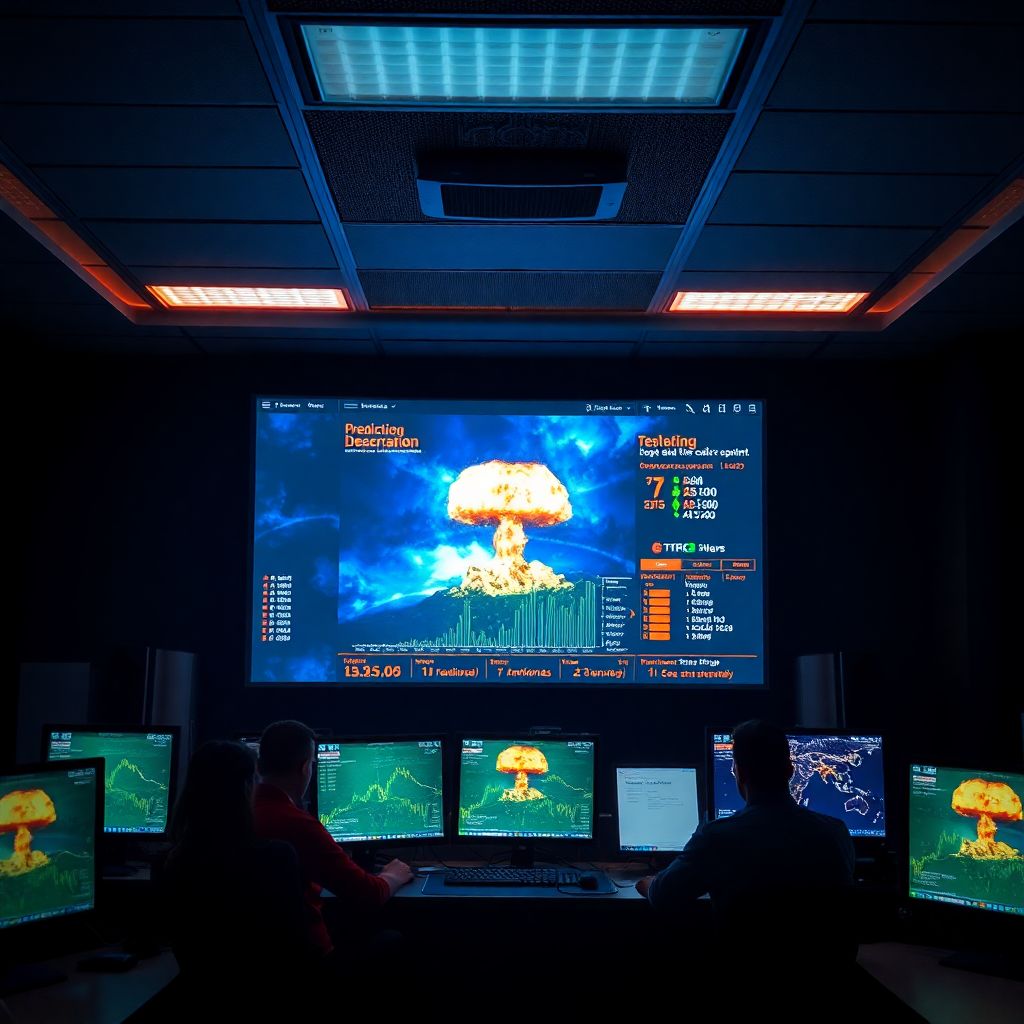
Polymarket quietly pulls nuclear‑detonation market amid growing uproar over war betting
Offshore prediction platform Polymarket has removed a controversial market that let users bet on the likelihood of a nuclear weapon being detonated, after a fresh wave of criticism from analysts, politicians, and the wider public.
The nuclear contract, which had been listed for years on the site, allowed traders to speculate on whether a nuclear device would be detonated within specified time windows. It drew consistent interest and sizable volumes, including more than 1.7 million dollars wagered on a contract set to expire in 2025. Now, without any formal announcement, that market has been archived and no longer appears among Polymarket’s active listings.
The timing of the decision has fueled debate. Just hours before the market was removed, Polymarket published updated odds on X indicating roughly a 22% chance of a nuclear detonation occurring by the end of the year. That figure, amplified on social media, triggered a wave of outrage from commentators who accused the platform of turning existential global risks into a speculative game.
Critics argued that turning scenarios like nuclear war into tradable assets effectively monetizes human catastrophe. The fact that the odds were presented in the same casual, gamified format as sports or election bets only intensified the backlash, with opponents framing it as a normalization of betting on the potential deaths of millions.
The nuclear contract did not exist in isolation. Its removal comes against the backdrop of accelerating controversy over Polymarket’s geopolitical offerings, especially those linked to the recent U.S. and Israeli military strikes on Iran. During that period of heightened tension, the platform recorded more than 529 million dollars in bets on contracts tied to the timing, scale, and outcomes of the strikes-activity that dwarfed typical traffic on the site.
Those volumes set off alarms among blockchain analysts and regulators. Forensic firms tracking on‑chain activity identified a cluster of newly created wallets that collectively earned more than 1 million dollars by placing highly accurate bets in the hours leading up to the strikes. The pattern raised immediate suspicions that individuals with privileged, non‑public information may have used the platform to profit from upcoming military operations.
This in turn sparked accusations that prediction markets are creating a new venue for potential insider trading on matters of war and national security. Traditional financial markets already treat material, non‑public information with extreme sensitivity, imposing heavy penalties for insider dealing. By contrast, decentralized prediction platforms typically require little more than a crypto wallet to participate and operate largely outside established regulatory frameworks.
Ethicists and legal experts warn that such an environment not only enables exploitation of secret information, but may also distort incentives. If large sums can be gained from accurately predicting conflict, there is concern that some participants could benefit financially from escalation or tragedy, whether or not they actively influence events. Even the perception that decision‑makers or their associates might be betting on war outcomes undermines public trust in institutions.
Polymarket’s defenders counter that prediction markets can serve an important informational role. In their view, aggregate market prices reflect the collective expectations of thousands of participants and can sometimes produce more accurate forecasts than polls, think tanks, or official intelligence assessments. For them, shutting down these markets risks losing a potentially powerful tool for understanding geopolitical risk.
Yet the nuclear‑detonation contract crossed a line for many observers. The idea that a platform could profit from trading fees on bets about a nuclear attack has been characterized by opponents as a direct commercialization of existential risk. Critics insist that certain categories-deaths, terrorist attacks, pandemics, and nuclear events among them-should be off‑limits, regardless of any theoretical forecasting value.
The controversy has now reached Washington. Several U.S. Senators have publicly called for tighter oversight or outright bans on markets that directly reference death, warfare, or other extreme geopolitical scenarios. They argue that such contracts are fundamentally different from, say, election prediction markets or inflation hedging instruments, because they explicitly hinge on human suffering and destruction.
Federal agencies are already paying attention. The Commodity Futures Trading Commission and other regulators are advancing rulemaking efforts aimed at clarifying what kinds of event‑based contracts can legally operate in, or target, the U.S. market. Core questions include whether certain wagers resemble unregistered futures contracts, whether they violate anti‑gambling statutes, and how to handle cross‑border platforms that serve U.S. users but are headquartered elsewhere.
For now, Polymarket has not provided a detailed public explanation for archiving the nuclear market or signaled a clear overhaul of its broader geopolitical offerings. Historically, the company has defended itself by emphasizing the value of crowd‑sourced predictions and by portraying the platform as an information market rather than a casino. However, the quiet removal of one of its most controversial markets indicates that external pressure is starting to shape what can and cannot be listed.
Behind this clash lies a deeper, unresolved question: where should society draw the ethical and legal boundaries of prediction markets? Supporters often compare them to insurance or derivatives markets, which also revolve around uncertain future events. But opponents point out a crucial distinction: life insurance, for instance, is heavily regulated, requires insurable interest, and is explicitly designed as a risk‑management tool rather than a speculative bet on warfare or mass casualties.
Another emerging issue is data privacy and intelligence leakage. If trading patterns on unregulated prediction platforms begin to mirror the timing of covert military actions or classified policy moves, they could inadvertently become an open‑source intelligence channel. Analysts might infer sensitive information simply by watching order flows and price movements, especially when linked to a handful of suspicious wallets.
There is also the matter of jurisdiction. Polymarket operates offshore, but its user base and impact are undeniably global. Lawmakers and regulators must grapple with how to enforce rules against platforms that can be accessed from anywhere, route funds through decentralized networks, and rely on pseudonymous wallets instead of traditional bank accounts or brokerage accounts.
Industry participants are now debating whether self‑regulation could stave off more aggressive government crackdowns. Possible measures include prohibiting markets that reference specific individuals’ deaths, banning contracts tied to terrorist attacks or nuclear events, imposing stricter know‑your‑customer controls for high‑risk markets, or introducing delays and circuit breakers for markets related to live military operations.
On the other hand, some worry that overly broad restrictions could push users toward even more opaque, fully decentralized platforms that are harder to monitor and influence. If mainstream, partially compliant services are shut down or heavily constrained, demand for these markets may simply migrate to less visible corners of the crypto ecosystem, further complicating oversight.
The Polymarket case also raises questions for institutional investors and founders in the broader crypto sector. As capital flows into prediction platforms, backers will be forced to decide whether they are comfortable profiting from contracts tied to war and nuclear risk, or whether environmental, social, and governance standards should apply as strictly here as in traditional finance.
For everyday users, the debate is likely to increase awareness of what, exactly, they are participating in when they place a bet on a geopolitical outcome. While some may see it as a purely intellectual exercise in forecasting, others will increasingly view such wagers as participation in an ethically fraught marketplace-particularly when the subject matter is as grave as nuclear conflict.
In archiving its nuclear‑detonation market, Polymarket has taken a step that acknowledges at least part of this concern. Whether it marks the beginning of a broader retreat from war‑related betting or merely a tactical response to public backlash remains to be seen. What is clear is that prediction markets have moved from a niche curiosity into the center of a larger conversation about ethics, regulation, and the limits of financial speculation in an age of real‑time global crises.