
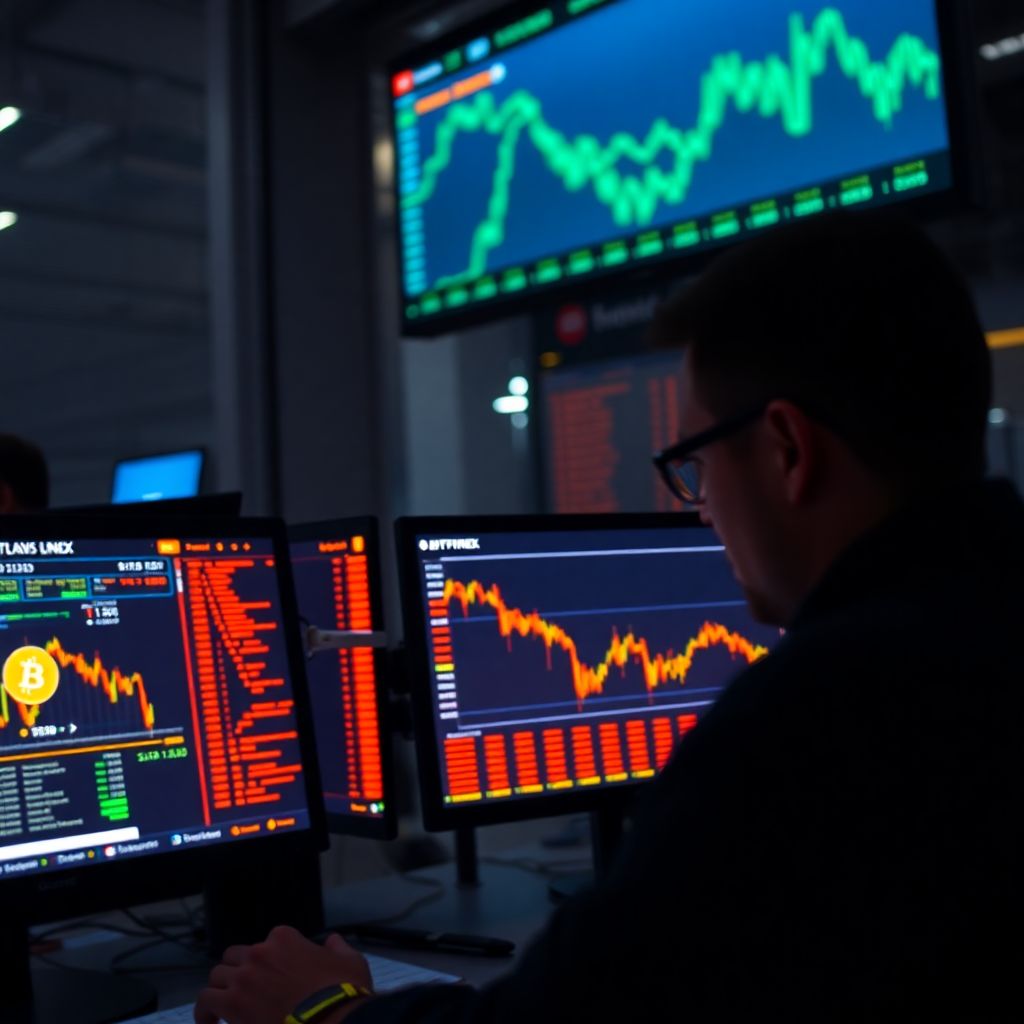
Bitfinex Bitcoin longs climb to 79,000 BTC as Adam Back flags structural shift in demand
Bitcoin margin traders on Bitfinex are quietly ramping up their exposure, with long positions swelling to levels unseen since late 2023, even as the spot price struggles to gain traction. The build-up is reviving a key question in the market: are large, patient buyers methodically accumulating BTC during the current correction?
Fresh data from the exchange shows that leveraged long positions on Bitfinex have reached roughly 79,193 BTC. This is the highest reading since November 2023 and a stark contrast to the cautious tone dominating broader crypto and macro markets, where traders have been preoccupied with rising oil prices, geopolitical tensions, and risk-off sentiment.
Against this backdrop, on-exchange behavior at Bitfinex appears to be telling a different story. While price action remains subdued and volatile, one segment of traders is steadily increasing levered exposure, suggesting a deliberate accumulation strategy rather than short‑term speculation.
Adam Back, CEO of Blockstream and a long‑time Bitcoin advocate, has described the current pattern in Bitfinex margin data as “unprecedented.” In his view, the pace and consistency of the build-up point to a more structural form of buying, likely driven by larger and more sophisticated participants rather than retail speculators chasing quick gains.
Back links the move to institutional-style execution tactics, particularly the use of time-weighted average price (TWAP) strategies. Under TWAP, buyers slice their orders into smaller chunks and execute them over extended periods, reducing market impact and avoiding sharp price spikes that a single large order could trigger. This approach is common among funds and professional desks managing significant capital.
According to Back, these TWAP-style orders appear to be concentrated below the 69,000 dollar level. He suggests that during the latest correction, bids sitting under this price zone have repeatedly absorbed available supply, effectively acting as a soft floor and indicating that some players are comfortable building size under that threshold.
He also notes that this margin long accumulation on Bitfinex is not a sudden phenomenon. Back traces its origins to late 2020, with the trend slowly but steadily intensifying over time. By his estimates, the current rate of organic accumulation stands at 300 BTC or more per day executed through routine trading activity rather than obvious, one‑off block orders.
At recent prices, that translates into daily flows on the order of 20 million dollars, or roughly 14,000 dollars of net buying per minute. On days when activity peaks, the total accumulated can reach between 450 and 600 BTC, painting a picture of persistent demand that keeps grinding higher in the background while headlines focus on volatility and macro shocks.
What is especially notable is the timing. The long build-up is happening during a corrective phase in Bitcoin’s price, not during a euphoric breakout or all-time high chase. While BTC has remained under pressure, with sharp intraday swings and periodic liquidations, the size of the long book on Bitfinex has consistently expanded, hinting at a divergence between price weakness and positioning strength.
Back argues that this behavior does not resemble “artificial speculation” or straightforward attempt to manipulate markets. Instead, he frames it as longer-term positioning by entities content to carry exposure through volatility. These buyers are seemingly unconcerned with short‑term drawdowns and are focused on future upside over a multi‑month or even multi‑year horizon. Their identities remain opaque, but their footprint in the data is increasingly hard to ignore.
This narrative fits into a broader thesis circulating among market participants: the idea that Bitcoin is gradually migrating from short‑term, highly reactive holders to investors with a longer holding period and higher conviction. In this framework, corrections are less a sign of structural weakness and more a mechanism for transferring coins from “weak hands” to “strong hands.”
Technical analysts have also highlighted growing signs of bearish exhaustion on higher time frames, especially on weekly charts. Momentum indicators and volume patterns suggest that aggressive sellers may be losing steam. In such an environment, a large and steadily rising leveraged long base can emerge as an important leading signal, hinting that some players are already positioning for a potential upside reversal.
If the current pace of accumulation continues, Back believes the size of Bitfinex’s long book could exert meaningful influence on Bitcoin’s tradable supply. As more BTC is effectively locked in margin positions by committed buyers, the freely circulating float on exchanges can shrink. This tightening of liquid supply may not instantly push prices higher, but it can lay the groundwork for sharper moves when a fresh wave of demand or a positive catalyst eventually appears.
Reduced market depth-where there are fewer large offers readily available at each price level-tends to amplify both upside and downside moves. In a bullish scenario, that means that any renewed inflows from spot buyers, new institutional participants, or macro relief could spark faster price appreciation than expected, as order books thin out and bids chase fewer available coins.
At the same time, a large leveraged long overhang carries its own risks. If the market were to experience a deeper downturn or a sudden negative shock, highly margined positions could become vulnerable to forced liquidations. That, in turn, can accelerate downside moves as long holders are compelled to sell into weakness. For now, however, the persistence and structure of the Bitfinex long build-up appear more aligned with slow accumulation than with a crowded, overleveraged frenzy.
For traders and investors trying to interpret this data, the key is context. Margin long growth alone does not guarantee higher prices; it must be weighed against funding rates, open interest across multiple exchanges, spot flows, and macro conditions. But when such growth happens during a correction and appears to follow an institutional execution profile, it can hint at a deeper shift in market composition.
One useful lens is to compare this episode with previous cycles. Historically, major Bitcoin bull runs were often preceded by quiet periods of accumulation, during which coins moved from speculative traders to more patient holders. Metrics such as coin days destroyed, HODL waves, and long‑term holder supply frequently showed strengthening conviction even as prices churned sideways or dipped. The rising margin long base on Bitfinex may be part of that same underlying dynamic, just expressed through leveraged instruments rather than spot balances alone.
Another angle is to consider why an institutional player might prefer TWAP-based accumulation at sub‑69,000 levels instead of simply waiting for lower prices. One explanation is risk management: large buyers often do not aim to catch absolute bottoms. Instead, they target ranges that align with their long‑term valuation models and then build exposure gradually, accepting short‑term volatility as the cost of securing inventory over time. The behavior Back describes matches this playbook closely.
This pattern also reflects changing perceptions of Bitcoin’s role in a broader portfolio. For some professional investors, BTC is evolving from a speculative side bet into a strategic asset with its own allocation bucket, akin to gold or high‑growth tech. If that thesis is gaining traction behind the scenes, the market may see more of these slow, methodical accumulation campaigns during dips, even if the public narrative still revolves around fear and uncertainty.
Retail participants observing these flows should be cautious not to overinterpret a single data point, but they can still extract practical lessons. First, deep corrections do not necessarily mean that “no one is buying”; often, the most determined buyers are active precisely when sentiment is weak. Second, the presence of steady, large-scale accumulation can explain why certain support zones hold repeatedly, even when news flow looks grim.
In tactical terms, traders may treat the 69,000 region and the current long build-up as a reference area rather than a strict line in the sand. If price continues to find buyers below that level and margin longs stay elevated or grow, it reinforces the idea of a structural demand zone. Conversely, a sharp reduction in those longs or a breakdown that triggers mass liquidations would signal that the support profile has changed.
Longer‑term investors, meanwhile, might see this as one more confirmation that Bitcoin’s ownership base is slowly maturing. The more coins end up with entities willing to hold through turbulence, the more supply becomes inelastic on the downside. That does not eliminate volatility-Bitcoin has always been volatile and likely will remain so-but it can increase the asymmetry of future moves, where limited supply meets incremental demand.
Ultimately, the surge in Bitfinex margin longs to nearly 79,000 BTC illustrates a core tension in the current market: surface‑level weakness versus underlying accumulation. While headlines focus on corrections, macro scares, and short‑term price swings, a different kind of activity may be taking place beneath the charts-measured, systematic, and geared toward a much longer time frame than the next daily candle.