
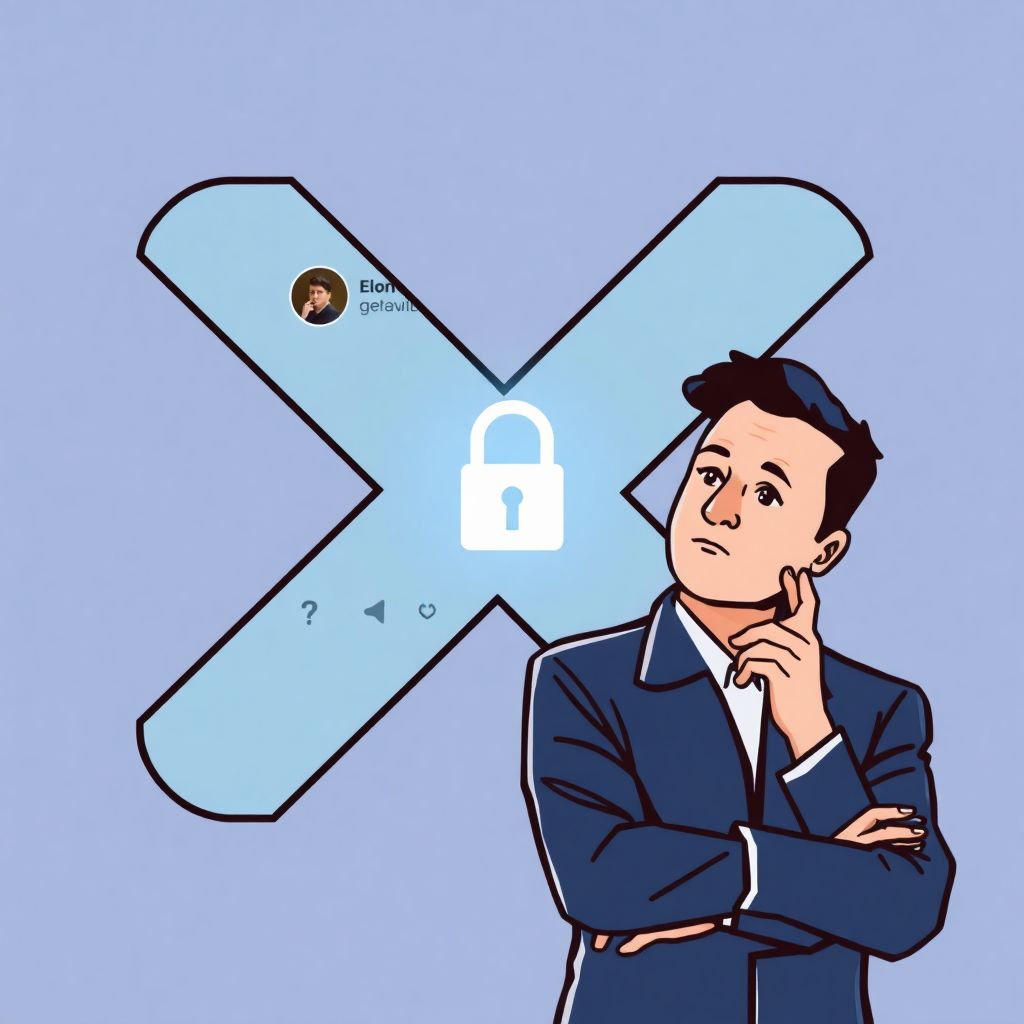
Elon Musk’s X rolls out “kill switch” to auto-lock first‑time crypto posters in bid to crush scams
X, the social platform owned by Elon Musk, is introducing an aggressive new defense against cryptocurrency scams: any account that mentions crypto for the very first time will be automatically locked and forced through an extra verification step before its post goes live.
Head of Product Nikita Bier says the system is designed to wipe out “99% of the economic incentive” behind one of the platform’s most entrenched forms of fraud, by disrupting the exact moment hijacked or fake accounts pivot into pushing crypto schemes.
What triggered the new “kill switch”
The change was confirmed on April 1, when Bier responded publicly to Benjamin White, founder of the prediction market platform Predictfully. White had described in detail how his account was compromised through a phishing attack: he received an email that looked like a copyright violation notice, followed a link to what appeared to be X’s login page, and unknowingly handed over both his password and his two‑factor authentication code.
Attackers captured those credentials in real time, took control of his account, and almost instantly began using it to promote fraudulent cryptocurrency offers. The smoothness and speed of this hijack‑and‑shill sequence has become a hallmark of organized scam rings operating on X.
Bier’s reply made clear that White’s ordeal was not an isolated case but a template:
> X is “in the process of implementing auto‑locking + verification if a user posts about cryptocurrency for the first time in the history of their account,” he wrote, adding that the measure “should kill 99% of the incentive.”
He also took a swipe at email providers’ role in the problem, criticizing Google for failing to meaningfully curb the phishing campaigns that often serve as the entry point for account takeovers.
The scale of crypto scams on X
Crypto‑related fraud has escalated on X over the past few years, evolving into a sophisticated, industrialized ecosystem. Instead of relying on single opportunistic hacks, scammers now operate in tightly coordinated networks that combine social engineering, paid insiders, and automated content distribution.
In March, on‑chain investigator ZachXBT mapped out a cluster of more than ten X accounts working in concert. These accounts published panic‑driven posts tied to war and geopolitical crises, then funneled anxious users toward deceptive crypto schemes. Blockchain analysis suggested the network made six‑figure revenues from that single campaign.
The problem has also surfaced inside X’s own enforcement systems. In September 2025, the company disclosed the existence of a bribery ring in which scammers allegedly paid intermediaries to get previously suspended crypto fraud accounts reinstated. X responded with legal action, but the episode highlighted just how lucrative – and persistent – these schemes have become.
For fraudsters, the business model is straightforward: hijack a credible voice, quickly blast out high‑pressure crypto pitches, and cash out before victims or platform moderators realize what’s happening. The new auto‑lock feature is intended to break that cycle at its most profitable point.
How the auto‑lock “kill switch” actually works
The mechanism focuses on a simple behavioral signature: an account that has never discussed crypto suddenly publishing content that appears promotional or transactional in nature – for example, linking to a wallet, advertising a token, or pushing an investment opportunity.
In such cases, X will automatically lock the account as soon as that first crypto‑related post is attempted. The user will be required to pass an additional verification step before the content is allowed to appear publicly. While X has not detailed the exact verification flow, it is likely to involve confirming account ownership and possibly reviewing recent login or security activity.
The crucial idea is friction. Most hijacked accounts are quickly flipped into crypto megaphones the moment attackers take control. By forcing a pause and a check exactly at that first mention of crypto, X aims to neutralize many scams before a single victim sees the post.
Who is – and is not – affected
According to Bier, the new system is not intended to interfere with established crypto voices on the platform. Accounts with a prior, consistent history of discussing digital assets should be able to continue posting without interruption.
Instead, the feature is tuned for sudden behavioral shifts: accounts that have never touched crypto topics and then unexpectedly pivot into promoting tokens, giveaways, or investment schemes. That pattern strongly correlates with account takeovers and fake personas created solely for fraud.
This distinction is critical for X’s business and public discourse. The platform hosts a large community of traders, builders, and analysts who rely on it for real‑time information. Automatically suppressing any and all crypto talk would damage that ecosystem; selectively targeting only first‑time crypto posters is X’s attempt to hit scammers without silencing legitimate conversation.
Limits of the new system – and what it cannot fix
Bier has been clear that the auto‑lock feature is not a silver bullet. For one, it does not directly address the root cause of many account takeovers: phishing emails that persuade users to enter their credentials on convincing but fake login pages.
Those emails often originate outside X’s ecosystem and land in people’s inboxes through mainstream providers. Bier’s criticism of Google underscores a structural problem: even the most advanced in‑app defenses cannot fully compensate for weak filtering or user awareness at the email level.
Scammers can also adapt. Networks that currently rely on hijacked accounts might pivot to growing “clean” accounts slowly, building some superficial crypto posting history before launching their fraud campaigns. Others might lean even more heavily on bots and reply spam to piggyback on popular posts rather than publishing from their own timelines.
Because of that, the auto‑lock should be seen as one layer in a broader security stack – a powerful one for stopping fast‑moving takeover scams, but far from the final word in anti‑fraud strategy.
Why this approach targets scam economics
Despite its limits, the initiative goes straight at what scammers care about most: speed and scale. The typical crypto account hijack only becomes profitable if attackers can move quickly – blasting high‑reach posts or direct messages within minutes, often before the legitimate owner even notices suspicious login alerts.
By inserting a mandatory verification checkpoint before the first crypto post is visible, X is attempting to ruin that economics. Each blocked campaign means lost time, higher overhead, and more risk for scammers. If the feature functions as intended, attackers could see their conversion rates collapse and their operational costs rise sharply.
That’s the logic behind Bier’s claim that the measure could eliminate “99% of the incentive.” It doesn’t need to stop every single scam; it only needs to make the majority of attempts unprofitable enough that organized rings move on or scale down.
What everyday users should do differently
Even with X’s new defenses, users remain the first and last line of protection. White’s case shows that strong security settings can still be bypassed if people are tricked into handing over their credentials in real time.
A few practical habits become even more important in the context of this new system:
– Treat any email about account violations, copyright complaints, or urgent security issues with suspicion.
– Never log in to X from a link in an email; instead, navigate directly to the site or app.
– Use hardware security keys where possible, which are resistant to most phishing attacks.
– Regularly review active sessions and revoke access for unknown devices or third‑party apps.
– Be wary of sudden, out‑of‑character crypto pitches from accounts you normally trust.
The more friction X adds for scammers, the more they will look for the easiest remaining weaknesses – and individual user behavior will continue to be one of them.
The broader trend: platforms vs. financial fraud
X’s move fits into a wider shift in how social platforms think about scams involving money. Crypto schemes, in particular, sit at the intersection of social engineering, financial crime, and emerging regulation. They exploit both the real excitement around digital assets and the confusion many users still have about how they work.
Regulators have increasingly pressed large platforms to show they are not passive conduits for unchecked financial fraud. At the same time, crypto‑savvy audiences expect fast, unfiltered conversation. X is trying to balance these pressures with a targeted, behavior‑based intervention rather than blunt bans or blanket throttling of crypto content.
Other platforms are likely watching closely. If the auto‑lock system meaningfully cuts down on visible scams without stifling legitimate debate, it could become a template for similar measures elsewhere.
Potential impact on the crypto conversation
For serious crypto participants, the new rule may have some side effects. New users who genuinely want to ask their first question about wallets or tokens could encounter a temporary account lock and additional verification, which might feel punitive or confusing.
However, this friction may also nudge first‑timers toward more careful behavior. If the platform signals that crypto is a high‑risk topic, users may become more skeptical of offers that promise outsized returns or pressure them to act immediately. Over time, that could raise the baseline level of caution in the broader audience.
Established analysts, builders, and investors are unlikely to be significantly impacted if X’s detection logic correctly distinguishes between long‑term discussion and sudden promotional bursts. Still, some false positives are almost inevitable, and how quickly X resolves them will shape user trust in the new system.
Where X could go next
The auto‑lock “kill switch” is a clear escalation in X’s war on crypto scams, but it is also a foundation for more sophisticated tools. Future steps could include:
– Risk scoring that combines login anomalies, device fingerprints, and content patterns before a post is elevated by the algorithm.
– Stronger guardrails around paid promotion and ad tools for accounts touching crypto topics.
– Integration of on‑chain analytics to flag scam‑associated wallets or tokens before they trend.
– User‑facing warnings when interacting with profiles or links tied to known fraud campaigns.
For now, X is betting that a simple rule – “if you talk about crypto for the first time, we stop and check” – will dramatically undercut one of the most profitable criminal ecosystems on the platform. Whether that promise of killing 99% of the incentive holds up will become clear as attackers test the system’s boundaries in the coming months.