
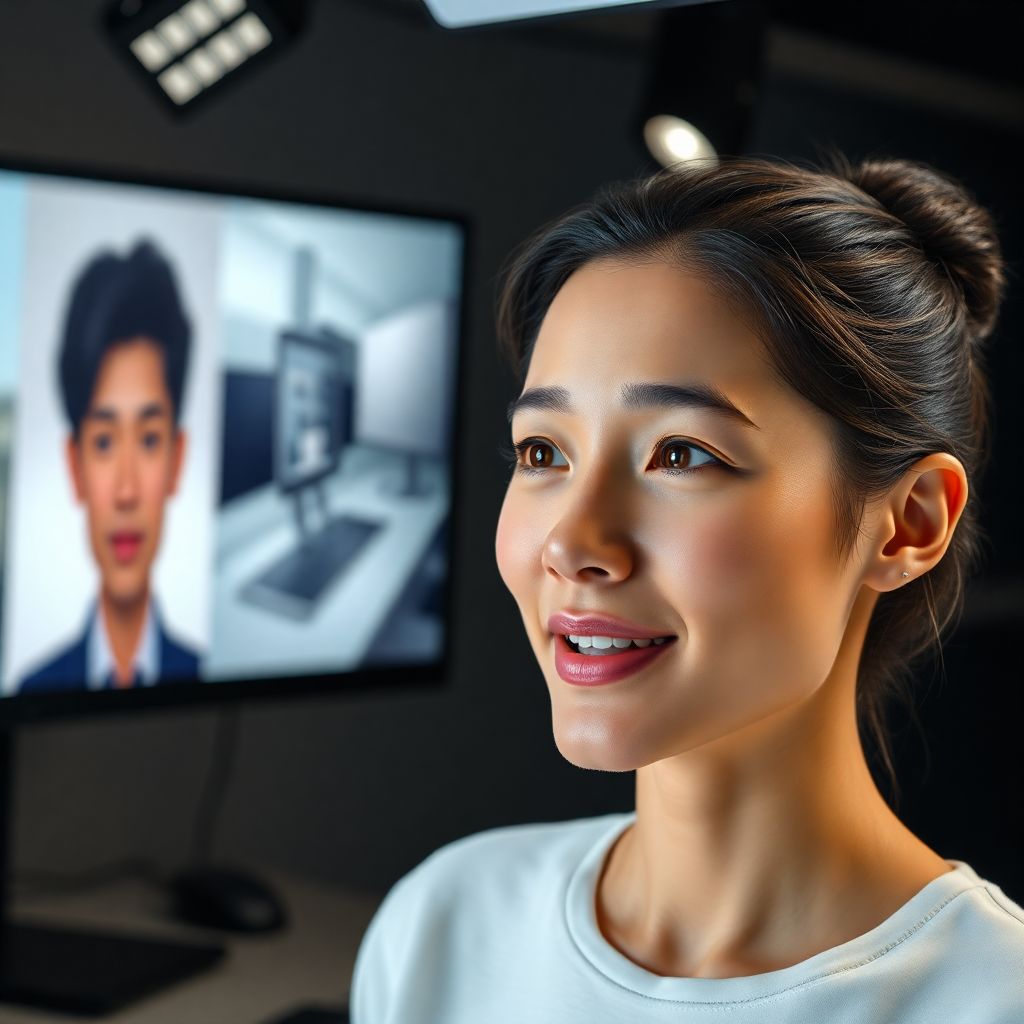
HeyGen Avatar V can now turn a 15‑second video of your face into a lifelike AI avatar that speaks 175 languages and can front‑end virtually unlimited videos – without a studio, camera crew, or special gear.
Announced on April 8 and quickly going viral, the new model builds a highly realistic “digital twin” of your face, voice, and signature gestures from a single short recording. Once that identity is captured, you can generate as many clips as you want, in as many styles as you like, all from text prompts.
What makes Avatar V different from earlier AI avatars
Most previous AI avatar tools were impressive in short bursts but struggled over longer videos. They often looked good in a demo or a 5‑second clip, then started to “drift”: the face gradually stopped looking like the real person, expressions became generic, and the character lost its resemblance by the end of the recording.
Avatar V was built specifically to fix that problem. HeyGen’s core metric is not “good for AI,” but simply “good enough that you’d put your name on it.” In practice, that means:
– The same recognizable face from the first frame to the last
– Consistent micro‑expressions and eye movements
– Stable identity across wide shots, medium shots, and close‑ups
– No obvious warping, morphing, or drifting over longer runtimes
Whether you’re generating a 30‑second social clip or a 10‑minute training module, the system is designed to keep your likeness stable the entire way through.
How the 15‑second scan actually works
Avatar V is trained on what HeyGen calls a “temporally grounded identity embedding.” That’s a technical way of saying the model doesn’t just grab static features like your nose or jawline; it learns how your face moves over time.
From that single 15‑second webcam or phone recording, the model captures:
– Your characteristic gestures
– The way your expressions transition (for example, how you move from neutral to smiling)
– The rhythm and dynamics of your face when you talk
This is what makes the avatar recognizably you in different scenes, angles, and contexts. The clip does not need professional lighting or a studio environment – a normal webcam or smartphone camera is enough.
HeyGen encourages users to be animated and expressive during this capture. The idea is simple: the more energy and variety you show in those 15 seconds, the richer the motion library the AI can learn from, and the more natural and engaging your avatar looks in the generated videos.
Separating how you move from how you look
One of the key design principles of Avatar V is disentangling identity from appearance.
– The 15‑second video defines your motion identity: how your face and head move, how you express emotions, how you gesture.
– A separate base photo defines your visual identity: lighting, outfit, hairstyle, camera angle, and overall aesthetic.
Because these two layers are separated, you can change your appearance at will while preserving your signature movements. That means:
– Swapping outfits, backgrounds, and lighting styles without losing “you”
– Creating different visual personas (formal, casual, futuristic, cinematic) based on the same underlying motion profile
– Maintaining continuity across a whole library of content, even as the visual style evolves
This separation is one of the main reasons Avatar V can scale to large content catalogs without each video feeling like it was made by a different person.
The basic workflow: from 15 seconds to full productions
In practice, the process is designed to be simple:
1. Record a 15‑second video
Use your webcam or phone. Face the camera, speak naturally, move your head and facial muscles, and be as expressive as possible.
2. Optionally clone your voice
You can record a dedicated voice sample so your avatar speaks with your own tone and accent. If you prefer, you can also use a synthetic or professional voiceover instead.
3. Choose a base photo
This image becomes the reference look for your avatar. It can be a clean headshot or a styled portrait, depending on the mood you want.
4. Generate scenes via prompts or templates
– Describe the outfit, setting, and camera style you want.
– Or pick from a library of presets for business explainers, social shorts, training modules, and more.
5. Render in any of 175 languages
Type or paste your script, select a target language, and Avatar V automatically adjusts lip movements to match the new audio. The system handles lip‑syncing, timing, and facial articulation.
The result is a studio‑quality clip with your digital twin delivering the message in the language and style you chose – created without cameras, lighting, or live recording.
What you can build with Avatar V
Because the avatar can be reused indefinitely, the range of potential applications is wide:
– Corporate training and onboarding
HR teams can create an entire library of training videos fronted by the same recognizable company representative. Updates to policies or processes become a matter of generating new scripts, not scheduling new shoots.
– Marketing and sales content at scale
Sales leaders can localize pitches into dozens of languages with the same person presenting, ensuring brand and message consistency across regions.
– Personal branding and creator content
Influencers, educators, and solo entrepreneurs can maintain a constant presence on video platforms, even when they don’t have time to record every day. The avatar can deliver tutorials, commentary, and product announcements on demand.
– Customer support and FAQ videos
Instead of static help articles, companies can deploy a human‑like guide who explains processes or answers common questions in clear, friendly video format.
– Localized campaigns for global audiences
A single master script can be turned into dozens of language variants, each one lip‑synced and voiced naturally for the target market.
For any use case where a human presence on camera drives trust and engagement, but time and budget limit live recording, a reusable avatar is a powerful shortcut.
Why this matters for content creation at scale
Avatar V is part of a broader trend in AI: collapsing the cost and friction of producing professional video.
Traditionally, scaling video output meant:
– Booking studios or building in‑house sets
– Hiring camera operators, editors, and sometimes on‑screen talent
– Coordinating availability, travel, and retakes
– Re‑shooting for every new version, language, or update
With Avatar V, the fixed cost is the initial 15‑second capture and setup. After that, your marginal cost per new video approaches zero compared to traditional production. That has several knock‑on effects:
– More experimentation – Marketers can A/B test dozens of versions of a script or hook without scheduling another shoot.
– Faster iteration – Legal, product, or policy changes can be reflected in updated videos within hours, not weeks.
– Consistent branding – The same face, tone, and style can appear across hundreds of assets, building familiarity and trust.
– Deeper localization – Instead of subtitles or dubbed voiceovers, local audiences see “you” speaking their language directly.
This dynamic is already influencing how large organizations plan for the future. AI systems that compress production time and cost are starting to show up in headcount models and tooling decisions for 2026 and beyond.
How enterprise and investors are reading the shift
Tools like Avatar V are not just creator toys; they are reshaping how businesses think about media, staffing, and infrastructure.
– Enterprises are re‑evaluating the balance between in‑house studios and AI‑powered content workflows. If a single subject‑matter expert can “record once and appear everywhere,” internal video teams might move from capture toward scripting, QA, and brand oversight.
– Investors are watching the proliferation of content‑automation tools as a key input when estimating the durability of AI infrastructure spending. The more organizations rely on high‑volume AI video, the stronger the case for long‑term demand in compute, storage, and supporting platforms.
In other words, Avatar V is both a product and a signal: it shows how fast the boundary between human‑shot and AI‑generated professional content is blurring.
Practical tips to get the best results
For users planning to adopt Avatar V, a few practical guidelines can significantly improve output:
1. Take the 15 seconds seriously
Treat the capture like a mini shoot. Ensure your face is well lit, avoid heavy shadows, and keep the camera stable. Look into the lens, speak naturally, and cycle through a few expressions – neutral, smiling, surprised, thoughtful.
2. Use a clean, high‑quality base photo
Choose an image with clear facial details and minimal noise. If you know the primary use case (corporate, casual, educational), style the photo accordingly.
3. Match scripts to your natural style
The avatar will look most authentic when the tone of the script matches how you would actually speak. Overly stiff or robotic writing can make even a strong avatar feel less convincing.
4. Iterate on visual styles
Don’t settle for the first output. Test different outfits, camera frames, and background environments until you find a consistent visual identity that feels right for your brand.
5. Plan for versioning and localization from day one
Structure your scripts so they can be easily updated or translated. Avoid culture‑specific idioms if you know you’ll be localizing widely.
Limitations and ethical considerations
While Avatar V dramatically improves realism and stability, it also amplifies important questions:
– Authenticity and disclosure
Audiences may not always realize they are watching an AI‑generated version of a real human. Many organizations are beginning to add disclaimers or policies about when and how avatars are used.
– Security and consent
Lifelike clones raise obvious concerns about misuse. Responsible deployment means clear consent procedures, strict control over who can generate content using a given avatar, and internal policies about what scripts are acceptable.
– Misinformation and deepfakes
The same techniques that power legitimate marketing and training content could be abused to impersonate individuals. Technical safeguards, watermarking, and legal frameworks will need to evolve alongside these systems.
Users adopting Avatar V at scale should think not only about efficiency but also about building trust and transparency with their viewers.
Where Avatar V fits into HeyGen’s ecosystem
Avatar V is now fully integrated into HeyGen’s paid offerings. Subscribers get access not only to the avatar engine itself, but also to:
– Ready‑made templates for common video formats
– Translation and localization tools for multi‑language output
– Studio‑style controls for layout, pacing, and composition
That combination of reusable avatars, templated workflows, and built‑in translation is what turns a clever AI demo into a production system capable of supporting ongoing content pipelines.
The broader AI and crypto context
The rise of tools like Avatar V is happening in parallel with other shifts in AI and digital infrastructure:
– AI‑driven content automation is one of the factors influencing enterprise hiring plans, with some roles moving from production to orchestration and oversight.
– Institutional players in digital assets and infrastructure are tracking AI workloads – including video generation – as part of their long‑term theses about where compute and storage demand will come from.
– In parallel fields like healthcare and AI agents, large investments and enterprise deployments are reinforcing the idea that AI will increasingly mediate how information is created, delivered, and consumed.
Avatar V sits at the intersection of these trends: a concrete example of how fast AI can transform a previously expensive, specialist task into something anyone can run from a laptop.
What this means for the future of video
If 15 seconds in front of a webcam is enough to create a reusable, photorealistic presenter, several consequences follow:
– Video becomes as editable and iterable as text.
– The distinction between “recording” and “generating” blurs for most business content.
– Human presence on screen is no longer a bottleneck – it becomes a design choice.
For creators, companies, and institutions, that opens the door to a new way of thinking about communication: less tied to physical production constraints, more focused on message, strategy, and ethics.
HeyGen’s Avatar V is one of the clearest signals yet that this shift is no longer theoretical. It’s here, it’s productized, and it’s already being used to build large‑scale video libraries that would have been impossible – or impossibly expensive – just a few years ago.