
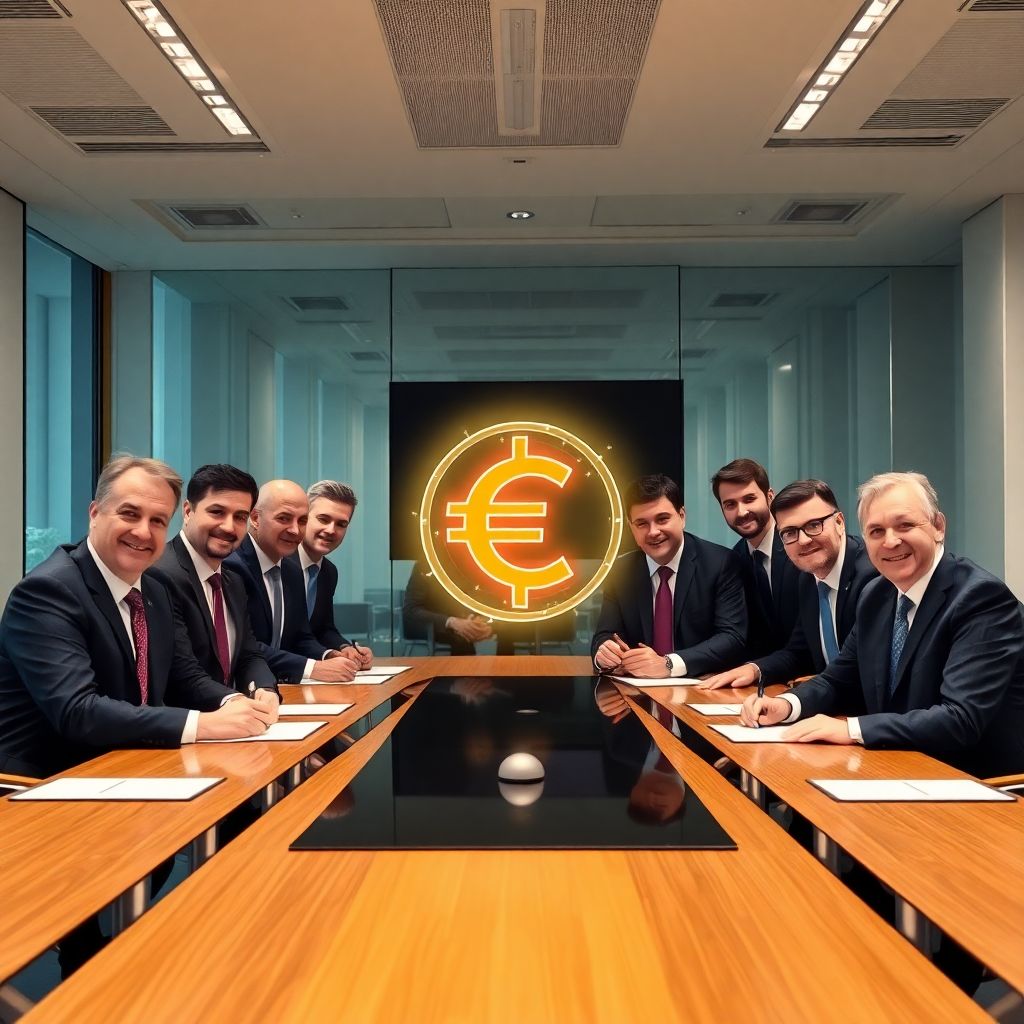
European banks select Fireblocks to power regulated euro stablecoin initiative
Twelve major European banks have teamed up to develop a fully regulated euro‑denominated stablecoin and have appointed Fireblocks as the core technology provider for the project. The initiative, coordinated by Qivalis, aims to bring a MiCA‑compliant digital euro token to market in the second half of 2026, subject to regulatory approval by De Nederlandsche Bank under the EU’s Markets in Crypto‑Assets framework.
According to Qivalis, the forthcoming token will be structured as electronic money and backed one‑to‑one with reserves held in euros. The product will fall under Dutch supervision, placing it squarely within Europe’s new regulatory perimeter for digital assets. Among the participants are banking groups supported by institutions such as BBVA, BNP Paribas, ING, and UniCredit, underscoring the project’s institutional weight and its focus on mainstream financial use rather than retail speculation.
Fireblocks has been tasked with delivering the backbone infrastructure for the stablecoin ecosystem. Its platform will power tokenization, institutional‑grade wallet infrastructure, and end‑to‑end lifecycle management of the euro token, from issuance and redemption to transfers and treasury functions. Fireblocks will also embed compliance tooling, including know‑your‑customer checks, identity verification, and sanctions screening, which are now mandatory components for any MiCA‑aligned digital asset product operating in the European market.
A Fireblocks representative described the initiative as the creation of a “regulated euro‑native settlement instrument” intended for use by European financial institutions. The technology stack is being architected to handle issuance, secure custody, treasury operations, and payment orchestration across a variety of banking workflows. That includes internal settlement, interbank transfers, and integration with tokenized securities and other on‑chain assets.
The euro stablecoin is designed primarily for institutional applications rather than direct consumer use. Core use cases include wholesale settlement between banks, corporate treasury management, collateral management, and servicing tokenized financial instruments. With this product, participating banks aim to provide a robust euro‑based digital payment instrument that can be deployed across multiple lines of business without defaulting to dollar‑pegged alternatives.
This move reflects a broader strategic push in Europe to build indigenous digital settlement rails and reduce reliance on foreign‑currency stablecoins. While dollar‑backed tokens currently dominate crypto payments and settlements, European banks and corporates are increasingly searching for euro‑native solutions that align with local regulation and monetary policy priorities. A bank‑supported, fully regulated stablecoin fits directly into this agenda.
Current market data illustrates the imbalance: the global stablecoin sector is estimated at around 320 billion dollars in value, and roughly 99% of that supply is linked to the US dollar. Euro‑denominated stablecoins account for only a marginal share of circulation. This disparity has been a key driver pushing European institutions to support locally issued, strictly regulated euro tokens under the MiCA framework, rather than continuing to rely on offshore or loosely regulated offerings.
Regulators and policymakers in Europe have repeatedly expressed unease about the growing presence of foreign‑currency stablecoins within the region’s financial system. Concerns include monetary sovereignty, potential disruptions to the transmission of eurozone monetary policy, and the risk that certain stablecoins may not function like money in practice. International bodies have also highlighted that some dollar‑based tokens, because they hold large portfolios of short‑term securities, can resemble investment instruments more than cash equivalents.
The Bank for International Settlements has reiterated that stablecoins with significant exposure to short‑term debt and other marketable assets may be vulnerable to liquidity stress, creating run risks similar to money market funds. This perspective has strengthened the argument for tightly regulated, fully backed stablecoins that follow strict rules on reserve composition, disclosure, and redemption rights – exactly the type of structure that MiCA attempts to formalize for the European Union.
Within the euro area itself, central bank officials have signaled that they want clearer boundaries around the role of non‑euro stablecoins in everyday payments. Earlier this month, Denis Beau, first deputy governor of the Bank of France, urged the European Union to curtail the widespread use of non‑euro stablecoins for routine transactions. Against this policy backdrop, the Qivalis‑led initiative is positioned as a cornerstone effort to build a domestic, euro‑centric stablecoin market that enjoys direct banking support and operates within a MiCA‑compliant technical and regulatory architecture.
For participating banks, the project is not only about offering a new digital asset, but also about modernizing the plumbing of European finance. A programmable, regulated euro token can streamline settlement between institutions, reduce counterparty and operational risks, and shorten the time and cost involved in cross‑border euro payments inside the bloc. When integrated with existing payment rails and real‑time gross settlement systems, such a stablecoin could function as a high‑efficiency bridge between traditional accounts and on‑chain environments.
The initiative also has strategic implications for the tokenization of real‑world and financial assets. Many banks are exploring how to issue bonds, money‑market instruments, funds, and even trade finance assets on distributed ledgers. A compliant euro stablecoin offers them a native settlement asset on those networks. Instead of using dollar‑based tokens to complete transactions in euro markets, financial institutions can rely on a euro‑pegged instrument that satisfies European supervisors and aligns with local investor protection rules.
From a treasury perspective, corporates and financial institutions could use a regulated euro stablecoin to optimize liquidity management. Treasurers may, for example, park operational balances in tokenized form for just‑in‑time payments, or seamlessly move funds between different platforms, exchanges, or custodians without leaving the regulatory perimeter. The ability to automate cash flows with programmable conditions – such as escrow releases, milestone‑based payments, or real‑time margin calls – becomes considerably more practical when using a trusted, bank‑issued stablecoin.
At the same time, the project will need to solve several operational and adoption challenges. Banks must integrate the new stablecoin into their legacy core banking systems and risk frameworks, ensure robust cybersecurity standards for wallet management, and develop clear procedures for incidents, redemptions, and dispute resolution. Interoperability with other blockchains and financial infrastructures will also be critical if the token is to achieve wide institutional usage rather than remain confined to a handful of pilot projects.
Another open question is how the forthcoming euro stablecoin will coexist with the potential digital euro central bank digital currency (CBDC) being explored by the European Central Bank. While the CBDC is expected to serve as a direct liability of the central bank for retail and possibly wholesale use, bank‑issued stablecoins represent claims on private intermediaries. A likely scenario is a layered ecosystem in which CBDC and regulated stablecoins coexist, with different instruments tailored to different types of users and transaction contexts.
Competition within the euro‑stablecoin segment is also likely to intensify. Several fintech companies and smaller issuers have already launched euro‑backed tokens, though most have not achieved meaningful scale relative to dollar counterparts. A consortium approach backed by large banks, however, can shift that dynamic by leveraging existing client relationships, regulatory credibility, and infrastructure. If the consortium successfully brings the token to market, it could set de facto standards for how institutional euro stablecoins are structured across the region.
For the wider European digital asset industry, the Qivalis‑Fireblocks collaboration is a signal that the market is transitioning from experimentation to industrialization. Instead of isolated pilots and proof‑of‑concepts, banks are beginning to commit to long‑term platforms that can support real volumes and mission‑critical payment workflows. This evolution aligns with MiCA’s goals: bringing clarity, uniform rules, and consumer and investor protections to a sector that previously operated in patchwork legal conditions.
As the project moves toward its proposed launch window in the second half of 2026, attention will focus on how quickly regulatory approvals are obtained, how much of the banking sector ultimately participates, and which concrete use cases go live first. Early adoption is likely to be strongest in areas where time‑critical settlement brings clear economic benefits, such as wholesale payments, tokenized securities issuance, and cross‑border corporate flows within the eurozone.
If the initiative succeeds, it could mark a turning point in Europe’s approach to digital money: from being largely a user of foreign‑currency stablecoins to becoming an active issuer of its own regulated, large‑scale euro tokens. That, in turn, could reshape the balance of power in global digital payments and offer European institutions a credible alternative to the overwhelming dominance of dollar‑linked stablecoins in today’s crypto and tokenized asset markets.