
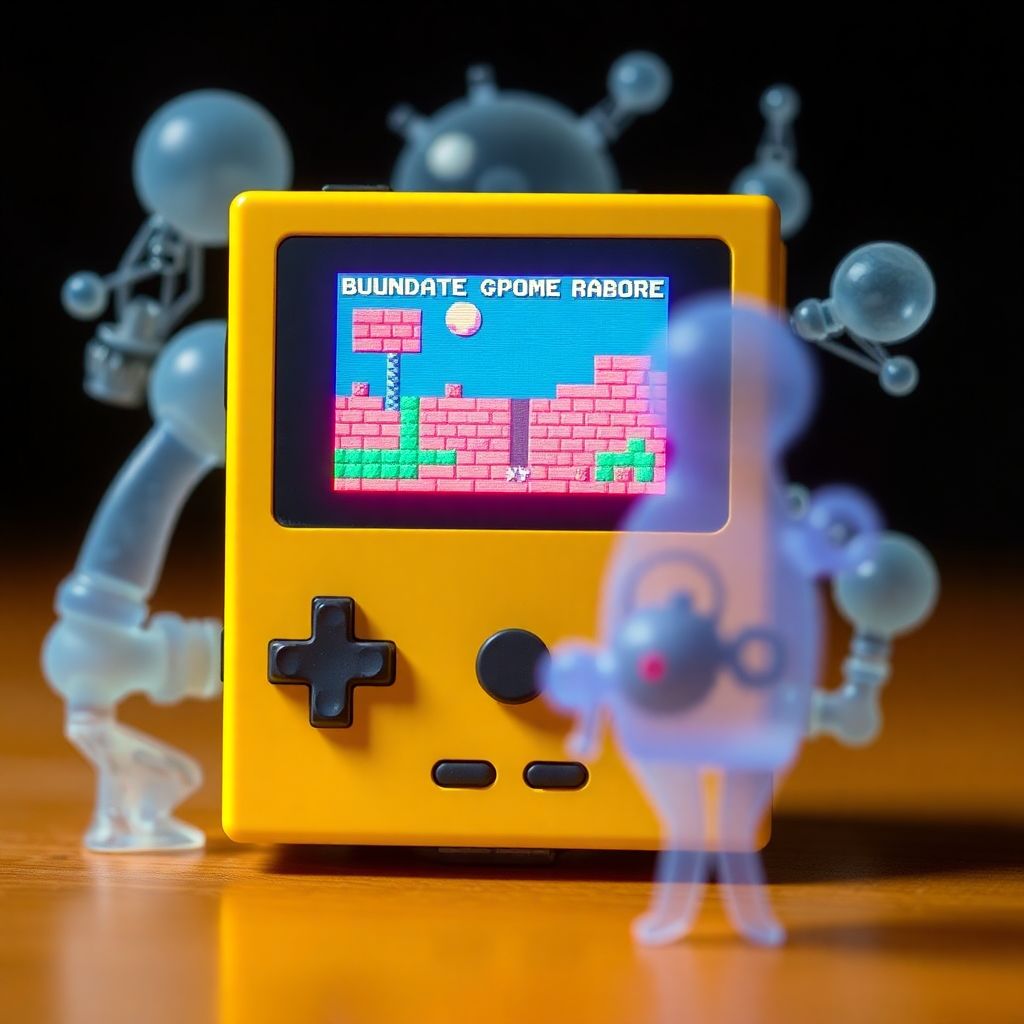
Playdate handheld creator Panic is drawing a hard line between “creative” and “technical” uses of artificial intelligence, formally banning generative AI content from games sold through its official storefront while still allowing AI-assisted programming tools.
The company has updated the terms for its Playdate Catalog-the official digital store for the tiny crank-equipped handheld-to state that third‑party submissions may not include AI-generated art, music, or writing. In other words, visuals, audio, story text, dialogue, and other expressive elements must be created by humans if a developer wants their game to appear in the Catalog.
At the same time, Panic is not outlawing AI entirely. Developers can still use AI-powered coding assistants when writing their game logic, provided they clearly disclose that fact. The firm is trying to separate AI as a behind‑the‑scenes productivity aid from AI as a replacement for the actual creative work that defines a game’s personality and aesthetic.
According to co‑founder Cabel Sasser, the disclosure requirement for AI use is not new-Playdate Catalog has long asked developers to say whether AI was involved in their projects. The new shift is that generative AI is now outright banned for any creative content within games going forward. The message is clear: code helpers are acceptable; AI-made art, soundtracks, or narrative are not.
This policy positions Panic as one of the most stringent hardware makers on the issue of generative AI. While many platforms are still figuring out how to label or moderate AI-driven content, Playdate is opting for a simpler, more conservative approach: if a customer buys a game through the official store, they can assume that the characters, illustrations, and audio tracks weren’t conjured up by a machine.
The move also reflects the particular culture surrounding Playdate. The handheld has become known for quirky, handmade-feeling games, often produced by small teams or solo developers. Panic appears to be protecting that identity, arguing implicitly that Playdate’s charm comes from work that is clearly authored, not aggregated from large AI training sets that may include unlicensed or unattributed source material.
For creators, the practical impact is twofold. First, teams that lean heavily on text‑to‑image tools for sprites, backgrounds, or promotional art will need to rethink their pipelines if they want distribution in the Catalog. Second, programmers using tools like code-completion assistants can continue to do so-but they must treat this like a material disclosure, the same way a studio might note use of a particular engine or middleware in its credits or submission notes.
This kind of policy inevitably raises questions about enforcement. Panic will likely rely on developer honesty as a first line of defense, backed by manual review and basic scrutiny if a game’s assets strongly resemble known AI styles or prompt‑generated artifacts. While no system is foolproof, the clear written rule gives Panic the authority to reject or remove titles that violate the ban if credible concerns emerge later.
The ban also intersects with ongoing legal uncertainty around AI training and copyright. Many artists object to their work being ingested into AI models without consent or compensation, and some lawsuits are still working their way through the courts. By excluding AI art, music, and writing, Panic avoids having to mediate those disputes on its platform and reduces the risk that Playdate Catalog becomes a vector for infringing content, accidental or otherwise.
From a player’s perspective, this stance can be read as a quality and trust signal. People who buy a Playdate are often seeking something deliberate and personal, rather than mass‑produced content. Knowing that games in the official store have been crafted by human artists and writers may enhance the perceived value of each title and reinforce the notion that Playdate is a home for unique, auteur‑driven experiences.
At the same time, Panic’s allowance for AI coding tools acknowledges the realities of modern development. Small teams are under heavy time and resource pressure, and AI can help with boilerplate code, refactoring, or debugging. By permitting these tools while drawing a firm boundary around the expressive layer of a game, Panic is trying to support productivity without diluting the human voice that players actually see and hear.
For indie developers, the policy might influence how they scope their projects. Teams that previously depended on AI for rapid asset creation will likely have to scale back visual ambition or collaborate with human artists and composers. That could slow production in the short term but may also open the door to more distinctive visual and audio identities, instead of the increasingly familiar “AI look” many players can spot.
There is also a branding angle. As AI-generated content becomes ubiquitous online, some platforms are starting to differentiate themselves by emphasizing human-made work. Playdate, with its deliberately low‑power hardware and focus on creativity over spectacle, is a natural fit for a “human-first” stance. The anti‑AI‑art rule strengthens that positioning: the console isn’t just minimalist in hardware specs, it’s also curated in how games are made.
Looking ahead, Panic will likely face edge cases: what about tools that lightly assist artists, such as AI-based upscaling, noise reduction, or color correction? What if a composer uses a machine-learning plugin in a digital audio workstation? The current language focuses on prohibiting “AI-generated” art, music, and writing, which suggests a primary-creation ban rather than a blanket rejection of any tool with machine-learning under the hood. How Panic interprets this in practice will matter for developers using modern creative software that increasingly incorporates AI features by default.
The decision may also influence how other niche hardware makers and curated storefronts respond to AI. If Playdate’s catalog maintains a strong reputation for originality and artistry, it could encourage similar platforms to adopt comparable restrictions, especially in spaces where community identity and creator relationships matter more than sheer content volume.
For now, the line is straightforward: on Playdate’s official store, all visible and audible creative work must be human-made, while AI can quietly assist in the background with code-as long as developers are upfront about using it. In an industry racing to automate more and more of production, Panic is betting that there is enduring value in knowing that a real person drew the pixels, wrote the jokes, and composed the tunes that bring a tiny yellow handheld to life.