
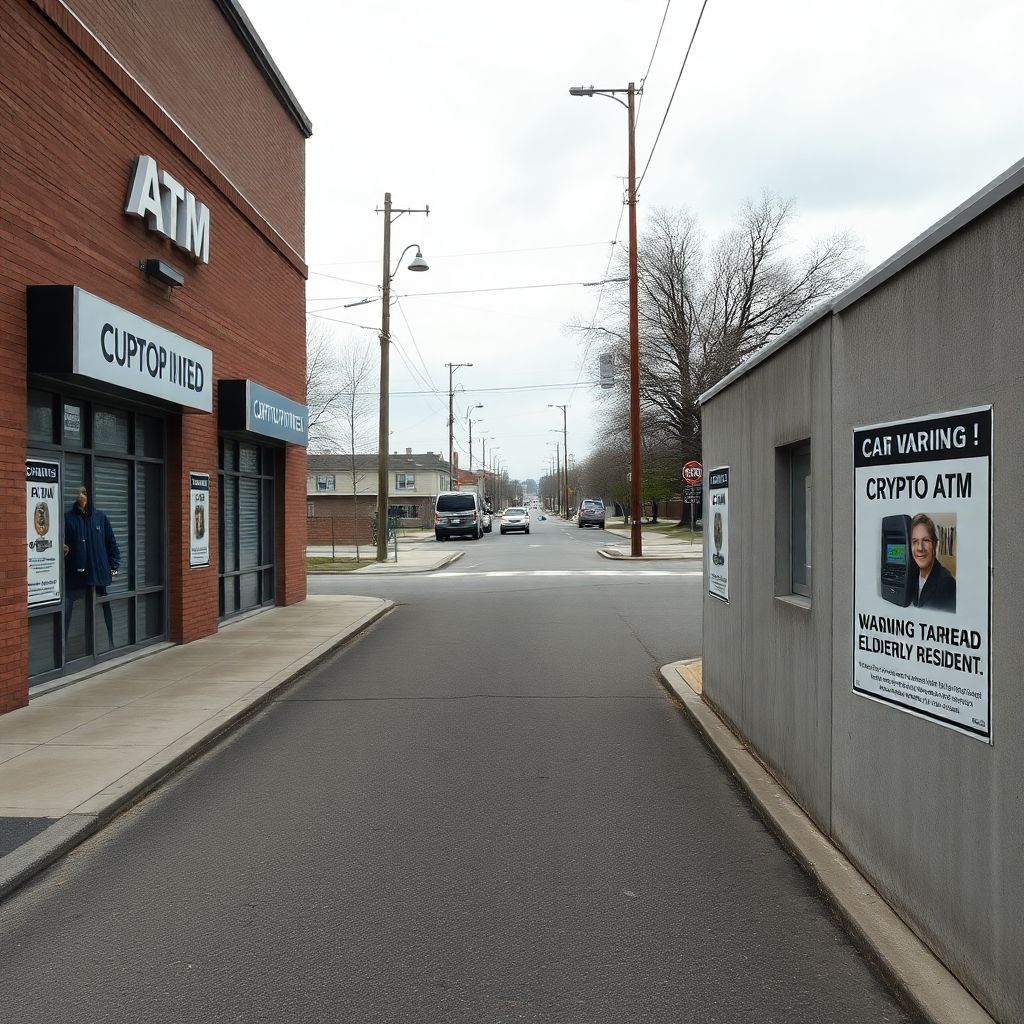
Tennessee becomes the second U.S. state to impose a full ban on Bitcoin and other crypto ATMs, turning the simple act of owning or operating such a kiosk into a criminal offense. State lawmakers say the move targets a growing wave of fraud, particularly schemes aimed at elderly residents who are often pressured to feed cash into these machines on the instruction of scammers.
Under House Bill 2505, any kiosk that lets customers buy Bitcoin or other digital assets with cash must be shut down in Tennessee by July 1. Governor Bill Lee signed the bill into law on April 13, completing a rapid legislative push that began earlier this year. After that deadline, continuing to run or possess one of these ATMs in the state won’t just be a regulatory violation – it will be a crime.
The measure was co-sponsored by Republican representatives Cameron Sexton and Jay Reedy. In a statement in March, Sexton argued that crypto kiosks have effectively become an open door for fraudsters, claiming they are now a “gateway” used to take advantage of residents, and especially seniors. His core argument: scammers exploit the anonymity and irreversibility of cryptocurrency transfers, making these machines an ideal tool to move money out of victims’ hands and into the criminal ecosystem.
According to Sexton, people who are tricked into using Bitcoin ATMs to move funds to swindlers rarely have any realistic chance of getting their money back. Unlike traditional bank transfers or credit card payments, which can sometimes be reversed or disputed, cryptocurrency payments are designed to be final. Once the coins are sent, there is almost never a path to recovery. That dynamic is a central justification behind the new law: by removing the kiosks entirely, lawmakers hope to shut down one of the easiest on‑ramps scammers currently use.
The ban applies broadly to machines that facilitate the purchase of Bitcoin or any other digital asset in exchange for cash. It does not target crypto ownership itself, nor does it outlaw online exchanges or peer‑to‑peer trading platforms. Instead, the law specifically zeroes in on the cash‑to‑crypto kiosks often found in convenience stores, gas stations, and small retail outlets across the state, arguing that these locations give criminals direct access to unsophisticated users with minimal oversight.
Tennessee’s move follows similar action by one other U.S. state, making it only the second in the country to outlaw these kiosks outright. While various states have tightened regulations around crypto ATMs – for instance, by imposing licensing requirements, transaction limits, or strict identity checks – a full criminal ban remains rare. Supporters of Tennessee’s approach say anything less has failed to curb the most abusive practices.
Operators now face a short runway to comply. Companies that run the machines must either decommission them, relocate them out of state, or risk criminal prosecution after July 1. That means removing hardware, canceling agreements with host businesses, and unwinding contracts with service providers. For small operators who built their business around these kiosks, the law could amount to a forced shutdown, with limited time to pivot.
Consumer advocates focused on elder fraud are likely to welcome the law. Many of the most common scams – fake tech support calls, phony law enforcement threats, romance schemes, or “grandparent” scams – increasingly end with the victim being told to pay using Bitcoin or another cryptocurrency at a nearby ATM. Because the machine converts cash instantly and requires minimal explanation from store staff, scammers can walk victims through the process step‑by‑step over the phone, often within minutes.
The crypto industry’s reaction, however, is more complex. On one hand, legitimate ATM operators argue that kiosks can be run with robust compliance controls, including identity verification and transaction monitoring, and that banning them entirely punishes law‑abiding businesses alongside criminals. On the other hand, even some within the industry acknowledge that the current patchwork of oversight has left room for bad actors who deliberately target populations with low financial and digital literacy.
Critics of the Tennessee law warn that an outright prohibition may not eradicate fraud so much as push it into other channels. Scammers can still direct victims to online exchanges, peer‑to‑peer transfers, or gift cards and money orders – all established methods of extracting funds. They argue that a more balanced solution might have combined tighter regulation, mandatory educational warnings on kiosks, transaction caps, and real‑time fraud alerts, rather than a blanket ban.
Yet from a lawmaker’s perspective, targeting ATMs is attractive precisely because they are a visible, controllable choke point. Unlike online platforms that can operate from anywhere in the world, physical kiosks must exist within state borders, often in easily identifiable retail locations. That makes them a convenient focus for a state‑level crackdown, even if they are only one piece of a much larger fraud landscape.
The Tennessee decision also hints at a broader policy debate that is far from settled: how to balance innovation in digital finance with basic consumer protection. Supporters of the ban frame it as common‑sense risk management, pointing out that the average user does not fully understand how cryptocurrencies work, let alone the permanence of on‑chain transactions. Industry advocates, meanwhile, worry that such laws send a chilling signal to entrepreneurs and could deter future investment in financial technology in the region.
In the coming months, other states will be watching how the Tennessee ban plays out. If reports of crypto‑ATM‑related scams fall significantly, policymakers elsewhere may feel emboldened to copy the model. If fraud simply migrates to other payment channels, critics will argue that lawmakers attacked a symptom rather than the underlying causes: lack of digital literacy, weak enforcement against scammers, and the global, borderless nature of online crime.
For Tennessee residents, the most immediate impact will be practical. Those accustomed to using Bitcoin ATMs for legitimate purposes – such as buying small amounts of crypto with cash or sending funds to family abroad – will have to seek alternatives. That could mean opening accounts with regulated online exchanges, using bank transfers instead of cash, or relying on peer‑to‑peer platforms that typically involve a higher learning curve.
Looking ahead, the core tension is unlikely to disappear. As digital assets continue to evolve and become more integrated into everyday financial life, states will be forced to refine their approach repeatedly. Tennessee’s decision to criminalize the ownership and operation of crypto ATMs marks a decisive, hard‑line stance: when in doubt, remove the tool that criminals are actively abusing, even if some legitimate users are swept up in the process.
Whether that approach ultimately proves effective – and whether it spreads – will help shape the next phase of cryptocurrency regulation in the United States. For now, Tennessee’s message is clear: when it comes to cash‑to‑crypto kiosks, the risk to vulnerable citizens outweighs the benefits, and the machines have no place in the state’s financial landscape.