
Microsoft’s Brad Smith to New Grads: Don’t Fear AI-Learn to Live With It
Brad Smith, vice chair and president of Microsoft, has a blunt message for today’s students: he understands why they’re booing artificial intelligence-but he thinks they can’t afford to stop there.
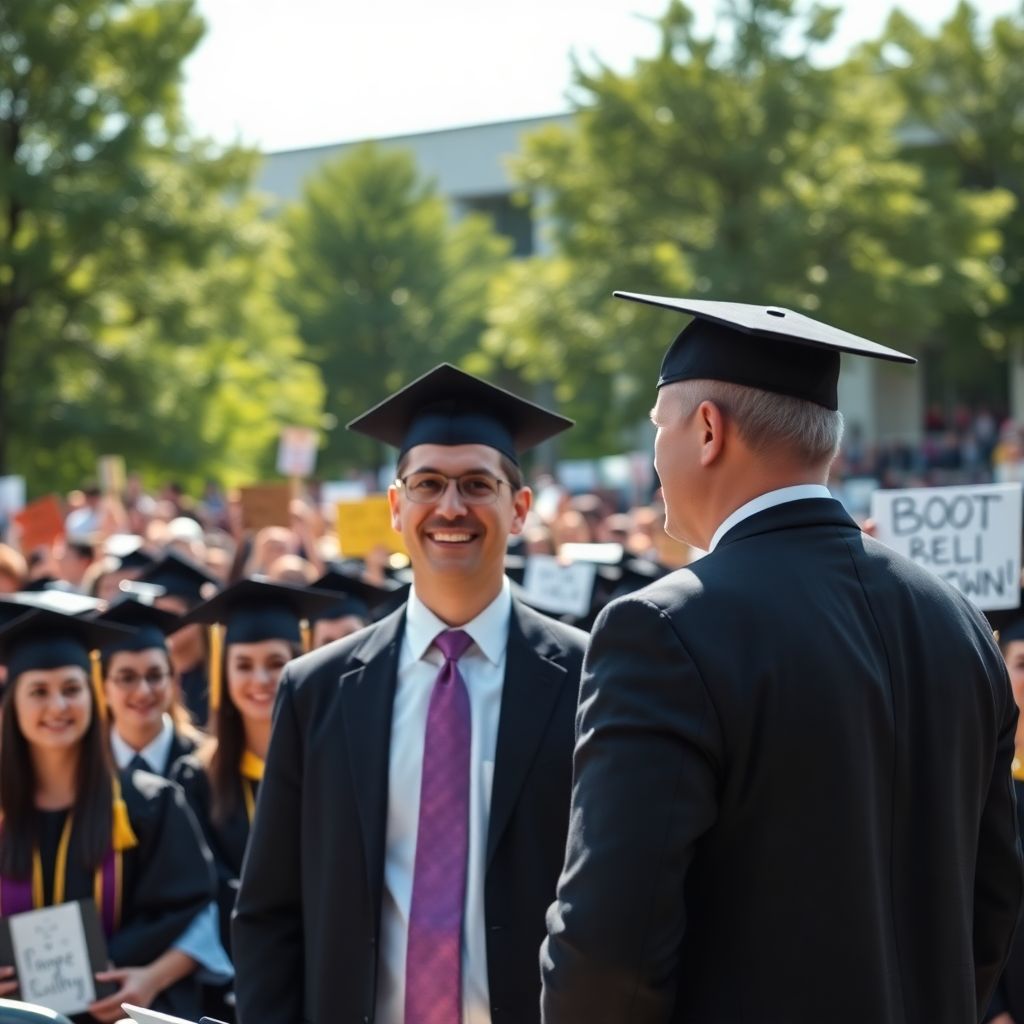
Over the past graduation season in the United States, a strange new ritual emerged. The moment a speaker mentioned AI, sections of the crowd erupted in boos. At the University of Arizona, former Google CEO Eric Schmidt met open hostility as soon as he brought up artificial intelligence. At the University of Central Florida, a real estate executive triggered the same reaction. Different campuses, different speakers, same response: today’s graduates are tired of being told that AI is their future when it already feels like a threat.
Smith says he heard that message clearly. After returning from reunion events at Princeton, he sat down and wrote a roughly 3,000-word essay aimed directly at the class of 2026 and their peers. The piece opens with a look back to 1838-when new technologies were also provoking fear and resistance-and ends with an appeal for students to channel their frustration into shaping how AI is used, instead of trying to wish it away.
A Wake‑Up Call for the Tech Industry
Smith doesn’t dismiss the boos as immaturity or ignorance. He treats them as a warning sign. In his view, this wave of public rejection is a “wake-up call” for the tech sector: people who are about to enter the workforce are already skeptical that AI will make their lives better.
That skepticism is hardly irrational. The same week Smith published his essay urging empathy for graduates, Microsoft’s own chief financial officer confirmed that the company’s headcount would continue to shrink. In other words, while executives talk about AI as an opportunity, many young people mainly see hiring freezes, reorganizations, and job cuts.
This tension-between the promise of AI and the immediate human cost of technological change-is exactly what Smith is trying to address. He argues that tech leaders must stop talking about AI only in terms of innovation and efficiency and start talking honestly about disruption, dislocation, and the need for guardrails.
Why Graduates Are Booing AI
For many students, AI is not an abstract idea or a distant risk. It is something they’ve already been forced to confront on multiple fronts:
– Academic integrity software scanning their work.
– Generative AI tools that can produce essays in seconds, triggering stricter rules, suspicion, and constant monitoring.
– Anxious headlines warning that white-collar jobs-from coders to copywriters-might be automated away.
– Corporate announcements that frame layoffs as “efficiency gains” made possible by AI.
In that context, commencement speeches that cheerfully celebrate AI as the next big thing can sound tone-deaf. Graduates hear, “This technology may replace some of you, but overall it’s exciting. Good luck.” The boos are, in part, a demand for honesty: if AI is going to change everything, then speakers should acknowledge both the risks and the responsibilities.
Smith’s essay tries to do that. He doesn’t claim AI is harmless, and he doesn’t tell students to “get over it.” Instead, he suggests that fear alone is not a strategy. The generations entering the workforce now will live with AI for their entire careers; whether they like it or not, they’ll need to understand it well enough to use it, critique it, and, when necessary, fight it.
From Fear to Adaptation
The core of Smith’s message is that every major technological shift has provoked anxiety. In 1838-his chosen starting point-new machines were transforming agriculture and industry, threatening livelihoods and established skills. Each wave of innovation brought upheaval, but it also created new roles, new industries, and new problems that needed to be solved.
Smith’s argument is not that “everything always works out.” It’s that societies which adapt-through education, regulation, and cultural change-tend to capture the benefits of new tools while limiting the harm. Those that cling to the status quo often fall behind economically and politically.
For graduates, “adapting” does not simply mean learning to use AI software. It means understanding:
– How AI systems are trained and where their data comes from
– What biases and blind spots those systems may have
– How to question AI‑generated outputs instead of blindly trusting them
– When to push back on employers or institutions that deploy AI irresponsibly
Smith urges students to seek out technology that gives them a sense of purpose, not just convenience. In his view, AI should be a tool that amplifies human abilities, not a replacement for human judgment and empathy.
The Awkward Optics: Empathy Amid Layoffs
The timing of Smith’s essay makes his call for empathy particularly complicated. As Microsoft invests aggressively in AI infrastructure and partnerships, it is also trimming staff in certain areas. This mirrors a broader pattern across the tech industry, where companies argue that automation and AI make them “leaner” and “more efficient.”
To a graduating senior facing a tough job market, this feels hypocritical: executives talk about AI as a way to “empower people,” yet workers see hiring slowdowns and reorganizations justified by the same technology. Smith attempts to bridge that divide by acknowledging the unease instead of brushing it aside.
His position, however, reflects a hard reality: large companies are not going to stop deploying AI. The debate is not about whether AI will be used, but how-and who gets a voice in setting the rules. Smith is effectively telling graduates that if they stay outside that conversation, others will define the future of work for them.
What “Adapting to AI” Could Look Like for New Graduates
For students and recent graduates, adapting to AI doesn’t mean surrendering to it. It means developing a strategic relationship with the technology. In practice, that could involve:
– Skill stacking: Combining AI literacy with a domain specialty-law, design, medicine, education, finance, public policy-so you understand both the tools and the context in which they’re used.
– Critical use of AI tools: Treating AI as a collaborator or assistant, not an oracle. Checking its outputs, understanding its limits, and using it to speed up tedious tasks rather than outsource your thinking.
– Ethical fluency: Learning the basics of data privacy, algorithmic bias, discrimination, and transparency so you can spot when AI systems are deployed in harmful or unfair ways.
– Advocacy inside organizations: As you build a career, pushing for responsible AI policies where you work-on issues like data use, consent, auditing, and human oversight.
Smith’s essay hints at this kind of active engagement. He wants graduates not just to “adapt,” but to help steer AI toward uses that align with their values and ambitions.
The Role of Policy and Regulation
Another important element of Smith’s message is that individuals cannot carry this burden alone. Governments, regulators, and corporations all have roles to play in making AI safer and more accountable. Smith has long argued for clearer rules around issues like facial recognition, data protection, and AI in critical infrastructure.
For graduates, this has a practical implication: careers at the intersection of technology and policy are likely to grow. Lawyers, policy analysts, public administrators, ethicists, and researchers will all be needed to design, enforce, and continuously refine the frameworks that govern AI.
Smith’s appeal to students to “do all they can” is partly a recruitment call for this broader project: shaping a social contract for the AI era, rather than letting technical capability alone determine what is allowed.
Jobs, Purpose, and the Search for Meaning in an Automated World
Perhaps the most striking part of Smith’s essay is his focus on meaning. He doesn’t limit the conversation to productivity or GDP. He writes about the importance of technology that helps people find purpose-a direct contrast to tools that merely optimize costs or maximize engagement.
For graduates, this resonates with a deeper anxiety: the fear that their working lives will be reduced to supervising algorithms, generating prompts, and cleaning up the mistakes of automated systems. Smith challenges that vision. He suggests that AI can free people from repetitive tasks, giving them more time to focus on the human elements of work: creativity, empathy, problem‑solving, and relationship‑building.
Whether that optimistic scenario comes true will depend less on the technology itself and more on how organizations choose to deploy it. Graduates entering the workforce have an opportunity-and, in Smith’s view, a responsibility-to push their future employers toward uses of AI that genuinely improve human well‑being.
Why Tech Leaders Need to Listen, Not Just Lecture
One of the quiet admissions in Smith’s piece is that the tech industry has often spoken at people rather than with them. For years, leaders promoted innovation as an unquestioned good, assuming that resistance was simply a failure to understand the benefits.
The boos at commencement ceremonies break that pattern. They force a different kind of conversation, one where concerns about job security, mental health, surveillance, and inequality are placed alongside enthusiasm for new tools.
Smith’s decision to write directly to the class of 2026 is a nod to that shift. It acknowledges that trust in big tech is fragile, and that rebuilding it will require more than slogans. It will require:
– Transparent communication about what AI can and cannot do
– Clear commitments about how it will be used in workplaces and public services
– Mechanisms for people to challenge and appeal AI‑driven decisions
– A willingness to slow down or stop deployments when harms become clear
A Generation That Refuses to Be Passive
Today’s graduates have grown up with constant change: smartphones, social media, streaming, remote learning, and now generative AI. Unlike earlier generations, they are less inclined to treat technology as neutral or inevitable. They ask sharper questions about who benefits and who pays the cost.
Smith appears to recognize that this skepticism is not a flaw-it is an asset. A generation that refuses to be passive consumers of technology is exactly the kind of generation that could push AI in a more humane direction.
His closing plea-that students “do all they can” to move forward with AI rather than simply pushing it away-is really an invitation to channel that skepticism into action. To learn enough about AI to critique it intelligently. To build careers that influence how it is designed and deployed. And to insist that the point of technological progress is not just efficiency, but human dignity.
From Booing to Building
The boos that echoed across American campuses this spring may go down as a turning point in the story of artificial intelligence. They signaled that the next wave of workers is not impressed by hype alone. They want proof that AI will make their lives better, not just corporate balance sheets stronger.
Brad Smith’s response does not resolve that tension, and it does not erase the contradictions within his own company. But it does something important: it treats graduates as participants in the AI era, not spectators. It asks them to bring their fear, anger, and hope into the conversation-and to help decide what kind of AI‑driven world they are willing to live in.
In that sense, the distance between booing and building may be shorter than it appears. The same energy that rejects empty promises about AI can fuel a more demanding, more responsible approach to technological change. Smith’s message is that adaptation is unavoidable. The open question is who will have the courage-and the leverage-to shape what we are adapting to.