
Tokenized Pokémon Cards Boom on Crypto Platforms-but Operators Reject ‘Gambling’ Label
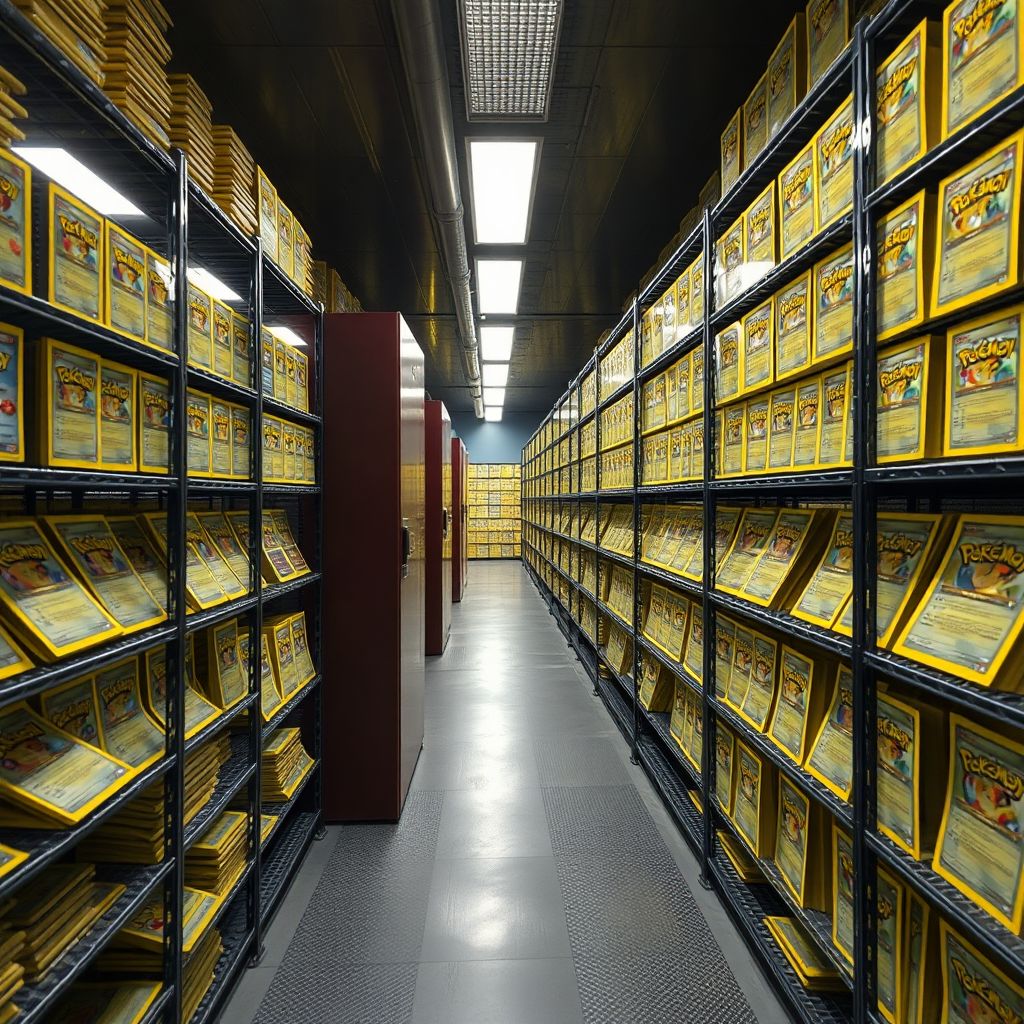
Somewhere in rural Montana, rows of metal shelves stacked with Pokémon cards sit in a climate‑controlled vault, protected by cameras and industrial‑grade locks. The collection never moves, yet it’s traded thousands of times a day: each card, or sealed pack, exists on crypto networks as a tradable token, the backbone of a fast‑growing niche market that blends collectibles, speculation, and game mechanics.
For Collector Crypt CEO Tuom Holmberg, that 28,000‑square‑foot facility is more than a warehouse-it’s the company’s main selling point. Since the startup launched a year and a half ago, he said, the vault has become central to its identity as competitors race to tokenize Pokémon and other trading cards.
“Out of the 30‑odd copycat platforms that popped up after us, probably half are literally storing product in someone’s apartment closet,” Holmberg claimed, arguing that professional‑grade custody is what separates long‑term businesses from opportunistic cash‑grabs.
Pokémon, but on‑chain
The idea is simple: every physical card or sealed box in that Montana facility is linked to a corresponding crypto token. Buying the token gives users a claim on the underlying card, which can be held in the vault, traded instantly with others, or-if they’re willing to pay shipping and verification fees-redeemed and mailed out.
Unlike traditional NFT collections that exist only as images on a blockchain, these assets are effectively warehouse receipts. The promise is twofold: crypto gives global, 24/7 liquidity, while the vault guarantees that the cardboard Pikachu or Charizard actually exists and remains in good condition.
Over the past year, platforms like this have seen volumes spike, driven largely by younger traders who already speculate in coins and meme tokens, and by nostalgic collectors priced out of owning entire vintage sets. Tokenization lets them buy fractional exposure to high‑end cards or gamble-critics would say-on sealed packs without leaving a crypto exchange interface.
The rise of “gacha” mechanics
What really turbocharged interest was the introduction of so‑called gacha‑style products, inspired by Japanese capsule toy machines and mobile games. Instead of buying a specific card, users purchase a mystery “spin,” “box,” or “slot” on‑chain, paying a fixed price in crypto. A random draw then determines whether they receive a common bulk card or a rare, high‑value pull.
For platforms, this structure has obvious benefits: it smooths out inventory management, supports eye‑catching jackpots, and keeps users returning for “one more spin.” For many buyers, the appeal is the same adrenaline rush as ripping a real booster pack-only faster, with animated reveals and on‑screen odds.
The economics are stark. One premium gacha product might bundle $100,000 worth of graded Pokémon cards, then sell 2,000 digital “hits” at $75 apiece. The math guarantees the operator a profit margin, while a handful of lucky spins deliver outsized scores that get promoted across social feeds. The vast majority of players walk away with far less than they paid in.
“Not gambling,” say platforms
This is where the semantics battle begins. To many observers, paying for a random outcome with clearly defined odds, hoping to receive an item worth more than your stake, looks indistinguishable from gambling. But platforms insist their model is different.
They typically point to three lines of defense:
– Buyers always receive something of value-no “empty” outcome.
– The rewards are tangible collectibles, not chips redeemable only on the same site.
– Users can, in theory, redeem cards and use them in the real‑world TCG or resell them elsewhere.
In legal terms, they argue, customers are paying for a physical product delivered via a novel allocation mechanism, not staking money on pure chance in the hope of winning more money. Revenue is described as “product sales,” not wagers.
Holmberg, for his part, prefers to frame Collector Crypt’s gacha‑style offerings as “gamified retail.” In his view, the core business is vaulting and authenticating cards; the on‑chain game layer simply makes collecting more engaging in a digital age.
Regulators see familiar patterns
Regulators, however, tend to look at function over branding. Around the world, authorities have already tangled with loot boxes in video games and “surprise mechanics” that monetize random digital items. The legal question is similar here: when does buying a digital pack cross the line from entertainment into regulated gambling?
In many jurisdictions, three elements typically define gambling: consideration (you pay to play), chance (outcome is random), and prize (you can win something of value). Mystery Pokémon drops on crypto rails can arguably check all three boxes.
What complicates matters is that the “prize” is not cash but a collectible whose resale value depends heavily on speculative markets. A shiny Charizard might be worth hundreds of dollars today and far less in a year. Platforms leverage this volatility in their marketing, highlighting recent high‑ticket pulls as proof that “life‑changing hits” are possible.
Some legal experts suggest that, as volumes grow, regulators may scrutinize these models the same way they now review online casinos and sports‑betting apps-whether or not operators insist they’re just selling cards.
Crypto rails amplify the risk
Running this entire system on crypto infrastructure adds another layer of complexity and risk. Token prices fluctuate, fees can spike, and users typically interact through custodial wallets tied to the platform, making it hard for outsiders to verify how fairly draws are conducted.
To answer that criticism, several operators have started publishing “provably fair” randomness schemes, where each pull is derived from a hash or seed users can audit after the fact. Still, most buyers don’t have the technical background or time to scrutinize such systems, and must trust that the operator isn’t manipulating outcomes behind the scenes.
There’s also the issue of market integrity. Because platforms often control both the primary gacha sale and the secondary marketplace for the resulting tokens, they can, in theory, influence perceived prices by selectively listing or delisting items, or by encouraging promotional trades. Wash‑trading-artificially inflating volume-has long plagued NFT markets, and collectible‑card tokens face the same vulnerabilities.
Why collectors pile in anyway
Despite the regulatory fog and structural risks, demand keeps climbing. For many users, the mix of nostalgia and speculation is irresistible. People who grew up opening packs in the late 1990s now have disposable income and a high tolerance for digital risk from years spent trading crypto.
Tokenized cards also lower practical barriers. Instead of worrying about grading, storage, humidity, or shipping damage, buyers let the company handle logistics. They can flip a token in seconds, or assemble a portfolio of specific cards that would be difficult to source locally. High‑end investors, meanwhile, gain exposure to blue‑chip collectibles without personally managing vaults or insurance.
Some platforms have started adding yield‑like mechanics, allowing users to stake their card tokens in pools that share in platform fees or promotional rewards. That further blurs the line between collecting and investment, enticing traders who might never have touched physical Pokémon cards otherwise.
Not just Pokémon
While Pikachu and Charizard remain the main draw, the successful experiments around tokenized Pokémon are spilling into other franchises. Sports cards, Japanese trading card games, and even limited‑edition sneakers are being stored in large warehouses and turned into crypto‑native instruments.
The template is the same: authenticate, vault, tokenize, then overlay a game layer-mystery draws, tiered rewards, timed drops, and seasonal events. For operators, this turns a low‑margin storage and resale business into a high‑engagement entertainment product with recurring revenue and a global audience.
The challenge will be keeping quality high as competition intensifies. Inconsistent grading, poor storage conditions, and opaque redemption processes can quickly erode trust. That’s partly why Holmberg emphasizes his Montana facility as a differentiator: in a market that leans so heavily on hype, tangible infrastructure can be a rare anchor.
Consumer protection on a time lag
For now, consumer safeguards lag far behind the pace of innovation. Most platforms rely on self‑imposed policies: age gates, deposit limits, voluntary “cooling‑off” periods, or pop‑up warnings reminding users that the “expected value” of a spin is below its purchase price. Enforcement varies widely.
Addiction experts warn that the combination of rapid‑fire pulls, constant notifications, and volatile reward sizes can trigger the same compulsive patterns seen in online gambling and day‑trading. The fact that the end product is a cute Pokémon card rather than a chip stack doesn’t necessarily blunt the underlying psychological mechanisms.
In the absence of clear rules, some operators have proactively geofenced certain regions or toned down jackpot‑style marketing to avoid becoming test cases in court. Others appear willing to push the envelope until someone forces them to stop.
What happens next
The trajectory is familiar: a niche hobby collides with crypto speculation, creating a grey area that regulators have yet to fully understand. As volumes swell into the hundreds of millions, pressure will likely mount for clearer classifications-either as simple retail, a novel form of collectibles trading, or as a regulated gambling‑adjacent product.
If authorities do step in, the most sustainable businesses will probably be those that already treat tokenized cards like serious assets: carefully stored, independently authenticated, transparently tokenized, with clear and fair rules for randomization and redemption. Hobbyist projects that run everything out of a bedroom closet may quickly find themselves on the wrong side of both trust and the law.
Until then, the Montana vault will keep humming, its boxes rarely opened even as their digital twins trade hands at breakneck speed. For a new generation of collectors, the Pokémon chase is no longer about lining up at a local game shop-it’s about watching a blockchain transaction confirm and hoping that, this time, the mystery spin reveals something rare enough to make the gamble feel worthwhile, even if nobody involved wants to call it that.