
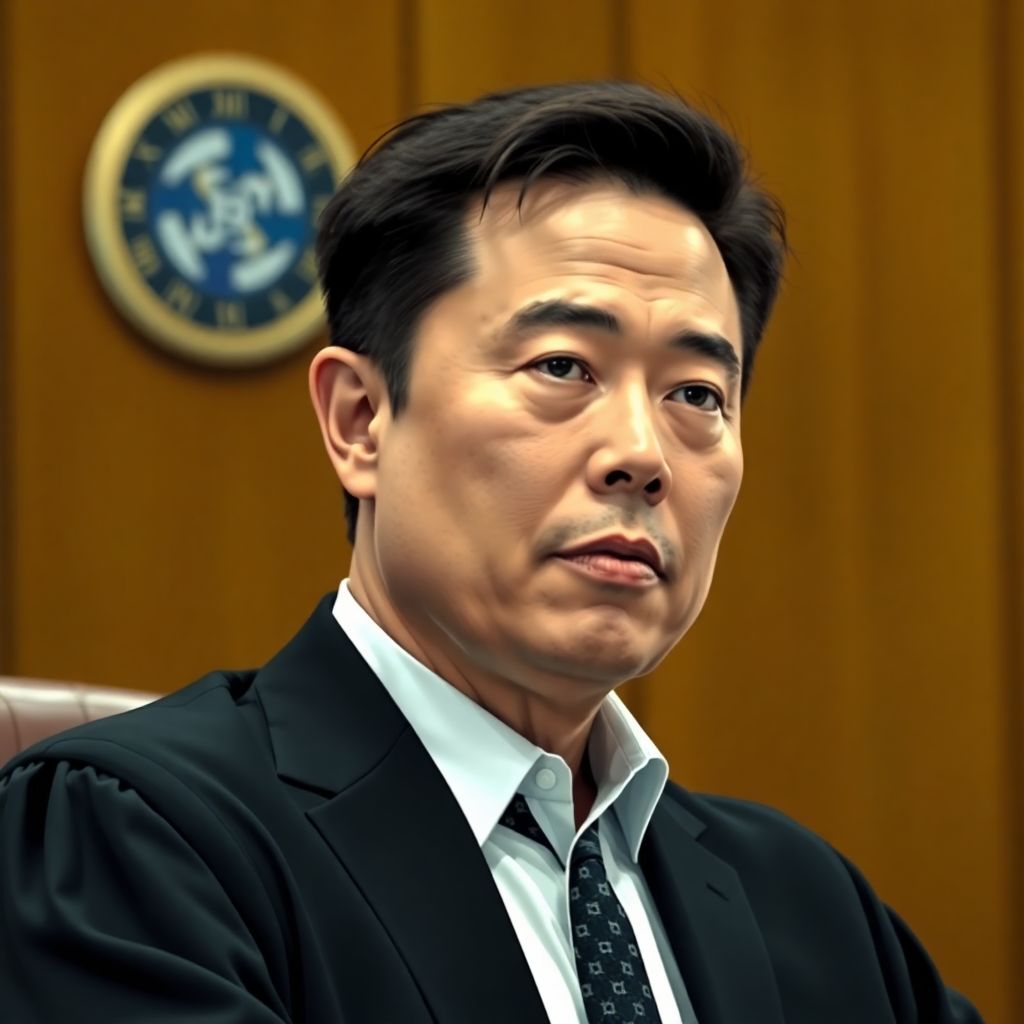
Elon Musk suffers another legal setback in his campaign against OpenAI, after a federal judge threw out a trade secret lawsuit brought by his artificial intelligence venture xAI, now part of SpaceX.
U.S. District Judge Rita Lin on Monday granted OpenAI’s motion to dismiss the case in full and refused to give xAI another chance to revise its claims. At the heart of her ruling: xAI never plausibly showed that OpenAI illegally induced a former xAI engineer to leak proprietary information about its Grok chatbot.
In her order, Judge Lin wrote that xAI’s complaint did not contain concrete, factual allegations that would allow a reasonable inference “that OpenAI told or encouraged” an ex-employee to take or disclose confidential materials. Instead, she found xAI’s accusations amounted largely to conclusions and speculation, which are not enough to sustain a trade secret claim in federal court.
By denying xAI “leave to amend,” the judge effectively closed the door on this particular lawsuit. Courts often allow plaintiffs to revise a complaint if it is merely poorly drafted; refusing that option signals that the judge believes the underlying legal theory is defective or unsupported by available facts, not just in need of better wording.
This marks Musk’s second courtroom defeat in his recent multi-front fight with OpenAI. Musk, who helped found OpenAI before publicly breaking with the organization, has been trying to cast the company as having strayed from its original mission and as using unfair tactics in the race to build advanced AI systems. Courts so far have not been receptive to those arguments.
The xAI case centered on Grok, a chatbot designed to compete with OpenAI’s ChatGPT. xAI alleged that OpenAI used the hiring process to coax a former xAI engineer into handing over sensitive technical and strategic information related to Grok’s development. According to xAI, this amounted to misappropriation of trade secrets under U.S. law.
Judge Lin, however, found that the company never bridged the gap between suspicion and proof. The complaint described recruiting communications and the fact that an xAI engineer later joined OpenAI, but did not provide specific, non-conclusory details showing that OpenAI actually requested, received, or used xAI’s proprietary information.
In trade secret litigation, those distinctions matter. To prevail, a company usually must show three things: that the information was genuinely secret and protected; that the defendant acquired it through improper means (such as theft, inducement, or breach of a duty of loyalty); and that the defendant used or disclosed it. General allegations that “they must have used our technology” rarely survive without concrete factual support.
Judge Lin’s order emphasized this standard. xAI, she ruled, had “insufficiently pled inducement” because it did not point to any specific statements or actions by OpenAI that would transform normal recruiting into unlawful solicitation of trade secrets. Hiring a rival’s employee, standing alone, is not illegal-even in a fiercely competitive field like AI.
The decision also underlines a broader legal reality for fast-moving tech sectors: courts are especially wary of turning routine job changes into automatic lawsuits. Engineers and researchers frequently move between competitors, and the law tries to balance two goals-allowing people to use their general skills and experience while still protecting truly confidential corporate know-how.
For AI companies, that balance is especially delicate. Models, training techniques, data curation methods, and evaluation pipelines can all qualify as trade secrets if carefully guarded. At the same time, much of the high-level knowledge-architectures, optimization strategies, open-source tooling-is widely shared across the industry. Demonstrating that a rival crossed the line from healthy competition into theft can therefore be difficult, particularly when much of the underlying technology builds on publicly available research.
Musk’s defeat in the xAI case also plays into a broader narrative of his strained relationship with OpenAI. Once a key backer and co-founder, he left amid disagreements over the organization’s direction and governance. In recent years he has repeatedly accused OpenAI of abandoning its initial ideals, becoming too closed, and aligning too closely with large corporate interests. Those criticisms have been accompanied by legal and public-relations offensives-including this xAI trade secrets suit-that so far have not changed OpenAI’s legal standing.
For OpenAI, the ruling is a significant, if narrow, win. It removes the immediate threat that a U.S. court could force discovery into its internal development of ChatGPT and related models-something that could have exposed sensitive details about training data, internal research processes, and commercial strategy. At a time when regulatory and antitrust scrutiny of major AI players is climbing, avoiding an intrusive trade secret case is no small relief.
For xAI, however, the dismissal raises strategic questions. The company has tried to position Grok as a bold, alternative chatbot, with a more irreverent style and, according to Musk, fewer ideological constraints. But competing with OpenAI, Google, Anthropic, and other well-funded labs requires not just technological breakthroughs but also a clear legal and reputational footing. A failed trade secret suit can be seen by investors and talent alike as a sign that allegations of copying are not backed by hard evidence-at least not in a way that satisfies a court.
It also underscores a tough reality for emerging AI challengers: legal action is rarely a shortcut to competitive parity. While lawsuits can sometimes force settlements, licensing deals, or behavioral changes, they also risk backfiring if judges conclude the claims are weak. That can strengthen the perception that incumbents are innovating independently rather than relying on rivals’ IP.
The ruling is particularly relevant to the way AI firms conduct recruiting. The line between legitimate headhunting and unlawful inducement to disclose confidential information often depends on what is said and documented during the hiring process. Written evidence that a company explicitly asks a recruit to bring internal code, datasets, or design documents can be devastating in court. By contrast, standard questions about experience, responsibilities, and skills are generally permissible.
Judge Lin’s analysis implicitly affirms that distinction: without emails, messages, or testimony pointing to explicit or implicit requests for xAI’s protected material, the court would not treat the recruitment of a single engineer as evidence of a corporate plan to misappropriate trade secrets. That sends a message across the AI industry: if you intend to claim a rival poached your secrets through hiring, you must come armed with specific, verifiable facts-not just circumstantial inferences.
From a policy perspective, the case highlights the tension between encouraging competition and safeguarding innovation. Strong trade secret laws are meant to protect costly R&D efforts, especially for technologies that cannot simply be patented or disclosed openly. But if those laws are applied too broadly, they risk freezing the job market and punishing employees for changing employers. Judge Lin’s refusal to equate a job offer with inducement suggests courts remain aware of that balance, even in cutting-edge fields like generative AI.
Looking ahead, Musk and xAI face a decision: attempt an appeal, pivot to other legal theories, or drop this line of attack altogether and focus on engineering and product development. Appeals are uphill battles; appellate courts typically defer to a district judge’s reading of a complaint’s sufficiency unless there is a clear error in applying the law. To revive the case, xAI would likely need to show that it actually had enough detailed facts and that Judge Lin set the bar too high-an argument that often fails when the record shows mostly conclusory accusations.
Meanwhile, the competitive landscape in AI keeps shifting. While ChatGPT remains the default reference point for many users, challengers are multiplying, from open-source model ecosystems to proprietary systems built by tech giants and startups alike. In that environment, legal skirmishes may generate headlines, but sustained success will likely depend more on delivering reliable, safe, and cost-effective AI tools at scale.
For businesses watching from the sidelines, the xAI-OpenAI dispute contains practical lessons. Companies building AI systems should:
– Clearly define what counts as a trade secret internally and apply consistent access controls.
– Use robust non-disclosure, confidentiality, and IP assignment agreements, especially for engineers handling model architectures, training datasets, and deployment pipelines.
– Document recruitment and onboarding processes to show that new hires are instructed not to bring or use former employers’ proprietary material.
– Rely on clean-room techniques, where independent teams replicate key features based on public information, when there is any risk of overlapping talent or technology.
Those steps do not guarantee victory in court, but they significantly strengthen a company’s position if a dispute arises.
For employees, particularly in AI and software engineering, this case is a reminder to carefully separate what belongs to them (skills, domain expertise, general knowledge) from what belongs to their employer (source code, private documentation, internal datasets, proprietary benchmarks). Carrying the latter to a new job can expose both the individual and the new employer to serious liability, whether or not a lawsuit ultimately prevails.
In the broader narrative of Musk’s clashes with OpenAI, this latest dismissal reinforces a pattern: public criticism and legal attacks have, so far, done more to spotlight the rivalry than to constrain OpenAI’s operations. xAI’s challenge to OpenAI over Grok has been firmly rebuffed, at least on the trade secret front, leaving the battlefield where it arguably matters most-product quality, safety, and user adoption.
For now, OpenAI walks away from this case unscathed in legal terms, while Musk and xAI must regroup. If they want to win the AI war rather than isolated battles, they may find that breakthroughs in models, infrastructure, and user experience ultimately carry more weight than allegations a federal judge has already dismissed.