
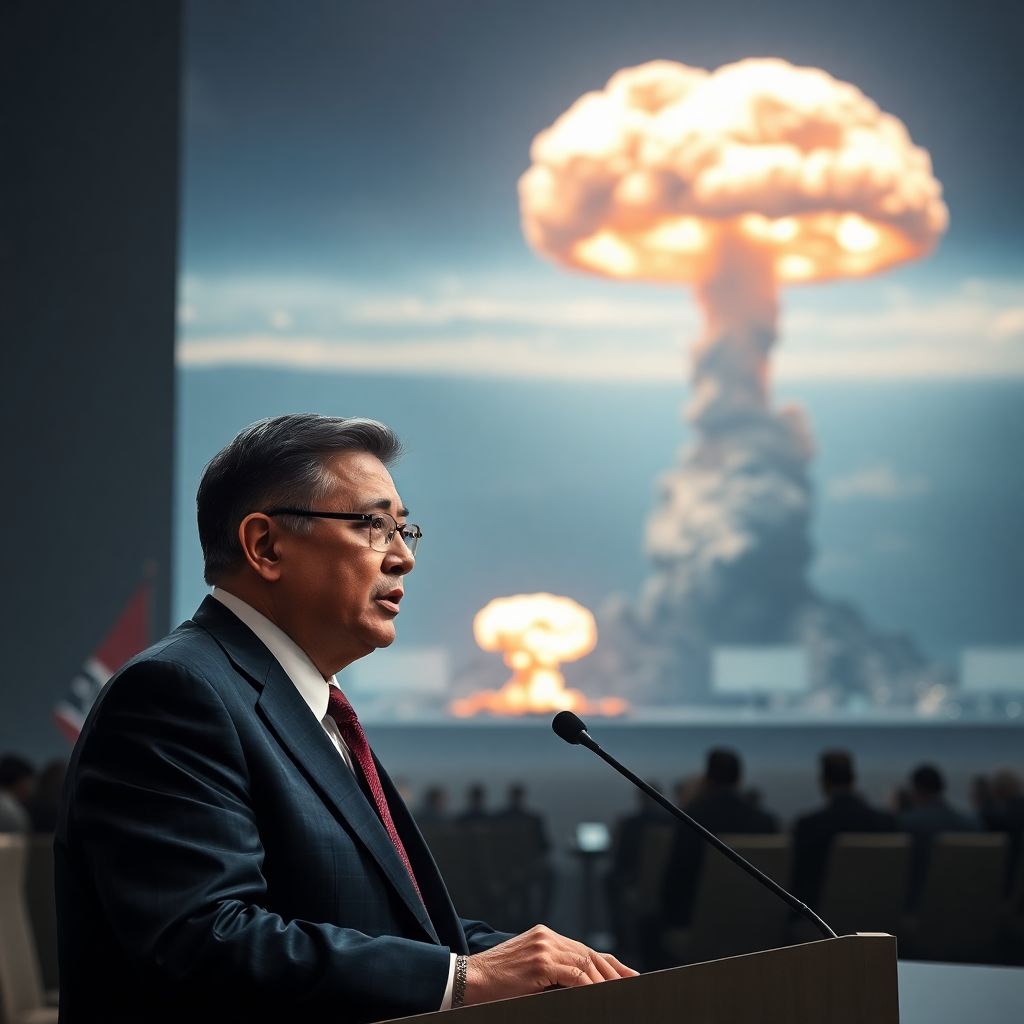
UK foreign secretary Yvette Cooper has warned that the world could face an “AI Hiroshima” if governments fail to put robust rules in place before the most advanced systems are fully deployed.
Writing in an opinion piece published on Monday, Cooper argued that artificial intelligence is reaching a tipping point where its benefits and dangers are accelerating at the same time, and that political leaders are “running out of time” to shape how the technology will be used.
She said AI is already delivering dramatic advances in medicine and industry, but the same tools are rapidly being adapted for military, criminal, and destabilizing political purposes. Waiting for a disaster before acting, she cautioned, would repeat the failures seen at the beginning of the nuclear age, when regulation lagged far behind technological capability.
Cooper drew on a recent visit to Shenzhen, China, to illustrate the dual nature of AI progress. “Last month, in Shenzhen, China, I saw the extraordinary promise of AI and robotics used for life-saving healthcare,” she wrote, describing systems that can assist doctors in diagnosis, surgery, and preventative care. Yet the very sophistication that enables life-saving applications, she added, can also be turned toward far darker ends.
“But the same technologies are also reshaping the future of warfare, crime and social cohesion in alarming ways,” Cooper warned. From autonomous weapons and AI‑driven cyber attacks to hyper‑realistic deepfakes and automated propaganda, she argued that frontier models are already challenging existing security frameworks and legal norms.
According to Cooper, containing the downsides of artificial intelligence could become “the greatest security challenge of the next decade.” She contrasted the speed and global reach of AI systems with the slower, state‑centred proliferation of nuclear weapons, noting that today’s tools can be copied, leaked, or repurposed by non‑state actors, criminal gangs, and even individuals with modest resources.
The foreign secretary urged governments to move beyond high‑level declarations and photo‑op summits and work toward binding international arrangements on AI, especially around the most capable “frontier” models. She argued that, just as nuclear arms control eventually imposed red lines and verification mechanisms, AI governance must establish clear limits, transparency requirements, and emergency protocols before a catastrophe forces the issue.
Cooper’s warning about an “AI Hiroshima” is intended as more than a dramatic metaphor. By invoking one of the most devastating moments of the 20th century, she is pressing leaders to recognize that transformative technologies can lock in new power structures and risks within a few short years. The period before that lock‑in, she suggested, is the only realistic window for shaping guardrails and norms.
She pointed to several areas where AI is already straining existing rules. On the battlefield, militaries are experimenting with lethal autonomous systems that can select and engage targets with minimal or no human intervention. In cyberspace, AI tools are making sophisticated hacking, phishing, and social engineering vastly more scalable. In domestic security, predictive analytics and facial recognition raise questions about mass surveillance, bias, and civil liberties.
Crime is another front where AI is changing the stakes. Cooper highlighted the rise of AI‑generated scams, voice cloning, and deepfake videos that can convincingly impersonate public figures, executives, or family members. These tools lower the barrier to sophisticated fraud and disinformation, while law enforcement struggles to keep pace with rapidly evolving techniques.
The foreign secretary also stressed the impact on social cohesion. As generative AI floods information channels with synthetic text, audio, and imagery, distinguishing truth from fabrication becomes harder for ordinary citizens. This erosion of trust, she warned, can be exploited to polarize societies, undermine elections, and weaken confidence in democratic institutions.
Cooper argued that tackling these risks requires cooperation across several layers: domestic regulation, cross‑border standards, and sector‑specific rules for particularly sensitive domains like defense, healthcare, and finance. National laws alone, she said, will be insufficient when leading AI models are trained across jurisdictions and deployed over global networks.
Among the measures frequently discussed by policymakers, and echoed in Cooper’s broader agenda, are mandatory testing and evaluation of powerful models before deployment, strict controls on military use of autonomous systems, requirements to watermark or label AI‑generated content, and obligations for companies to report serious incidents or “near misses” involving their systems.
She also emphasized the need for greater transparency from the companies developing frontier models. Without access to technical information and safety assessments, regulators and security agencies cannot accurately gauge the potential for misuse, cascading failures, or unexpected emergent capabilities. Cooperative frameworks between governments and industry, she suggested, must be built now rather than after a crisis.
Cooper’s nuclear analogy underscores another key point: early choices about doctrine and norms can shape decades of technology use. In the atomic era, concepts like mutually assured destruction, non‑proliferation, and verification emerged only after the world had already witnessed catastrophic destruction. With AI, she argued, the goal should be to define inadmissible uses and shared red lines before societies experience an AI‑driven catastrophe.
She also acknowledged that a complete halt to AI progress is neither realistic nor desirable. The same systems that threaten to supercharge cybercrime or autonomous warfare can accelerate drug discovery, optimize energy use, enhance education, and make public services more responsive and efficient. The challenge for policymakers, in her view, is to maximize these benefits while constraining the most dangerous applications.
To avoid an “AI Hiroshima,” Cooper called for a sense of urgency that matches the pace of technological change. That means investing in technical AI safety research, building regulatory capacity inside governments, training diplomats and security officials on the technology, and integrating AI considerations into broader foreign and defense policy.
She suggested that upcoming international forums and negotiations must treat AI as a core security and economic issue rather than a side topic. For the United Kingdom, that includes working with allies and rivals alike to establish shared principles on autonomous weapons, cross‑border AI cooperation, export controls for the most capable systems, and emergency communication channels if AI‑related incidents spiral out of control.
Cooper’s message is that the world stands at an inflection point. AI is not a distant or hypothetical threat, but a rapidly maturing technology already entangled with military strategy, organized crime, and the fabric of everyday social life. Whether it becomes a force for broad human flourishing or a catalyst for new forms of disaster, she argued, will depend heavily on whether today’s leaders choose to act before the first major crisis, not after it.