
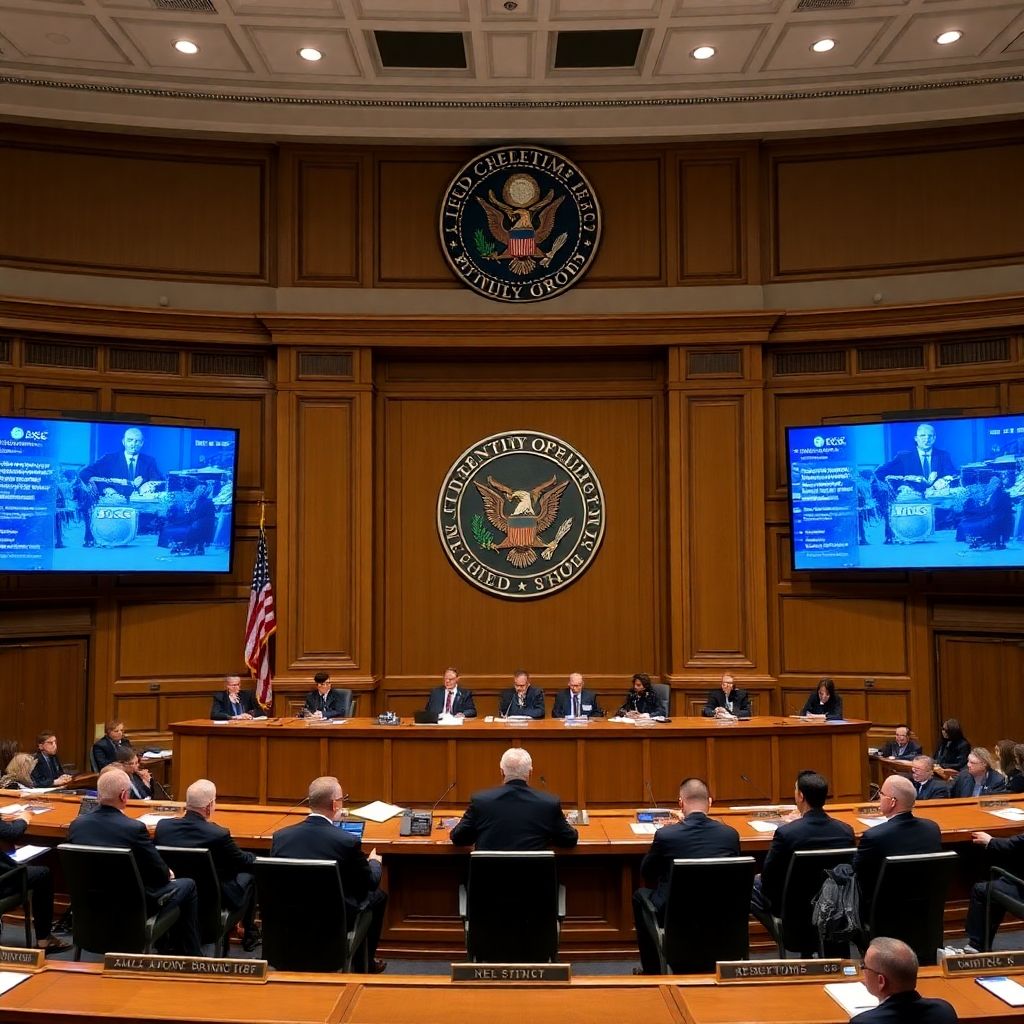
SEC signals that its long-discussed “crypto safe harbor” is finally moving from theory to practice, with a formal proposal expected to surface as soon as this month. According to an updated rulemaking agenda, the agency plans to publish a dedicated crypto framework in July, opening the door to a public comment period and potentially reshaping how digital assets are regulated in the United States.
The forthcoming package-informally referred to inside the agency as “Regulation Crypto”-is designed to address how crypto assets are offered and sold, and to define the boundaries of compliant on-chain financial activity. Crucially, the plan is expected to carve out specific exemptions and safe harbors, giving certain projects and market participants clearer guidelines and some breathing room to operate without immediately running afoul of securities laws.
The updated 2026 agenda is the strongest indication so far that the SEC is ready to move from speeches and hints to concrete rule text. SEC chair Paul Atkins has been trailing the initiative for months, framing it as a long overdue effort to bring order to a market that has so far been governed largely by enforcement actions, informal guidance, and court decisions rather than a single, comprehensive rule set. Atkins had previously suggested the proposal was imminent; its appearance on the formal calendar suggests the internal drafting process is nearing completion.
Once the draft regulation is published, it will enter the standard rulemaking pipeline. That means industry participants, legal experts, investors, and the general public will be invited to submit comments-typically over a 30- to 90-day window. During that time, lobbyists and trade groups are likely to weigh in heavily on how strict or flexible the final rules should be, especially around which tokens might qualify for exemptions and what conditions projects must meet to rely on any safe harbors that are introduced.
At the core of the proposal will be rules governing the initial offer and subsequent sale of crypto assets. For years, the key legal question in the U.S. has been whether particular tokens are “investment contracts” under the long-standing Howey test, and therefore securities under federal law. Regulation Crypto is expected either to clarify how that test should be applied in the digital asset context, or to introduce more targeted criteria that distinguish between, say, speculative token offerings and tokens used primarily for payments or network utility.
The safe harbor concept is particularly significant for early-stage projects and decentralized networks. A well-designed safe harbor could allow teams to launch tokens, build infrastructure, and gradually decentralize their systems under a transparent set of rules, rather than operating under constant fear that later SEC scrutiny could retroactively deem their past activity unlawful. In practice, that might involve disclosure obligations, limits on fundraising amounts, milestones for decentralization, or time-limited protections that expire once a project reaches a certain level of maturity.
Exemptions and safe harbors are also expected to touch on on-chain financial activity beyond simple token issuance. That could include decentralized finance protocols, staking programs, lending platforms, and automated market makers. One of the current pain points in the U.S. market is that these activities often sit in a gray area-clearly financial in nature, but not easily mapped onto the structures contemplated by mid-20th-century securities regulations. By explicitly recognizing “on-chain” behavior in rule text, the SEC would be acknowledging that digital-native activities require digital-native regulatory concepts.
For centralized intermediaries-exchanges, brokers, custodians, and token issuers-the new framework could be a double-edged sword. On one hand, clarity is likely to reduce long-term legal risk and make it easier to design products that can be offered nationwide without constant legal reinterpretation. On the other hand, new rules may formalize registration requirements, capital standards, reporting duties, and compliance systems that some platforms have so far tried to avoid or sidestep. The balance the SEC strikes will heavily influence where crypto businesses choose to base and expand their operations.
Market participants will also be watching closely to see how the proposal treats stablecoins and asset-backed tokens. These products increasingly function as the core plumbing of the crypto ecosystem, but they raise distinct regulatory issues around reserves, redemption rights, and systemic risk. While banking and payment regulators also have a say here, any hint in Regulation Crypto about whether stablecoins are to be treated as securities-or carved out under specific exemptions-could have immediate implications for major issuers and for dollar-linked liquidity across exchanges.
Another sensitive area is how the SEC will deal with secondary market trading. Many exchanges worry that if a token is ever considered a security at any point in its lifecycle, its ongoing trading might require full compliance with securities exchange rules, even after it becomes widely held and functionally decentralized. A clear safe harbor or exemption for sufficiently decentralized networks, or for certain classes of tokens, would directly address this concern and might unlock listing opportunities that are currently deemed too risky.
The public comment period will be a crucial test of how aligned the SEC is with both lawmakers and the industry. Members of Congress have already floated various digital asset bills, some aiming to put more responsibility in the hands of other agencies such as the CFTC. If Regulation Crypto is perceived as either overly restrictive or as claiming too broad a jurisdictional reach, that could intensify legislative efforts to rebalance authority or to set statutory guardrails on the SEC’s approach to crypto.
For builders and investors, the most practical question is what they should do while the rule is under consideration. Until final rules are adopted-often a process that can stretch many months or longer-existing case law, prior enforcement actions, and interpretive guidance remain the primary reference points. Companies that are currently operating in a gray zone may want to use the comment period to advocate for rules that reflect how decentralized systems work in practice, and to document the steps they are already taking toward transparency and investor protection.
The safe harbor debate also has global implications. Other jurisdictions, from the European Union to parts of Asia and the Middle East, have moved faster to set up bespoke frameworks for crypto assets and service providers. If the U.S. ends up with a clear, workable set of rules, it could reclaim some of the regulatory leadership it has ceded in recent years. If, however, the final regulation is regarded as unworkable or excessively punitive, that might accelerate the ongoing shift of innovation, liquidity, and talent to friendlier regimes abroad.
Finally, even after the proposal is published and commented on, the story will hardly be over. The language of the final rule, the way the SEC chooses to enforce it, and how courts interpret any contested provisions will all shape the real-world impact of Regulation Crypto and its safe harbor provisions. For now, the agency’s updated agenda is less a conclusion than a signal: after years of piecemeal actions and policy ambiguity, the SEC is preparing to put its crypto philosophy into binding regulatory text-and the entire digital asset industry will be watching every line.