
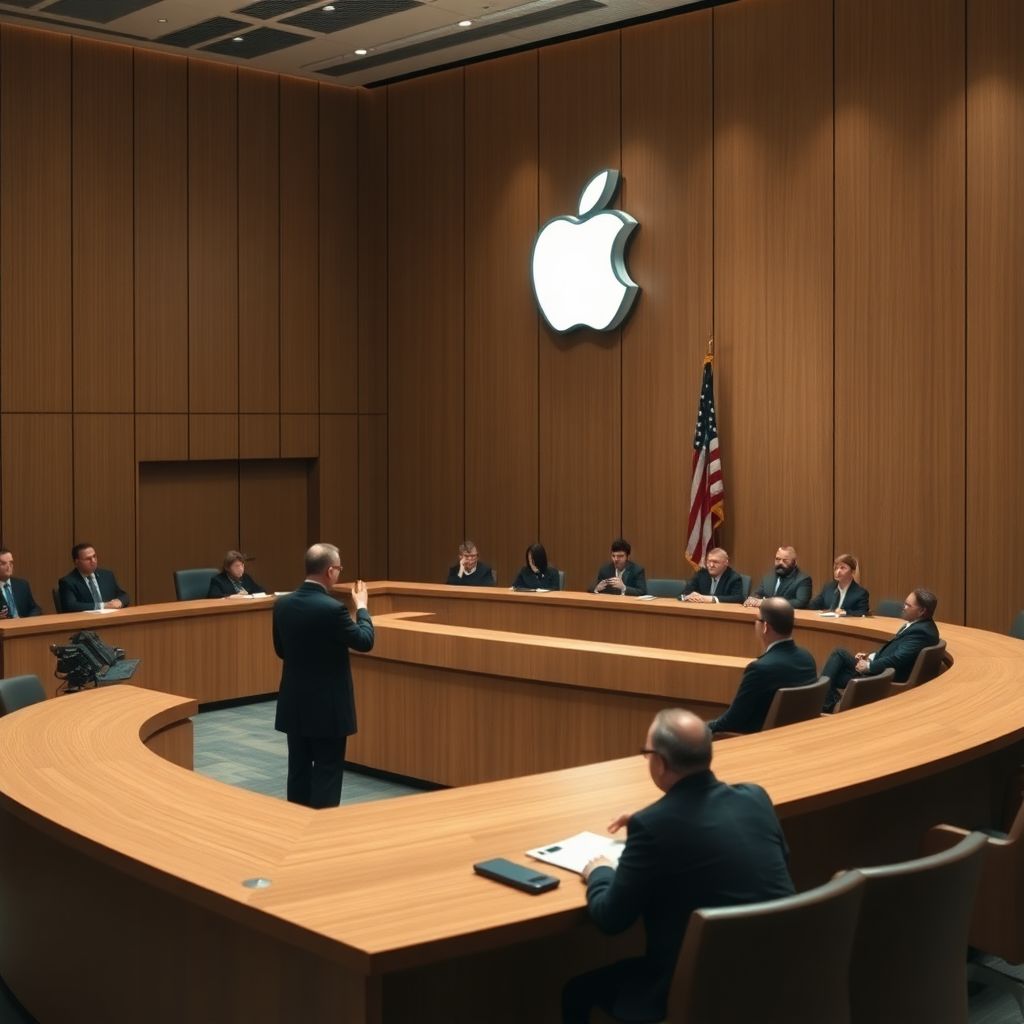
Apple Sues OpenAI, Accuses Ex-Employees of Stealing Hardware Trade Secrets
Apple has filed a lawsuit against OpenAI and two of its former senior employees, alleging a coordinated theft of trade secrets tied to Apple’s consumer hardware business.
The complaint, lodged in the U.S. District Court for the Northern District of California, names Chang Liu, a former senior system electrical engineer, and Tang Yew Tan, a former high-ranking design executive on the iPhone and Apple Watch teams. Also named are OpenAI Foundation, OpenAI Group PBC, and a related entity, io Products.
According to Apple, Liu and Tan secretly removed highly sensitive documents in the months leading up to their departure and then used that information to accelerate OpenAI’s own hardware initiatives. The materials allegedly taken include internal design files, supplier lists, engineering schematics, and other proprietary data tied to Apple’s next-generation devices.
Apple claims that Liu, who resigned in January after roughly eight years at the company, not only failed to return an Apple-issued laptop but continued to access internal systems after his departure. In the filing, Apple’s attorneys say Liu exploited “a rare, previously unknown authentication bug” to log in to Apple’s shared network folders even while employed at OpenAI.
“While employed by OpenAI, Mr. Liu also exploited a rare, previously unknown authentication bug to access Apple’s shared network folders,” the complaint states. Apple argues that this access was unauthorized and gave Liu an illicit window into ongoing hardware projects and confidential documentation.
Tan, a veteran design leader involved in the look and feel of flagship products like the iPhone and Apple Watch, is accused of taking confidential design specifications and supplier-related information that Apple says form the backbone of its tightly controlled hardware supply chain. The company contends that such information would be invaluable to any rival trying to build competing consumer devices.
The lawsuit paints a picture of a deliberate and methodical effort to move Apple know-how into OpenAI’s orbit. Apple alleges that both former employees copied files, downloaded internal documents, and retained at least one corporate device, all in violation of their employment agreements and company policies on confidential information.
Beyond the individual actions of Liu and Tan, Apple’s complaint suggests OpenAI benefited from this information in its own push into consumer hardware. Apple asserts that the alleged trade secrets were used to inform design decisions, component choices, and engineering approaches for products under development at OpenAI and its affiliates.
The company is seeking injunctive relief to prevent any further use or dissemination of the disputed information, as well as monetary damages for what it characterizes as misappropriation of trade secrets and breach of contract. Apple also wants the court to compel the return and destruction of all Apple materials allegedly in the possession of OpenAI, Liu, Tan, or any related entities.
Why This Case Matters for the Tech and AI Industry
The dispute lands at the intersection of big tech hardware and frontier AI, at a time when the line between software labs and device makers is rapidly blurring. As AI companies explore dedicated hardware-from custom chips to consumer-facing devices-access to experienced engineers and designers has become a strategic priority.
Apple’s complaint highlights a growing concern inside large tech firms: that star employees, when poached by high-flying AI companies, might bring more than just their expertise. Source code, engineering diagrams, and supply chain data are now seen as particularly high-value targets, especially as firms race to ship AI-optimized devices.
If Apple succeeds, the ruling could reinforce stricter guardrails on employees moving between competitors, especially in roles involving proprietary hardware or AI acceleration. Companies may tighten internal access controls, increase monitoring of file transfers, and revise exit procedures to reduce the risk of confidential data walking out the door.
The Legal Backbone: Trade Secrets and Employee Obligations
At the core of Apple’s case are longstanding trade secret protections. Under U.S. law, trade secrets cover information that has economic value from not being generally known and that a company takes reasonable steps to keep confidential-such as unreleased product designs, detailed engineering documentation, and supplier pricing.
Apple’s lawsuit argues that both Liu and Tan were bound by confidentiality and invention assignment agreements common in Silicon Valley. Such contracts typically prohibit the retention or unauthorized use of company data after an employee leaves, regardless of where they go next.
The alleged exploitation of an “authentication bug” deepens the legal risk, if proven. Accessing corporate systems through a security flaw without authorization can support not only trade secret claims but also potential computer misuse allegations, depending on the specific facts and legal theories Apple pursues.
Implications for OpenAI’s Hardware Ambitions
For OpenAI, being named directly in a high-profile trade secret suit carries both reputational and operational risks. Even if the company disputes Apple’s allegations, it may be forced to conduct internal audits, isolate certain projects, or “clean room” aspects of its hardware development to prove independence from any tainted information.
Apple’s filing suggests that any hardware efforts at OpenAI-particularly those aimed at consumer markets-may now come under intense scrutiny. Investors, regulators, and potential partners will be watching for signs of how OpenAI handles intellectual property and internal controls when hiring from established hardware giants.
If the court orders broad discovery, Apple could seek detailed records about OpenAI’s internal communications, product roadmaps, and development timelines to argue that its own confidential information influenced specific design choices or architectures.
A Flashpoint in the AI-Big Tech Relationship
The case also comes against the backdrop of increasingly complex relationships between large platform companies and AI labs. On one hand, there are partnerships and integrations; on the other, there is rising competition for compute, talent, and-now-devices.
Apple’s aggressive posture signals that it intends to draw a clear line between collaboration on AI services and any encroachment on its core hardware advantages. The company has long treated its design processes, supply chain arrangements, and engineering documentation as among its most carefully guarded assets.
If other hardware leaders perceive a similar risk from AI firms recruiting their engineers, we could see a more pronounced chill in cross-company movements for employees with deep access to proprietary systems.
What Comes Next in the Courtroom
The lawsuit is likely to move through several stages: responses from OpenAI and the named individuals, potential motions to dismiss some or all claims, and arguments over the scope of evidence each side must produce. The court will also consider whether Apple has shown enough urgency or risk of ongoing harm to justify any early injunctions limiting OpenAI’s use of contested information.
Settlement is another possible path. Many trade secret disputes never reach a full trial, instead resolving through agreements that may include financial compensation, commitments around product development, or independent oversight of internal controls.
However, Apple’s decision to call out both individuals and OpenAI entities by name indicates it is prepared to publicly litigate the boundaries of fair competition in AI hardware, rather than quietly handling the matter behind closed doors.
How Companies Are Likely to Respond
Across the industry, this case may prompt companies to revisit how they:
– Restrict access to highly sensitive files, especially for employees known to be in talks with competitors.
– Monitor abnormal login activity or unusual data downloads, particularly around resignation dates.
– Patch and audit internal authentication systems to prevent the kind of vulnerability Apple says was exploited.
– Train staff on legal obligations tied to confidential information both during and after employment.
Some may also adopt more granular compartmentalization of projects, ensuring that no single individual can walk away with a complete picture of a product’s design and manufacturing strategy.
The Human Side: Talent Mobility vs. Corporate Protection
Underlying the legal filings is a broader tension: companies want to protect their investments in research and development, while individuals want the freedom to move between employers and apply their skills.
Courts typically distinguish between general skills and experience-which employees are free to use anywhere-and specific confidential documents and technical details, which they are not allowed to take or exploit. The outcome of Apple’s lawsuit may further clarify where that boundary lies in a world where AI and hardware are increasingly intertwined.
For engineers and designers, the case serves as a stark reminder that saving work files “just in case,” or logging into old systems after switching jobs, can have serious legal consequences-especially when the employer is one of the world’s most powerful technology companies.
A Defining Test for AI-Era IP Disputes
As the AI boom collides with entrenched hardware ecosystems, Apple’s suit against OpenAI and its former employees is poised to become a reference point for how courts treat alleged misappropriation in this new landscape. The factual record-what was taken, how it was used, and what safeguards were in place-will be crucial.
Whatever the ultimate judgment, the case underscores a simple reality: in the race to build AI-powered devices, the most valuable resource may not be just compute or algorithms, but the hard-won knowledge of how to design, engineer, and manufacture products at scale-and how fiercely that knowledge will be defended.