
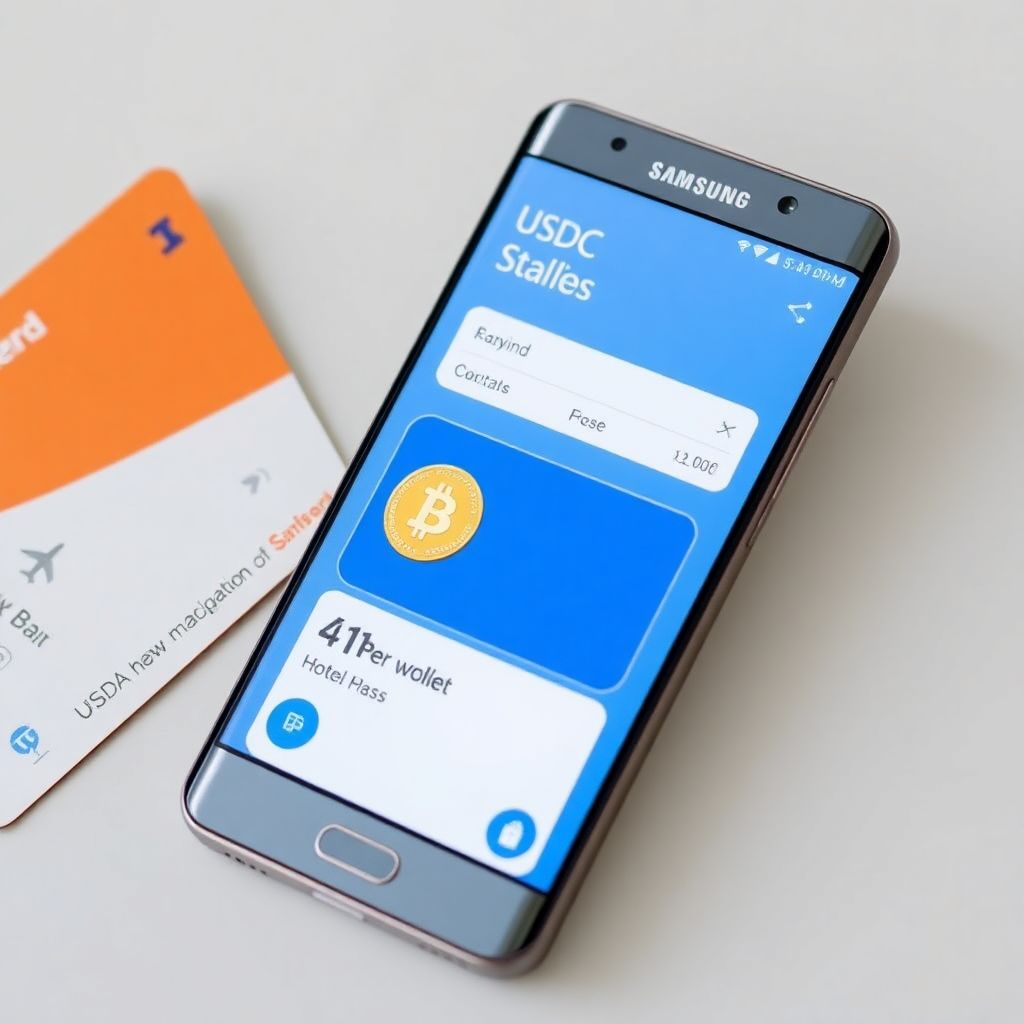
Samsung is preparing to bring stablecoins directly into Samsung Wallet-placing crypto-style dollars alongside everyday items like your boarding pass and hotel room key. During the Galaxy Unpacked event in London on July 22, the company previewed a wallet interface that prominently featured Circle’s USDC, signaling that stablecoin support is moving from concept to product direction.
Samsung Wallet is already positioned as a digital hub for modern life, storing payment cards, identification documents, and even hotel keys. Now the company says the app will expand into “new forms of digital value,” with stablecoins at the center of that push. On stage, Samsung product manager Lee Dinham framed the change as a shift beyond traditional money tools like cash management and savings, arguing that stablecoins can enable fast, dependable transfers of value through a device people already carry everywhere.
Even with the on-stage reveal, Samsung is keeping key specifics under wraps. The company did not provide a launch date, did not confirm which stablecoin issuer(s) will be supported beyond the USDC mockup, and did not say which blockchain networks the tokens will use. For now, the announcement reads as a strategic commitment rather than a full product rollout.
Dinham also emphasized the scale of what Samsung is attempting. By building “native” stablecoin support into Samsung Wallet, the company aims to be among the first major smartphone brands to embed stablecoins at the operating-ecosystem level, rather than treating them as an add-on that requires a separate third-party app.
Stablecoins are crypto tokens designed to maintain a stable price-most commonly pegged to the U.S. dollar-typically through one-to-one backing with cash and cash-equivalent reserves. In practice, they’re often marketed as a way to move digital dollars quickly, with fewer surprises from price volatility than assets like Bitcoin or Ether.
If Samsung follows through, the most immediate impact could be usability. A stablecoin sitting next to payment cards and travel documents suggests a future where sending value becomes as routine as sharing a photo-especially for small peer-to-peer transfers, splitting expenses, or reimbursing friends and family without relying on bank hours or international transfer rails.
Travel is another obvious target. Samsung’s “boarding pass” comparison points to situations where users need quick access to funds across borders. Stablecoins, when integrated cleanly, can function as a digital cash equivalent-useful for travelers managing spending, topping up balances, or moving money between accounts and regions without waiting on traditional settlement timelines.
The business angle matters too. Samsung Wallet integration could encourage broader merchant experimentation, particularly if stablecoin payments are presented in a familiar interface that resembles existing tap-to-pay experiences. Whether that becomes mainstream would depend on fees, settlement options, and how seamlessly Samsung can bridge stablecoin balances with everyday checkout behavior.
Security and trust will be central to adoption. A “native” wallet feature carries different expectations than a niche crypto app: users will assume strong safeguards, clear recovery options, and straightforward controls. If Samsung wants stablecoins to feel as normal as stored cards and IDs, the user experience will need to reduce complexity-especially around addresses, networks, and transaction finality.
Regulation and compliance are another open question. Stablecoins increasingly sit at the intersection of payments law, consumer protection, and financial crime controls. Samsung’s silence on issuers and chains may reflect the reality that these decisions are tightly linked to regional rules and operational requirements.
It’s also worth noting what Samsung didn’t claim. There was no promise of universal stablecoin support, no confirmation of USDC as the first live asset, and no detail on whether users will be able to pay merchants directly, swap between tokens, or simply hold and transfer stablecoin balances.
Still, the direction is clear: Samsung wants Samsung Wallet to evolve from a storage space for credentials and cards into a broader container for digital value. If stablecoins truly arrive as a built-in feature-and not a limited pilot-it could lower the barrier for everyday users to interact with dollar-pegged tokens without seeking specialized crypto tooling.