
CFTC setback in Wisconsin leaves prediction markets exposed to state gambling laws
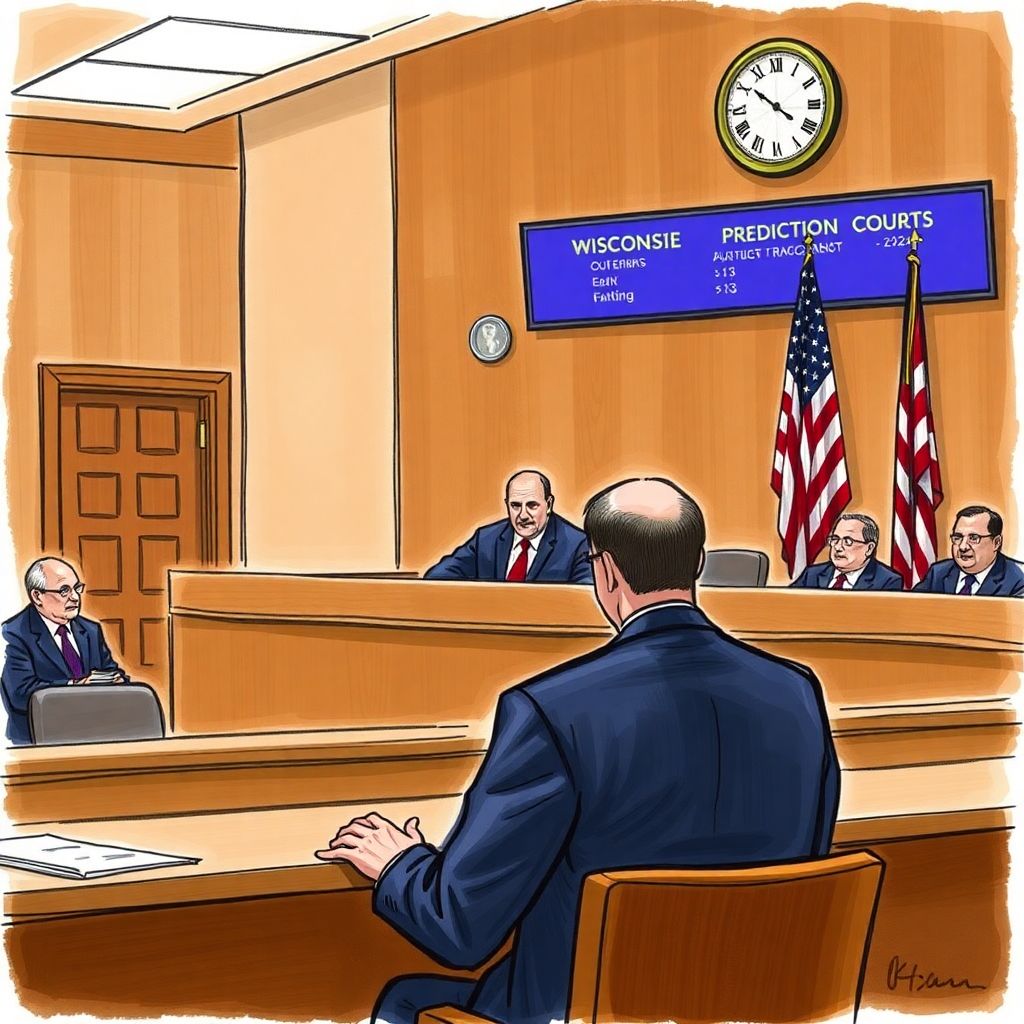
A federal judge in Wisconsin has refused to shield prediction market platforms from state gambling enforcement, dealing a blow to the Commodity Futures Trading Commission’s effort to assert exclusive federal control over event-based contracts.
In a ruling from the U.S. District Court for the Eastern District of Wisconsin, Judge William Griesbach denied the CFTC’s request for a preliminary injunction that would have barred Wisconsin officials from applying state gambling statutes to federally registered platforms such as Kalshi and Polymarket. The decision means Wisconsin can continue pursuing its own lawsuits while the broader jurisdictional fight plays out.
The CFTC brought the federal case in April after Wisconsin sued Kalshi, Polymarket, Crypto.com, Robinhood, and Coinbase in state court. State prosecutors argue that contracts based on the outcomes of sporting events, offered via these platforms, are not benign financial derivatives but in practice amount to unlicensed sports betting.
To win preliminary relief, the CFTC needed to demonstrate a likelihood of success on the merits, a risk of irreparable harm if enforcement continued, and that the balance of equities and public interest favored the injunction. Judge Griesbach found the regulator failed on each of these prongs, concluding that the legal basis for CFTC preemption was too weak at this stage.
The court also turned down separate motions by Kalshi and Crypto.com to intervene in the federal case and seek their own preliminary protections from Wisconsin’s actions. That leaves the companies to defend themselves primarily in state court, without the umbrella of an immediate federal injunction.
At the heart of the dispute is how to classify sports event contracts. The CFTC contends that these products are “swaps” under the Commodity Exchange Act (CEA), which would place them squarely under federal derivatives regulation and largely out of reach of state gambling laws. Griesbach was unpersuaded, ruling that the CFTC had not convincingly shown that the contested sports contracts meet the statutory definition of swaps. That conclusion alone, he wrote, was enough to deny the requested injunction.
The judge went further, rejecting the idea that the CEA, even if it covers certain event contracts, automatically preempts Wisconsin’s ability to enforce its long-standing gambling framework. According to the opinion, the state’s gambling statutes do not conflict with federal commodities rules and therefore are not overridden by them. In other words, federal registration as a derivatives platform does not automatically immunize a firm when its offerings look, to state regulators, like sports bets.
Wisconsin Attorney General Josh Kaul has framed the issue in stark terms, arguing that these sports-related contracts are essentially wagers dressed up as investment products. He has said the state’s lawsuits target companies that are “thinly disguising unlawful conduct” by marketing sports betting as financial trading. In his view, calling a contract a derivative does not change its underlying nature when money is risked on a game’s final score or a player’s performance.
Legal analysts say the Wisconsin ruling reinforces the idea that prediction markets may face a patchwork of state-level enforcement, even when they operate under CFTC oversight. Attorney Daniel Wallach has noted that because the CEA does not fully displace state law in this area, the five Wisconsin cases are likely to land back in state courts, where judges could issue injunctions barring the platforms from offering sports contracts to Wisconsin residents.
The decision also arrives amid mounting resistance from state regulators to the CFTC’s broader attempt to define a national framework for so-called “event contracts,” which include markets on elections, sports, and other real-world outcomes. Attorneys general from 44 states have formally pressed the CFTC to pull back and revise proposed changes to Rule 40.11, arguing the regulator is overstepping its mandate under the CEA.
That multistate coalition, led by Ohio Attorney General Andy Wilson, contends that Congress has never clearly authorized the CFTC to regulate sports betting markets, and that such oversight has historically been left to the states. In a sharply worded letter submitted at the close of the public comment period, the attorneys general stressed that states “have long regulated gambling-including sports bets,” while federal authorities have largely stayed on the sidelines except in narrow circumstances.
For U.S. users of prediction markets, these legal battles are more than abstract jurisdictional fights. Platform access, product design, and even the ability to open or maintain an account may start to depend heavily on where a user lives. If state gambling rules operate alongside federal derivatives regulation, companies like Kalshi and Polymarket could face a tangle of divergent licensing regimes, product bans, and compliance obligations from one state to another.
Wisconsin’s stance sharply contrasts with a recent decision out of Minnesota. There, U.S. District Judge Katherine Menendez temporarily blocked enforcement of Minnesota’s new prediction market ban. In that case, she found that the CFTC, Kalshi, and Polymarket had shown a sufficient likelihood of success on their argument that federal law preempts state restrictions, at least as applied to some CFTC-regulated event contracts. The injunction allows the platforms to keep operating in Minnesota while litigation continues.
Those conflicting rulings underscore the absence of a unified national standard for prediction markets. Courts in Wisconsin and New York have so far favored state authority and the continued application of gambling statutes, whereas Minnesota has signaled that federal derivatives law may sometimes trump state bans. For market operators, investors, and users, the result is a regulatory map that is not just fragmented but actively contradictory.
A spokesperson for the CFTC said the agency is disappointed with the Wisconsin outcome and plans to appeal. The next phase of litigation could determine whether Wisconsin’s state cases move forward unimpeded, and whether platforms will need to suspend sports-related contracts specifically for users in that state. An appellate ruling could either reinforce state power over gambling-style contracts or strengthen the CFTC’s hand in drawing a clearer line around federally supervised prediction markets.
Beyond the immediate cases, the Wisconsin decision raises deeper questions about what prediction markets actually are: tools for price discovery and information aggregation, or simply more sophisticated betting products. Supporters argue that contracts tied to sports, politics, or economic indicators can improve forecasting, enhance market efficiency, and reflect collective intelligence. Critics, including many state regulators, focus on consumer protection, addiction risks, and the possibility that speculative trading on games or elections is substantively no different from casino wagering.
Industry participants are watching closely because the classification question influences everything from tax treatment to marketing strategy. If sports and event contracts are treated as swaps, platforms must comply with stringent CFTC rules on clearing, reporting, and market integrity. If they are categorized as gambling, companies must secure state gaming licenses, implement location-based restrictions, and possibly withdraw from jurisdictions with strict prohibitions. In some cases, they may need to navigate both regimes simultaneously.
Investors and traders, too, face practical consequences. A user in Minnesota might currently be able to trade on specific sports or election outcomes through a CFTC-registered platform, while a similar user in Wisconsin could be locked out of those same markets under threat of state enforcement. That uneven access can fragment liquidity, complicate hedging strategies, and reduce the usefulness of prediction markets as national indicators of sentiment or probability.
The uncertainty is also shaping how new products are designed. Some platforms are attempting to steer away from clearly gambling-like contracts, focusing instead on macroeconomic data releases, policy decisions, or financial benchmarks that more easily fit within the CEA’s derivatives framework. Others are experimenting with geofencing and differentiated product menus by state, though this adds operational complexity and compliance costs that smaller firms may struggle to absorb.
For policymakers, the Wisconsin ruling highlights the need for clearer federal guidance or legislative action if prediction markets are to develop in a consistent way across the country. One path would be for Congress to explicitly define which types of event contracts fall under federal commodities law and which remain subject to state gambling control. Another would be to create a hybrid framework allowing coordinated supervision, with minimum national standards and room for stricter state rules where justified by local policy priorities.
Until that happens, platforms and users should expect continued legal experimentation. States that share Wisconsin’s skepticism may bring their own enforcement actions, citing gambling statutes that predate the current wave of digital prediction markets. Meanwhile, platforms will likely continue to test federal preemption theories in courts that may or may not be receptive, as seen in the divergent outcomes in Wisconsin and Minnesota.
In practical terms, anyone building or using prediction markets in the U.S. now operates against a backdrop of legal volatility. Business models that assume uniform nationwide availability look increasingly fragile. Instead, successful operators may be those able to adapt quickly to evolving rules, maintain sophisticated compliance functions, and design products that can pivot between a derivatives-oriented and a gambling-oriented regulatory lens.
The Wisconsin loss does not end the CFTC’s campaign to assert authority over prediction markets, but it does underscore the limits of its current strategy. Unless higher courts side decisively with the federal regulator, or Congress steps in with new legislation, the future of event-based trading in the U.S. will likely be shaped piecemeal-one state, one lawsuit, and one conflicting court ruling at a time.