
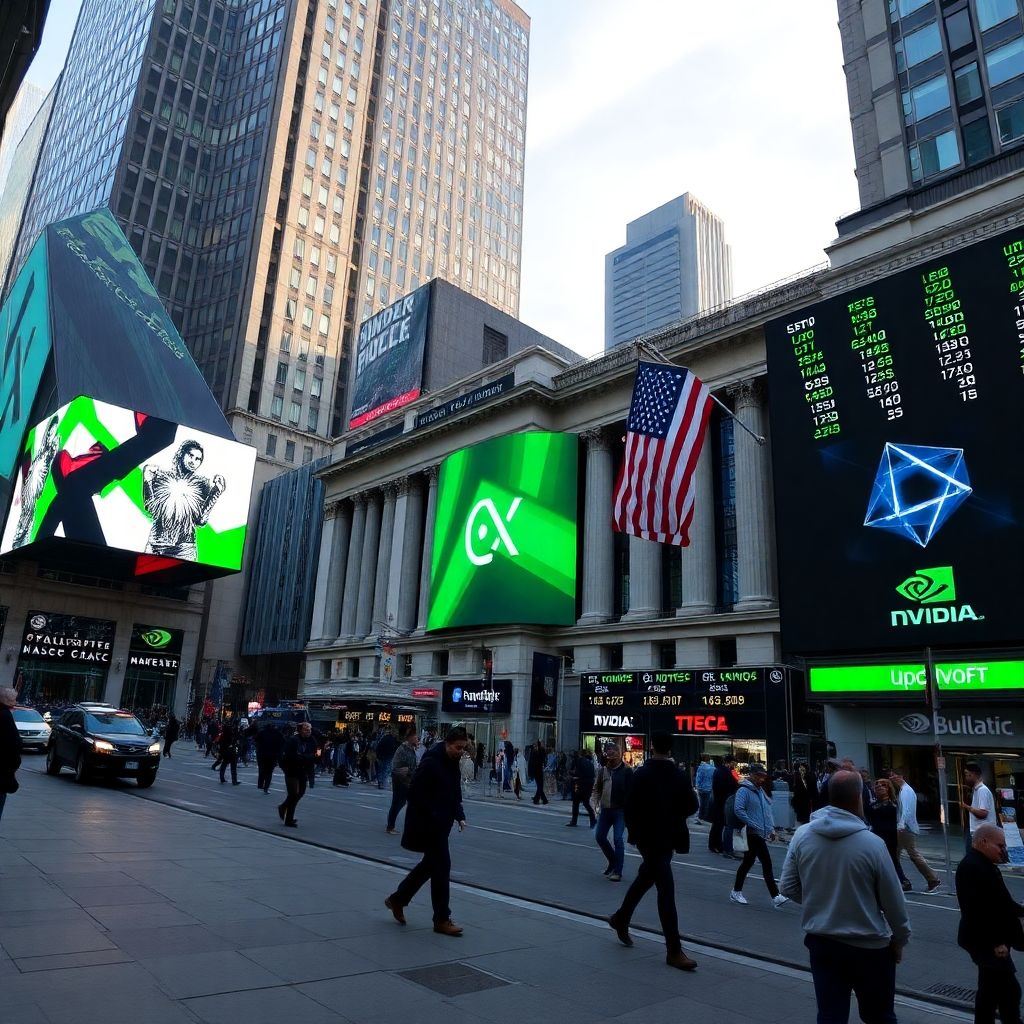
US stock markets surged on Tuesday, reaching historic highs as investors looked ahead to a pivotal interest rate decision from the Federal Reserve. The Dow Jones Industrial Average soared by over 300 points during intraday trading, while the S&P 500 and Nasdaq Composite both reached record-breaking levels. The rally was largely driven by strong performances from tech giants like Nvidia, Microsoft, and Apple, which continue to lead market momentum.
Investor sentiment received a significant boost from Nvidia, with its stock climbing over 3% after CEO Jensen Huang expressed a confident outlook for the company’s AI-focused future. Positive remarks about growth potential suggested the company had “turned a corner,” reinforcing bullish expectations. Another catalyst for Nvidia’s gains was the announcement of a $1 billion investment in Nokia, which signaled confidence in the broader tech infrastructure sector.
Microsoft also contributed to Wall Street’s optimistic tone. Its shares rose more than 2% following reports of a strategic shift involving OpenAI. The move could see the AI startup transition into a public benefit corporation, a development interpreted by markets as a long-term commitment to innovation and public engagement in AI technologies.
Apple, meanwhile, saw its market capitalization surge past the $4 trillion mark, driven by robust demand for its latest iPhone lineup. The company continues to demonstrate resilience and growth potential amid a competitive global smartphone market, further energizing investor confidence in Big Tech.
These gains came on the heels of Monday’s modest rally, buoyed by renewed optimism over U.S.-China trade relations. Negotiations between the two economic powers have shown signs of progress, contributing to the broader risk-on mood in global markets. The confluence of trade optimism, tech momentum, and anticipation over the Fed’s forthcoming decision has created fertile ground for stock gains.
The S&P 500 climbed 0.4% during Tuesday’s session, rising above the 6,800 mark, while the tech-heavy Nasdaq Composite gained 0.8%. The Dow Jones closed the day up by more than 150 points, reflecting sustained investor enthusiasm ahead of the October 29 Federal Reserve meeting. Market participants are largely pricing in a dovish stance from the Fed, with some even anticipating a potential rate cut in the near future if economic data supports easing.
Looking ahead, the release of quarterly earnings reports from several major tech firms, scheduled for Wednesday, could further accelerate market momentum. Strong earnings would reinforce the narrative of tech sector dominance and may solidify investor expectations for continued market resilience.
Beyond equities, optimism also spilled over into other asset classes. Bitcoin and the broader cryptocurrency market showed signs of stabilizing, while gold began to retreat after a strong multi-week rally. The shift suggests that investors may be rotating back into risk assets, including digital currencies, amid decreasing uncertainty in traditional markets.
The Federal Open Market Committee’s (FOMC) upcoming decision remains a crucial focal point. While inflation has shown signs of cooling, the Fed must balance this with robust labor market data and consumer spending patterns. Any indication of a policy pivot could have significant implications for both equity and bond markets, as well as currency valuations.
Additionally, the recent capital inflows into megacap tech stocks suggest that institutional investors are positioning themselves ahead of potential monetary easing. This strategic repositioning indicates confidence in the sector’s ability to outperform even in a more turbulent macroeconomic environment.
Analysts are also watching geopolitical developments closely. The evolving dynamics in global trade, especially between the U.S. and China, will likely have a lasting impact on equity markets. Any further breakthroughs or setbacks in negotiations could materially shift investor sentiment and influence market direction.
Meanwhile, sectors beyond technology are also showing signs of life. Industrials, financials, and consumer discretionary stocks have begun to follow tech’s lead, reflecting a broader recovery in risk appetite. This diversification in market leadership could signal the early stages of a more sustained bull run.
In summary, the U.S. stock market’s rally is underpinned by a combination of robust tech performance, favorable macroeconomic signals, and growing investor confidence ahead of key policy decisions. As Wall Street eyes upcoming earnings and the Fed’s next move, all signs point to a market poised for continued growth—so long as the economic data and geopolitical developments remain supportive.