
Why the DeFi map is going multi‑chain, whether we’re ready or not
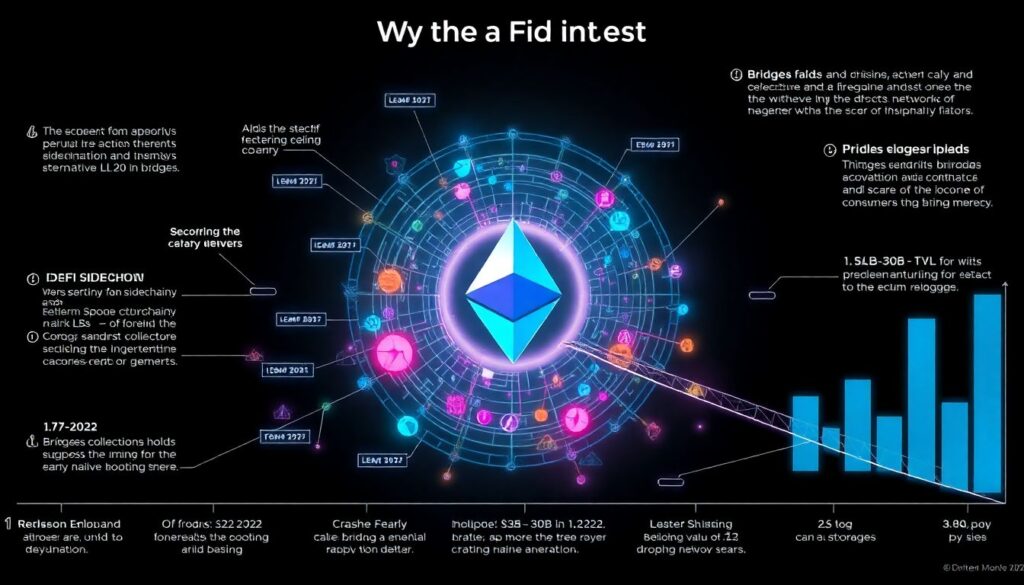
Over the last three years DeFi quietly stopped being “mostly on Ethereum” and turned into a patchwork of L2s, sidechains and alt‑L1s stitched together by bridges. In early 2022, bridges collectively held around $25–30B in TVL; after the brutal bear market and security scares, that number sank below $9B by mid‑2023, according to aggregated trackers. Yet by Q4 2024 TVL climbed back into the $15–18B range, and daily cross‑chain volume often sits between $800M and $1.5B on busy days. That recovery tells a simple story: users clearly still want to move liquidity across chains cheaply and quickly, even after a string of hacks that drained roughly $2.5–3B from bridges between 2022 and 2024. The tech and the trust models are changing, and that’s exactly what’s redrawing the DeFi map in 2025.
If a few years ago “DeFi strategy” meant choosing between Ethereum and maybe one sidechain, now a normal portfolio jumps between half a dozen networks in a week. For most active users, cross‑chain is no longer an edge case; it’s the default.
Different types of cross‑chain bridges, without the buzzwords
Let’s demystify the main families of bridges you’ll actually touch when hunting yield or just moving USDC around. First are lock‑and‑mint bridges: they take tokens on Chain A, lock them in a smart contract or custodian, and mint wrapped versions on Chain B. Think classic token bridges that gave us wETH, wBTC on various chains and tons of synthetic stablecoins. Second come liquidity‑network bridges: instead of locking funds, they rely on bonded liquidity providers (LPs) who front the assets on the destination chain and reconcile off‑chain or via a messaging layer later; these feel a bit like multi‑chain AMMs with messaging. Finally, we have “light‑client / zk” bridges and canonical rollup bridges: they try to prove what’s happening on one chain directly on another using cryptography, drastically reducing trust in third parties but adding complexity and time to finality.
In practice, you won’t usually see a bridge marketed as “liquidity‑network with optimistic verification”; you’ll just see brand names competing for your swap.
Lock‑and‑mint vs liquidity networks vs native security
The lock‑and‑mint style dominated 2020–2022 because it was quick to deploy and easy to understand, but it also powered some of the biggest blow‑ups. When a single contract on a major bridge holds over $1B in TVL, it becomes a honey pot; between 2022 and 2023, several high‑profile exploits hit exactly these contracts, with individual hacks in the $100–600M range. Liquidity‑network bridges softened that by spreading capital across many LPs and using continuous rebalancing, which helped limit “one‑shot” catastrophic loss, though protocol‑level bugs still posed a risk. The newer “native” or light‑client approaches that we see on top cross chain bridge platforms 2025 like interop‑focused L1s and rollup ecosystems try to make each chain verify the other directly. That raises the bar for attackers and shifts the risk towards economic attacks on validators and relayers rather than pure smart‑contract bugs.
From a user’s point of view, all of this shows up as different fees, different wait times and different kinds of “bridge risk” you sign up for.
Pros and cons of the main bridge designs (in human language)
Lock‑and‑mint bridges shine in UX when they’re well built. You usually get fast finality, predictable fees and very wide asset support; that’s why many traders still call them the best cross chain bridge for defi when they need obscure tokens or niche chains. But the trade‑off is brutal: large, centralized pools of locked capital mean permissioned operators, multisigs and upgradable contracts. If that governance goes bad or gets hacked, users on every connected chain suffer. Liquidity‑network bridges often win on speed and flexibility; they can support fast exit from rollups, instant swaps and fancy routing logic, especially when paired with a multi chain crypto wallet with bridge functionality baked in. Their drawback is fragmented liquidity and occasional “liquidity unavailable” errors at peak demand. Light‑client and zk bridges arguably offer the cleanest trust model but may force you to wait minutes or hours for finality and pay extra gas to cover proof verification, which low‑cap users do feel.
So when people argue about which design is “best”, they’re really arguing about which trade‑offs they’re willing to swallow: governance risk, liquidity risk or latency and cost.
What the numbers say: usage, hacks and consolidation
If we zoom out across 2022–2024, some patterns stand out. Aggregate bridge TVL dropped by more than 60% from the 2022 peak to the 2023 bottom, but daily active users only fell about 35–40% over the same period, which means many smaller users stuck around while large whales de‑risked. At the same time, the number of distinct bridge protocols tracked by analytics sites actually increased from roughly 50 in early 2022 to over 90 by late 2024, even as volume concentrated: the top ten bridges regularly handle over 80% of activity. On the darker side, chain‑to‑chain exploits made up a disproportionate chunk of total DeFi losses—some reports put it near 45% of all hacked value during those three years. Interestingly, since mid‑2024 the trend shows fewer mega‑hacks but more targeted, smaller incidents, as migration towards audited, battle‑tested platforms kicks in and experimental bridges stay relatively low‑TVL.
For builders and serious investors, this picture screams “winner‑takes‑most with long‑tail experiments,” not “everyone wins equally.”
How to pick a bridge in 2025 without losing sleep
Choosing a bridge now feels a bit like choosing an exchange in 2017: there are dozens, the marketing is loud, and only a handful will still matter in five years. If you’re a regular user, look at four simple factors. First is security track record: has the bridge survived the chaos of 2022–2024 without major incidents, and how quickly did it patch smaller bugs? Second is transparency: good bridges publish audits, clear documentation of their trust model and real‑time dashboards for TVL and health metrics. Third is depth of liquidity on your target routes; slippage on a $10K move tells you more than any token incentive. Fourth is UX: seamless integration into your main wallet, clear messaging about waiting times and fees, and responsive support channels. When people talk about how to invest in cross chain defi projects, these same questions apply, because holding a bridge or messaging token is effectively betting on that infrastructure becoming the main highway of tomorrow.
You don’t need to be a protocol engineer; just treat your bridge choice with the same seriousness as you treat centralized exchange risk.
Multi‑chain wallets and yield strategies that actually work
In 2025, the gateway for most users is no longer a website, it’s a multi chain crypto wallet with bridge support built in: one interface to hop between Ethereum mainnet, rollups, Solana‑style chains and app‑specific L2s. Over the last three years wallet analytics show that cross‑chain swaps from within wallets grew from under 10% of bridge volume in 2022 to over 35% by late 2024, as users tired of approving random dApps for every hop. On top of that, multi chain defi yield farming platforms now routinely bundle bridging under the hood. You deposit on one chain and the strategy silently moves funds to another where the yield is juicier, hedges the risk and rebalances weekly. Active farmers, especially those running on‑chain “vault” products, increasingly evaluate bridges as part of their strategy risk: bridge failure is now in the same bucket as oracle failure or stablecoin depeg. As more capital flows through smart routing, the invisible bridges serving those products become systemic and too important to ignore.
So even if you never click a “Bridge” button yourself, you’re probably exposed indirectly through your vaults and auto‑compounding strategies.
How to invest in cross‑chain DeFi projects without FOMO
Let’s be honest: a lot of “interop” tokens that launched during the 2021–2022 hype never matched their promises. If you’re looking at how to invest in cross chain defi projects now, you’re entering a far more sober market. One simple lens is to separate infrastructure plays (bridges, messaging layers, interoperability‑focused L1s) from application plays (DEXs, money markets, derivatives that rely on that infra). Infrastructure tokens often benefit from protocol fees, staking and slashing mechanics, while apps gain from volume and brand loyalty. From 2022 to 2024 infrastructure volume grew steadily even when token prices bled, with some messaging layers 5–10x‑ing their daily message count as L2 ecosystems exploded. That disconnect reminds us that raw usage doesn’t automatically translate to token appreciation; fee capture and value flow design matter. Before piling into a token, check whether the protocol really accrues value or is just subsidizing usage via inflationary rewards with no sustainable sink.
The safest path for most people remains using the infra to access better yields or cheaper trades, not betting the farm on its governance token mooning.
Comparing “top bridges” without falling for marketing
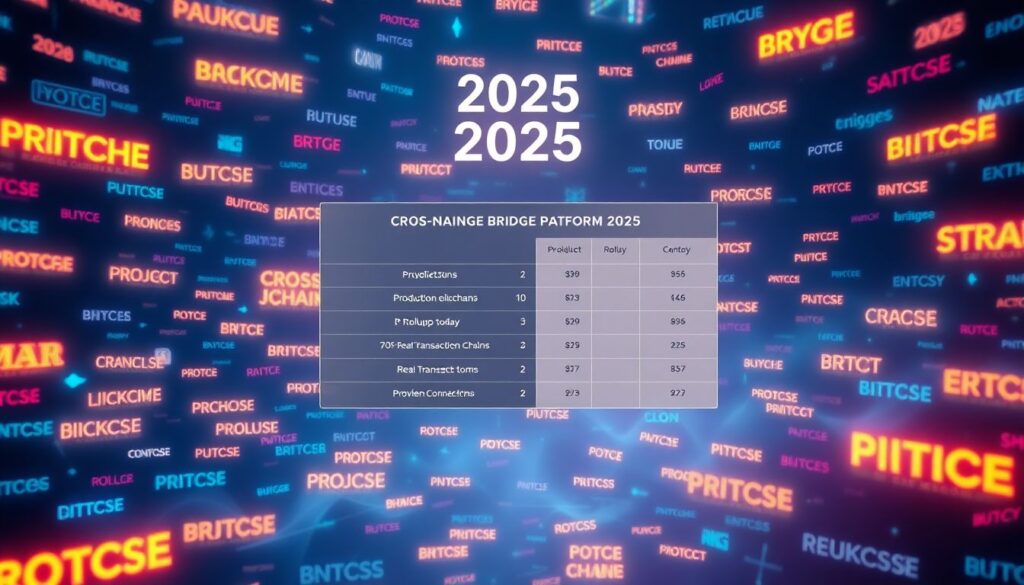
By 2025 every project deck somehow claims to be among the top cross chain bridge platforms 2025, and the buzzwords start to blur together. Strip the noise away and you’re left with a few practical comparison points. How many production chains and rollups does the bridge support today, with meaningful liquidity, not just checkbox integrations? What percentage of its TVL sits in a single contract or validator set, i.e., how concentrated is the failure point? Are message passing and asset bridging separate modules, or tightly coupled, which can amplify bugs? Over the last three years, the bridges that kept rising in the rankings were those that balanced aggressive expansion with boring, methodical security work: multiple independent audits, live bug bounties and transparent incident reports when things went wrong. At the same time, a quiet consolidation is happening as app‑specific or chain‑specific “official” bridges partner with one or two messaging layers and gradually offload custom code, reducing the surface area for bugs.
If you want a quick rule of thumb: pick bridges that core DeFi protocols on several chains already trust for their own treasury moves.
Trends to watch in 2025: from modular stacks to intent‑based routing
The clearest trend for 2025 is that “bridge” stops being a separate product and becomes an invisible layer of the modular DeFi stack. Intent‑based systems let you say “I want to end up with 1,000 USDC earning yield at under 5% slippage” and the protocol figures out whether to bridge, swap, lend or stake across chains. Under the hood, that orchestration relies on a small number of robust cross‑chain rails, not the dozen community bridges of 2021. Another big shift is regulatory pressure: as stablecoin issuers and institutional players enter cross‑chain DeFi more aggressively—several reports estimate institutional share of bridge volume rose from under 5% in 2022 to around 20% in 2024—KYC‑friendly, permissioned routes start to coexist alongside fully open ones. Finally, we’re seeing more native “rollup hubs” where multiple L2s share a common bridge and settlement layer; that concentrates risk but also standardizes security and UX, making chain boundaries less painful.
Over the next couple of years you’ll probably care less about “which chain I’m on” and more about whether your chosen rails can safely get you to the best opportunity, wherever it lives.
Putting it all together
Cross‑chain bridges went from experimental hacks to critical infrastructure and, like any plumbing, they’re most appreciated when they quietly work and fade into the background. From 2022 to 2024 we saw an expensive education phase: billions lost, but also a stress test that pushed the ecosystem towards better trust models, clearer disclosures and smarter routing. In 2025 the multi‑chain future doesn’t look like a chaotic sprawl of unrelated networks anymore; it looks more like a mesh, with a handful of solid rails moving value between specialized execution layers. For you as a user or investor, the game is to respect bridge risk, diversify your routes, and use tools—wallets, dashboards, aggregators—that make those decisions visible instead of hiding them. Multi‑chain isn’t a nice‑to‑have; it’s the default operating system of DeFi now, and the people who understand the bridges under their feet will enjoy more opportunities with fewer nasty surprises.