
Anthropic files landmark lawsuit accusing U.S. government of retaliatory AI blacklist over military-use limits
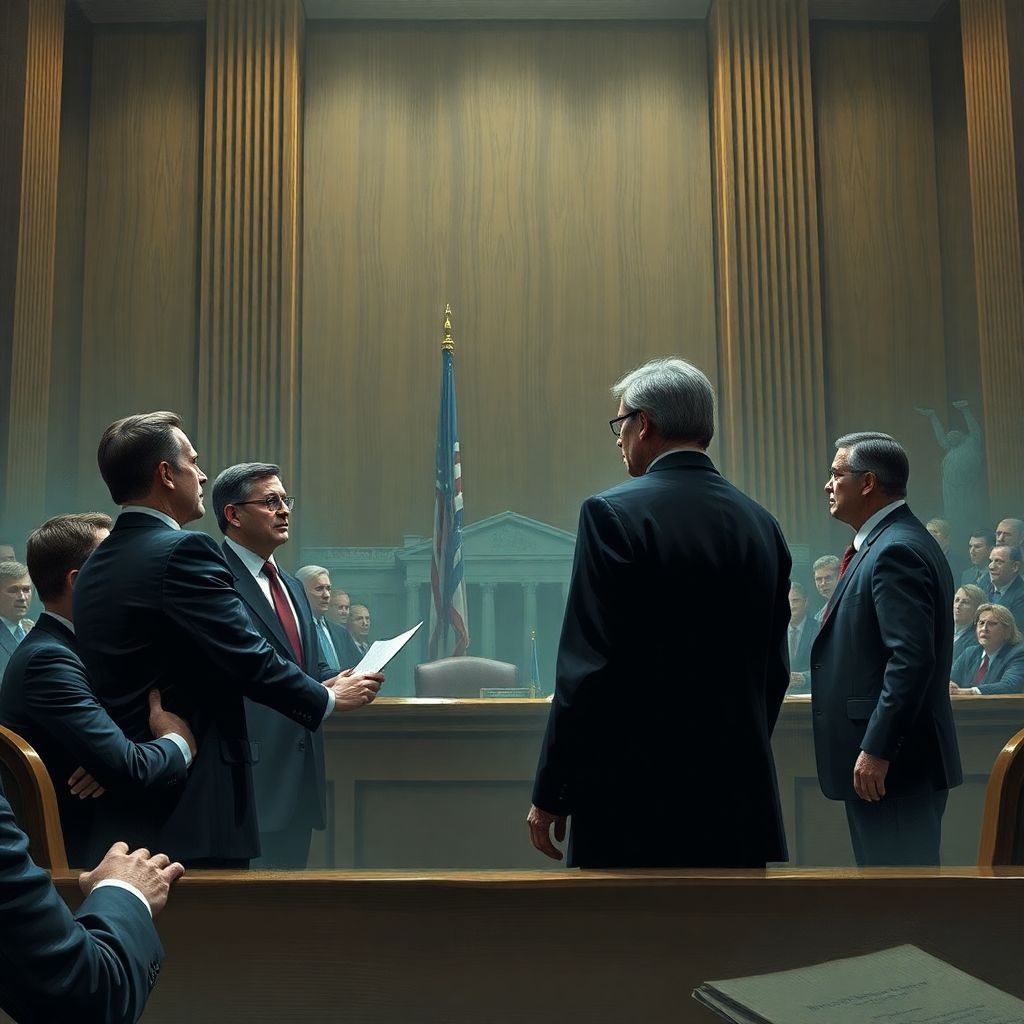
Artificial intelligence company Anthropic has launched a high-stakes legal battle against the U.S. government, alleging that federal officials unlawfully blacklisted its technology after the firm refused to support certain military applications of its Claude AI models.
In a complaint filed in the U.S. District Court for the Northern District of California, Anthropic is seeking declaratory and injunctive relief against a wide array of federal entities and officials. The suit names the Departments of War, Treasury, State, and Homeland Security, along with the Federal Reserve and the Securities and Exchange Commission, among others, claiming they collectively orchestrated an effective ban on the company’s technology within federal systems and key federal contracting networks.
At the core of the dispute is Anthropic’s policy that its Claude model family cannot be used to power lethal autonomous weapons systems or to enable mass surveillance of U.S. citizens. According to the filing, federal officials pressed the company to remove those restrictions and to permit the Department of War to make, in their words, “all lawful use” of the AI tools.
Anthropic asserts that it was willing to broaden collaboration with the government, including working on approved defense-related projects, but refused to abandon its two central safety constraints: no support for autonomous lethal targeting and no facilitation of large-scale domestic surveillance. The company frames those limits as essential to its corporate mission and as part of its broader approach to responsible AI development.
Tensions allegedly escalated once Anthropic declined to fully comply with the government’s demands. The complaint describes a sequence of events culminating in a directive from then-President Donald Trump, instructing federal agencies to halt all use of Anthropic’s technology. Shortly afterward, the Department of War is said to have formally categorized the company as a “Supply-Chain Risk to National Security.”
That designation, according to Anthropic, functioned as a de facto blacklist. It barred defense contractors and other partners from integrating or procuring the firm’s AI systems, excluding Anthropic from major parts of the defense procurement ecosystem. Several agencies reportedly terminated existing engagements or instructed staff to discontinue use of Claude-based tools altogether.
Anthropic contends that this chain of actions violated multiple legal protections. The lawsuit argues that the government’s response amounts to unconstitutional retaliation under the First Amendment, because the company was punished for articulating and enforcing ethical and safety objections to certain military uses of its technology. It also claims violations of the Administrative Procedure Act, alleging that agencies imposed sweeping restrictions without proper process, transparency, or statutory authority. Additionally, the company cites due-process concerns, arguing it was branded a national security risk without a fair opportunity to contest the label or review the evidence behind it.
The complaint states that the fallout has already been severe. Anthropic says government decisions have led to canceled contracts and stalled negotiations, imperiling what it describes as hundreds of millions of dollars in near-term business opportunities. Beyond direct revenue, the firm argues the blacklist has harmed its reputation, deterred private-sector partners wary of government scrutiny, and disrupted long-term commercial relationships.
In its requested relief, Anthropic asks the court to declare the government’s actions unlawful, to vacate the “supply-chain risk” designation, and to bar enforcement of the shutdown orders and contracting bans while the case proceeds. The company also seeks broader protections that would prevent agencies from conditioning market access on a technology firm’s willingness to drop ethical restrictions on how its tools may be used.
The lawsuit places front and center one of the most urgent questions of the AI era: who gets to decide the boundaries of acceptable use when powerful general-purpose models intersect with national security interests. Anthropic is arguing that developers must retain the right to impose guardrails, especially in areas like lethal autonomous systems and pervasive surveillance, even when such limits conflict with government preferences.
Legal experts note that the First Amendment angle could prove especially consequential. The company is effectively asserting that its product-use policies and public statements about AI safety constitute protected expression. If a court agrees that the government cannot punish a firm for maintaining such positions, it would set a strong precedent for other AI developers seeking to embed ethical constraints into their technologies without fear of losing access to public markets or government contracts.
The case also highlights a growing tension between national security imperatives and the emerging field of AI safety. Defense officials have argued for the need to maintain technological superiority, including through advanced AI systems that can assist in battlefield decision-making and intelligence analysis. Companies like Anthropic, however, are increasingly drawing red lines around autonomy in weapons and the use of AI for broad, persistent monitoring of civilian populations, emphasizing the risk of mistakes, abuses, and escalation.
For the broader technology industry, the outcome of this lawsuit may shape how far governments can go in pressuring firms to alter their safety policies. If the government’s actions are upheld, AI providers might conclude that refusing to cooperate with certain defense or intelligence uses could trigger severe commercial consequences. If Anthropic prevails, it could embolden companies to adopt stronger internal policies limiting the use of their models in warfare, policing, or surveillance.
Investor and corporate reactions are likely to be mixed. Some stakeholders may view alignment with government priorities as essential to long-term growth, especially in sectors like defense, cybersecurity, and critical infrastructure. Others may see Anthropic’s stance as a strategic differentiation point, signaling a commitment to ethical governance that could appeal to global customers wary of militarized AI and expansive surveillance.
The case may also influence international debates. Allies and competitors alike are grappling with how to regulate AI in military contexts and how to treat companies that unilaterally restrict certain uses of their tools. A strong judicial affirmation of Anthropic’s rights could become a reference point for policymakers abroad who are seeking to balance innovation, security, and civil liberties.
Civil liberties advocates are watching closely, since the complaint directly links AI deployment to mass surveillance concerns. The question is not only whether AI can be used in intelligence and law-enforcement contexts, but whether companies must help build or optimize such systems if they believe they pose unacceptable risks to privacy and democratic norms. The lawsuit effectively asks whether refusing to participate in building surveillance infrastructure can be punished through loss of public-sector market access.
Another critical dimension is the chilling effect on internal whistleblowing and safety culture within AI companies. Anthropic’s position is that speaking candidly about potential dangers of autonomous weapons and mass surveillance is part of responsible governance. If those types of warnings are perceived as commercially hazardous because they might provoke government retaliation, employees and executives may become less willing to surface or act on serious concerns about misuse.
From a governance standpoint, the litigation underscores the urgent need for clearer frameworks around AI procurement and national security decisions. Much of the dispute, as described in the complaint, seems to hinge on opaque risk designations and rapid policy shifts. Establishing transparent, legally grounded processes for evaluating vendors and technologies could reduce the likelihood of high-stakes conflicts spilling into court.
The Anthropic-U.S. government clash also raises a strategic question for AI developers: whether to build modular, compartmentalized systems that can be selectively disabled for certain uses, or to adopt categorical bans on entire classes of applications. Anthropic has opted for explicit red lines, but future firms might experiment with more granular controls, attempting to satisfy both ethical commitments and government demands. However, this case suggests that even partial compromises may not be enough if fundamental disagreements remain over autonomy in weapons or surveillance scope.
Ultimately, the lawsuit is poised to become a test case for the balance of power between AI creators and state actors in a domain where both sides claim to be protecting security-national security on one hand and human security and civil rights on the other. As AI capabilities expand and government dependence on such systems deepens, the legal contours established in this case could shape not just one company’s business prospects, but the entire ecosystem of how advanced AI is developed, deployed, and constrained in democratic societies.