
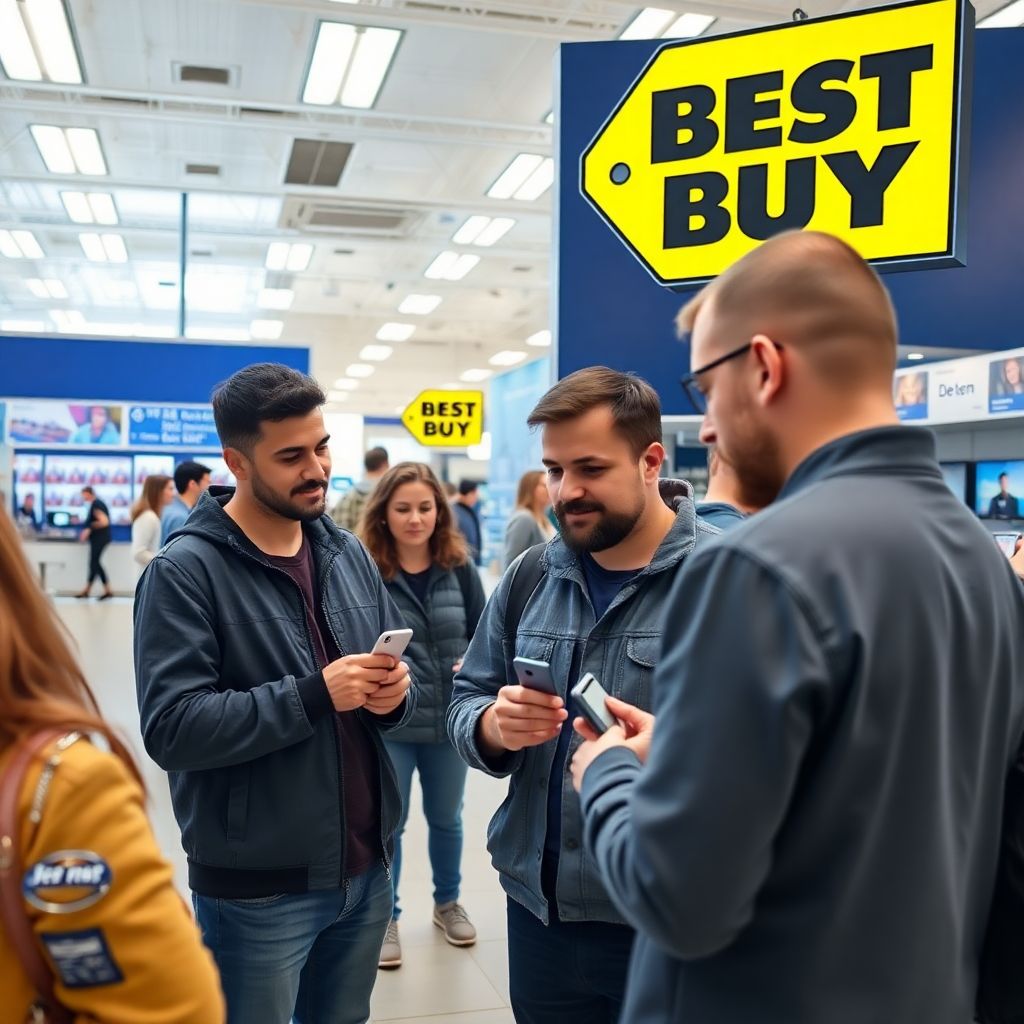
Best Buy brings Tangem hardware wallets and crypto ring to stores across the U.S.
Best Buy has begun stocking Tangem’s line of self‑custody crypto products both online and in more than 200 physical locations across the United States, marking Tangem’s most extensive retail rollout in the country so far. The move puts the company’s NFC-based hardware wallets and its new wearable “crypto ring” directly in front of mainstream shoppers alongside traditional consumer electronics.
According to Tangem, the partnership significantly expands its existing retail footprint, which already includes major outlets such as Walmart, Amazon, and Virgin Megastore. With Best Buy now on board, the company aims to push hardware wallets from a niche, online-only product into something consumers can pick up as easily as a smartphone accessory.
Company executives frame the deal as a turning point for self‑custody. Tangem’s chief technology officer, Andrey Lazutkin, says the availability of its devices in a big‑box electronics chain lowers both technical and psychological barriers for everyday users considering taking control of their own digital assets. He argues that combining strong security with a simplified user experience at national scale could fundamentally broaden the audience for self‑custody.
Tangem reports that its hardware is already used in 170 countries and can handle more than 16,000 tokens across over 90 blockchain networks. Across more than six million devices shipped, the firm says it has not recorded a successful breach of its security architecture, positioning this track record as a key selling point for cautious buyers.
Despite years of headlines about hacked exchanges and platform failures, Tangem cites data indicating that roughly 88% of crypto holdings are still parked on centralized trading platforms. At the same time, exchange vulnerabilities continue to rank among the top security worries for U.S. crypto users. By putting hardware wallets on familiar retail shelves, Tangem hopes to make moving away from custodial platforms as simple as buying a new router or smartwatch.
At the center of the Best Buy offering is the Tangem Wallet, a credit‑card‑sized NFC hardware wallet sold in packs of two or three identical cards. Each card in the set can act as both a primary access device and a backup key to the same wallet, eliminating the need for users to manage a traditional seed phrase if they opt for Tangem’s seedless backup model. Lose one card and the others still provide full access to the same funds.
The retail rollout also features the Tangem Ring, which the company describes as the first fully fledged hardware wallet built into a wearable ring format. Crafted from zirconia ceramic, the ring is designed to look and feel like a minimal, everyday accessory while housing secure hardware inside. The retail package includes one ring and two backup cards, so users have multiple ways to access and recover the same wallet.
In both the card‑based wallet and the ring, private keys are generated directly on the embedded secure chips and never leave the hardware, according to Tangem. The company emphasizes that keys are not uploaded to servers or stored on users’ smartphones, reducing exposure to remote attacks. While Tangem promotes a seedless backup process to simplify recovery, advanced users can optionally import or use a conventional seed phrase if they prefer the more traditional approach.
When paired with the Tangem mobile app, the hardware devices function as an access key to a broader crypto management platform. Users can hold, send, receive, swap, and stake supported digital assets, as well as spend them where compatible payments are supported. Tangem says its ecosystem integrates Visa payments via Tangem Pay and works with mobile payment systems like Apple Pay and Google Pay. Even when using these services, final transaction approvals occur on the hardware device itself and can be protected with PIN codes and biometric checks on the user’s smartphone.
This expansion into Best Buy arrives as crypto companies increasingly shift their focus from pure speculation to everyday usability and consumer products. For years, much of the industry’s push into the mainstream centered on enabling crypto payments at the point of sale or rewarding users with digital assets. For example, Shopify introduced direct USDC payment options for merchants via partnerships with major payment processors, while Fold rolled out a Bitcoin rewards program allowing employers to pay out incentives in BTC. Electronics chains such as Newegg experimented with accepting assets like Dogecoin at checkout, reflecting a broader trend toward making crypto feel like another payment rail rather than a purely investment‑driven asset class.
The Tangem-Best Buy tie‑up represents a different but related phase of that evolution: instead of prioritizing where consumers can spend crypto, it focuses on how they hold it. By normalizing dedicated self‑custody hardware in mainstream stores, the company is betting that more users will opt for a model where they hold their own keys instead of trusting exchanges to safeguard their funds.
For everyday consumers, the most immediate question is why they would need a hardware wallet at all. As long as their assets sit on a well‑known exchange, the service can feel convenient and relatively safe-until there is an outage, a hack, or a policy change that restricts withdrawals. Hardware wallets like Tangem’s aim to solve precisely that risk: they give users direct, on‑chain control over their assets, turning the exchange into a tool for trading rather than a long‑term storage provider.
Tangem’s choice of NFC cards and a ring form factor is also a deliberate departure from the more familiar USB‑style devices that have dominated the hardware wallet space. NFC cards resemble payment or access cards and may feel intuitive to users already accustomed to tapping their phones and cards for everyday transactions. The ring format goes a step further by integrating the hardware into something people already wear daily, which could encourage more consistent use while making the device less conspicuous.
Security architecture is central to Tangem’s pitch. The company relies on secure element chips similar to those found in modern payment cards and passports. These chips are designed to generate and store cryptographic keys internally and prevent key extraction even under direct, physical attacks. Because the keys never leave the chip, the attack surface is narrowed: malware on a smartphone or laptop cannot simply copy a wallet’s private key if that key never enters system memory in the first place.
However, self‑custody also shifts responsibility onto the user. If a person loses all of their Tangem devices associated with a particular wallet and has not configured an alternative recovery method, the funds tied to that wallet may be permanently inaccessible. Tangem’s multi‑card sets and ring‑plus‑card bundles are meant to address this risk by encouraging users to split their backups across multiple locations-keeping one card at home, one in a safe deposit box, and carrying the ring, for example. The seedless model is intended to eliminate the common failure point of a single piece of paper or text file containing an all‑important seed phrase.
For newcomers, this raises a practical question: who exactly should consider a Tangem wallet from Best Buy’s shelves? The most obvious candidates are users who hold more crypto than they are comfortable leaving on an exchange but are intimidated by complex setups or long seed phrases. A tap‑to‑sign card or ring, paired with a mobile app, offers a more familiar interaction model than typing recovery words into a device or manually verifying long strings of characters.
More advanced users may see value in Tangem as a secondary or “daily spending” wallet. They might choose to keep the bulk of their holdings in a multisig or more complex cold storage arrangement, while using a Tangem card or ring for smaller, frequently used balances. The wearable form factor, in particular, lends itself to on‑the‑go payments, event ticketing, or rapid access scenarios where taking out a hardware stick or entering lengthy PINs is impractical.
From Best Buy’s perspective, adding hardware wallets is part of a broader trend of expanding into adjacent digital lifestyle products-beyond laptops and TVs into smart home devices, gaming, VR, and now crypto security. For the retailer, Tangem’s products occupy a category similar to password managers, biometric safes, or privacy‑oriented devices: tools that respond to rising consumer awareness of digital risk.
The partnership also signals a maturing retail attitude toward crypto. Rather than treating digital assets strictly as speculative products best left to online platforms, big‑box stores are beginning to treat them as another part of the consumer electronics ecosystem. Hardware wallets sit comfortably alongside routers, security cameras, and smartphones, all of which manage sensitive data and online identities in various ways.
For Tangem and its competitors, success at Best Buy could set a template for future distribution. If consumers respond positively to seeing crypto self‑custody tools in mainstream aisles, other electronics chains, telecom carriers, or even financial institutions could follow suit with their own retail offerings. That, in turn, could influence how new crypto users first encounter self‑custody: not through niche online forums or advanced tutorials, but through familiar retail brands and in‑store demonstrations.
At the same time, bringing hardware wallets to the mass market does not eliminate the need for education. Buyers still need to understand that while these devices provide stronger security guarantees than custodial platforms, they also demand more personal responsibility. Misplacing devices, ignoring backups, or falling for social engineering scams can still lead to loss. Retailers and manufacturers that succeed in this space will likely be those who pair hardware sales with clear, accessible guidance on best practices.
By securing shelf space in one of America’s largest consumer electronics chains, Tangem is betting that convenience and familiarity will be the key to unlocking wider adoption of self‑custody. The company’s NFC cards and wearable ring offer a different take on hardware wallets-one that aims to merge security, everyday usability, and mainstream retail visibility in a single package. As crypto moves further into the consumer mainstream, how shoppers respond to seeing a “crypto wallet ring” next to headphones and chargers may offer an early glimpse into the next phase of digital asset adoption.