
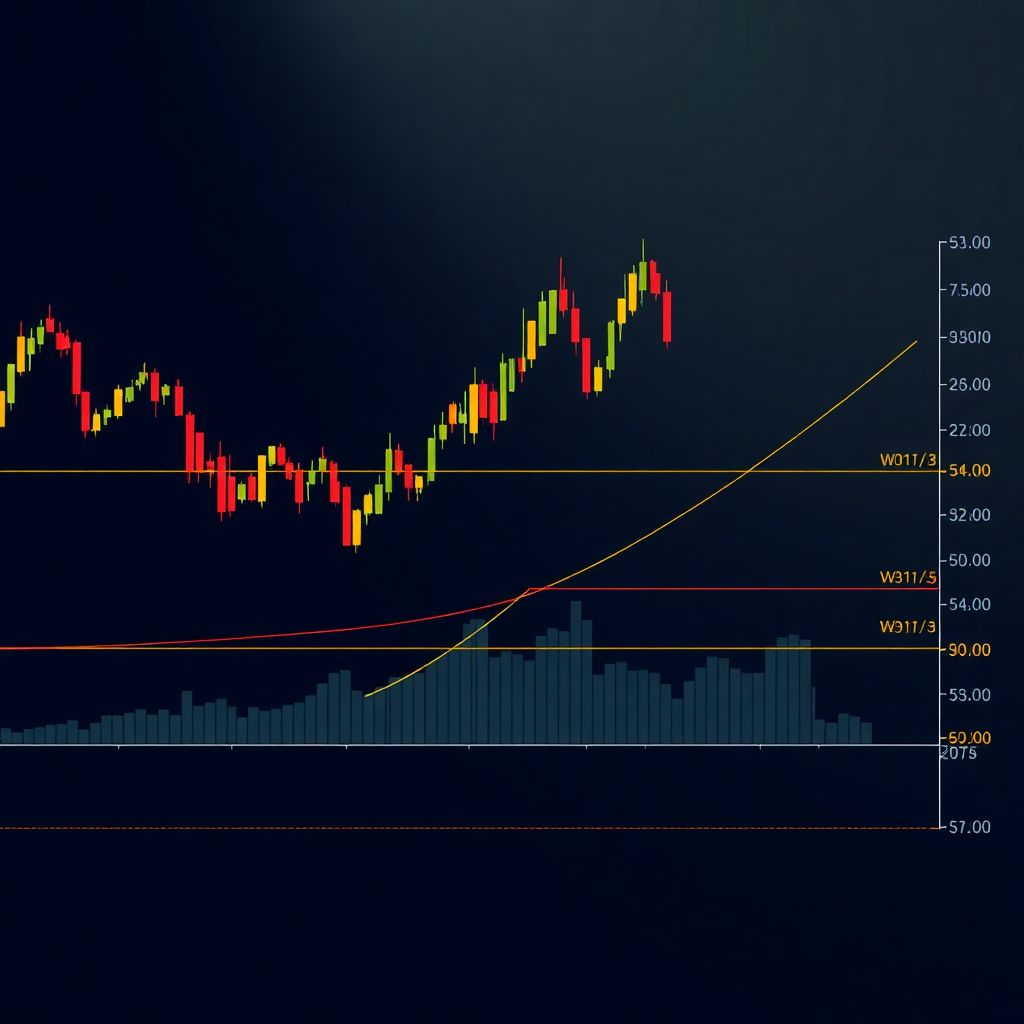
Binance Coin’s latest sell-off is showing few signs of exhaustion, and several key technical indicators are flashing warnings that the slump may not be over. After a blistering rally to a record high of $1,376 earlier this year, BNB has retreated sharply to around $840, wiping out roughly 40% from its peak. This drawdown has dragged its market capitalization down to about $118 billion from more than $180 billion at its year‑to‑date top, underscoring how abrupt and deep the correction has been.
The correction is not happening in isolation. The broader crypto market has been under pressure, with Bitcoin losing altitude and major altcoins following suit. Risk sentiment has cooled, leverage has been flushed out in several waves, and BNB, despite its strong brand and ecosystem backing, has not escaped the downdraft. The token is tracking the wider market weakness, but its own chart suggests that specific technical patterns could magnify the downside.
On the daily timeframe, BNB has been locked in a clear downward trajectory for several weeks. Price action has shifted from a strong, impulsive uptrend to a series of lower highs and lower lows, a classic sign that sellers are increasingly in control. Momentum indicators have rolled over, and buyers have struggled to reclaim any major resistance levels. Against this backdrop, one pattern in particular is drawing traders’ attention: a looming death cross.
A death cross occurs when a shorter-term moving average drops below a longer-term one, signaling a transition from bullish to bearish conditions. In BNB’s case, the 50‑day Exponential Moving Average currently hovers near $905, while the 200‑day EMA is close to $880. As the faster 50‑day line drifts downward toward the slower 200‑day line, the probability of a bearish crossover increases. Historically, such crosses have often preceded extended periods of weakness or, at the very least, prolonged consolidation rather than V‑shaped recoveries.
At the same time, the structure of BNB’s recent price action resembles a bearish pennant pattern. This formation typically appears after a steep downward move, followed by a brief consolidation in the shape of a converging triangle. The initial sharp drop forms the pennant’s “flagpole,” while the subsequent narrowing price range creates the pennant itself. BNB now seems to be tracing out that triangular consolidation, with the two trendlines gradually moving closer to each other. A decisive break below the lower boundary of this triangle would normally signal a continuation of the prior downtrend, opening the door to another leg lower.
The Fibonacci retracement levels add another layer of concern. After its massive rally to the all‑time high, BNB has now slipped slightly below the 61.8% Fibonacci retracement level derived from the latest major upward move. The 61.8% zone is often considered a “golden” level where strong assets frequently find support and stage meaningful rebounds. Falling under this threshold suggests that buyers failed to defend one of the most important technical support areas, increasing the risk that the correction could deepen.
Murrey Math Lines, another tool used by technically oriented traders to gauge key support and resistance zones, paint a similarly cautious picture. BNB has broken down through the Strong, Pivot, and Reverse levels on this framework and has now arrived at what is described as the Weak, Stop & Reverse point. This area can sometimes offer a short‑term pause in the trend, but its very name implies fragility: if price fails to stabilize here, the model points toward a test of even lower levels.
Trend‑following indicators confirm the bearish bias. BNB is trading below the Supertrend line, which switches from support to resistance when an uptrend flips into a downtrend. Being under this line typically signals that any rebound attempts are likely to meet selling pressure rather than spark a sustained reversal. Similarly, on the Ichimoku chart, price action remains underneath the cloud, indicating that the prevailing momentum and longer‑term bias are still skewed to the downside. Until BNB reclaims and holds above this cloud, rallies are likely to be treated as potential selling opportunities rather than the start of a new bullish phase.
Putting these signals together, the path of least resistance appears to remain lower. If the bearish pennant breaks down and the death cross confirms, sellers are expected to aim for the next significant support area around $750. This level aligns with the Ultimate Support band within the Murrey Math Lines framework and sits roughly 10% below current prices. A clean break beneath $750 would be technically significant and could trigger another wave of liquidations or panic selling, dragging BNB toward the next major psychological and technical target near $500.
The $500 area carries weight beyond simple round‑number psychology. It would represent a deep retracement of the entire bull move from prior cycle lows and could be an area where longer‑term investors begin to reassess value. For many trend traders, however, such a move would merely confirm that the asset has shifted into a longer, structural downtrend, prompting them to remain cautious or even continue short‑biased strategies until clearer signs of stabilization emerge.
That said, the bearish outlook is not set in stone. Markets are inherently probabilistic, and technical patterns fail often enough to warrant humility. A key invalidation level for the negative scenario sits around the 50% Fibonacci retracement zone, close to $945. If BNB can reclaim this region and sustain trading above it, the current breakdown narrative would begin to weaken. A move above $945 would indicate that buyers are finally stepping in with enough conviction to absorb selling pressure and push price back into a more neutral or even bullish posture.
Reclaiming the 50% retracement would also increase the chance of a short squeeze. Many traders who have been positioning for continued downside could be forced to cover their shorts, adding fuel to a recovery move. From there, if BNB managed to break back above its key moving averages and the Ichimoku cloud, the door could open for a drive back toward its record highs, with the all‑time peak region around $1,380 serving as a longer‑term upside reference point.
For traders navigating this environment, risk management becomes crucial. Aggressive bears might look to use rallies toward the 50‑day EMA or the upper boundary of the pennant as opportunities to enter or add to short positions, placing stops just above the invalidation levels such as the $945 area. More conservative participants may simply wait for confirmation: a clear breakdown from the pennant with expanding volume on the downside, or, conversely, a convincing reclaim of the 50% Fibonacci level and a close back above the Supertrend and Ichimoku cloud.
Long‑term investors with a multi‑year horizon might take a different view altogether. For them, the current pullback could eventually be seen as part of a typical crypto market cycle, characterized by extreme rallies and equally sharp corrections. They may choose to scale into positions gradually as price approaches major support zones like $750 or even $500, accepting the possibility of further volatility in exchange for longer‑term upside potential. However, even long‑term buyers typically benefit from being aware of the technical landscape, as it can help them avoid catching a falling knife too early.
It is also important to remember that technicals do not exist in a vacuum. Fundamental developments around the Binance ecosystem, regulatory news, macroeconomic shifts, and sentiment toward centralized exchanges can all influence BNB’s trajectory. Positive catalysts such as ecosystem growth, technological upgrades, or improving regulatory clarity could blunt or even reverse the negative technical signals. Conversely, any fresh negative headlines or broad‑based risk‑off moves in global markets could accelerate the downside that the charts are already hinting at.
Volatility is likely to remain elevated as these opposing forces play out. Traders should expect abrupt intraday swings, false breakouts, and aggressive stop‑hunts in both directions as liquidity thins out and market makers adjust. Patience and discipline—waiting for confirmed signals rather than chasing every move—can help reduce the risk of whipsaws in this kind of environment.
In summary, Binance Coin currently sits at a technically fragile point. The combination of a looming death cross, a developing bearish pennant, a loss of the critical 61.8% Fibonacci level, and positioning below key trend indicators all point to an elevated risk of further downside, with $750 and potentially $500 emerging as the next major support zones. At the same time, a decisive recovery above the 50% retracement near $945 would cast doubt on the bearish case and could mark the beginning of a more constructive phase, with the all‑time high region around $1,380 once again entering the conversation. Until such a reversal unfolds, caution remains warranted.