
Binance Launches ‘Junior’ Crypto Savings Accounts Aimed at Children
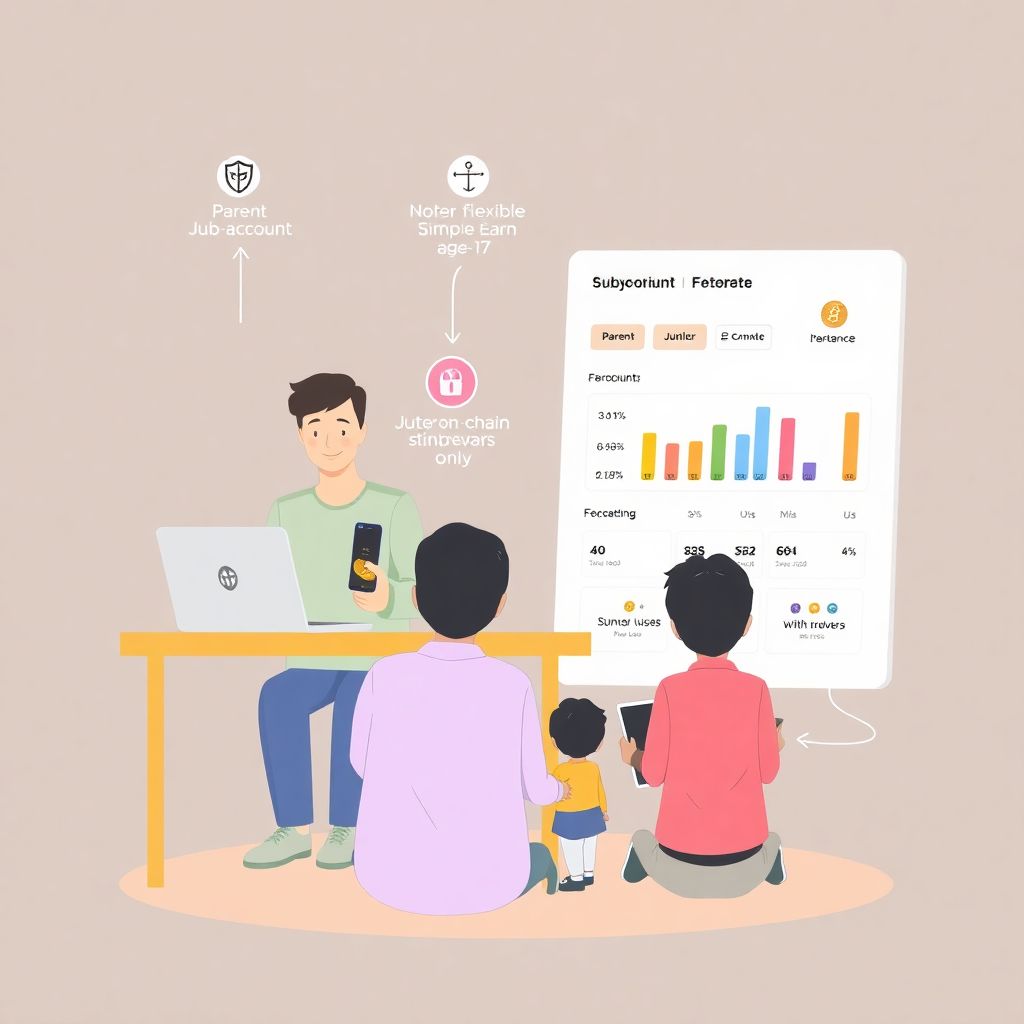
Binance has introduced a new product, Binance Junior, a crypto savings account designed for minors that operates under the supervision and control of their parents or legal guardians. The new feature is intended to let adults invest in digital assets on behalf of children, while putting strict limits on how those funds can be moved or accessed.
How Binance Junior Works
Binance Junior is structured as a sub-account attached to an adult’s primary Binance account. Only users with a verified main account can open a Junior account, and the parent retains full authority over it at all times.
Key setup points:
– The account is available for children aged 6 to 17.
– Each Junior profile is linked to one parent or guardian’s main Binance account.
– The adult controls deposits, investment options, and transfers in and out of the sub-account.
This structure allows parents to build a crypto portfolio in a child’s name without handing over full trading powers or unrestricted access to blockchain withdrawals.
Deposit and Funding Options
Parents can fund a Binance Junior account in two main ways:
1. Internal Transfers from the Parent’s Binance Account
The primary method is moving assets from the parent’s main account to the Junior sub-account. This can include stablecoins or other supported cryptocurrencies, depending on the region and product availability.
2. On-Chain Transfers via the Parent Account
While Junior accounts themselves cannot withdraw or interact directly with the blockchain, parents can receive funds into their own Binance wallets through on-chain transfers from external wallets or platforms. After that, they can move those assets internally into the Junior account.
In other words, all external blockchain activity is funneled through the parent’s main account. The child’s sub-account sits inside Binance’s ecosystem and does not hold direct on-chain withdrawal privileges.
Strict Limits on Withdrawals and Transfers
One of the key safety features is how tightly outbound movement of funds is controlled. According to Binance’s design for Junior accounts:
– No on-chain withdrawals from Junior accounts
The child’s sub-account cannot send assets to external wallets or addresses. This blocks children from moving funds off the platform or interacting with decentralized apps directly.
– Transfers are restricted to parent and other Junior accounts
Funds can be moved:
– Back to the parent’s main Binance account, or
– To other Binance Junior accounts (for example, siblings), if the parent authorizes it.
This closed-loop system is meant to limit the risk of unauthorized spending, scams, or impulsive trading decisions by minors, while still allowing families to manage and allocate funds internally.
Earning Interest: Junior Flexible Simple Earn
In selected jurisdictions, crypto deposited into Binance Junior accounts may be eligible for passive income through Junior Flexible Simple Earn, a customized version of Binance’s yield-earning products.
Core features of this earning option include:
– Variable interest rates depending on asset type and market conditions.
– Flexible redemptions, meaning parents can typically move funds back to the main account without long lock-up periods.
– Parent-controlled participation, as only the adult account owner can opt Junior funds into or out of Simple Earn products.
Not all regions will support the same coins or the same interest-bearing features, and Binance’s terms may change over time, so the precise returns and eligible assets will differ by country.
Geographic Availability and Age Rules
Binance has not fully clarified a single global rule set for Binance Junior. Instead, availability appears to be fragmented by region:
– The official materials specify that the product is available only in certain countries and jurisdictions.
– Age limits can differ: while the general band is 6 to 17 years old, some countries may impose different minimum or maximum ages due to local regulations.
– Not every supported country will offer the interest-earning features, even if basic Junior accounts are available there.
As a result, parents need to check the specific conditions that apply in their own country, including whether Binance Junior is supported at all and what exact limitations apply to minors.
Why Binance Is Targeting Family and Youth Finance
By launching Binance Junior, the exchange is moving into a niche that blends family savings, financial education, and long-term investing. Several motives are apparent:
– Early financial literacy: Parents increasingly want to teach kids about money, investing, and digital assets before they reach adulthood. A controlled sub-account lets them demonstrate real portfolios without giving children the keys to move money freely.
– Long-term savings: Some families may view crypto as a speculative but potentially high-growth component of long-term savings for education, housing deposits, or future expenses.
– User retention: From a business perspective, onboarding younger users through family accounts can help exchanges build loyalty so that, when those children become adults, they are more likely to remain customers.
However, this also raises questions about how suitable volatile assets like cryptocurrencies are for minors, even under adult supervision.
Benefits for Parents and Children
For families comfortable with crypto, Binance Junior can offer several potential advantages:
1. Centralized Control with Separate Tracking
Parents keep full custody and decision-making powers, but they can still see each child’s holdings and performance separately, which makes it easier to track savings for multiple kids.
2. Opportunity to Learn with Limited Risk Exposure
Children can follow price movements, portfolio changes, and interest earnings through a simplified view (where available), without the technical complexity of wallets, private keys, or decentralized finance interfaces.
3. Gatekeeping Against Scams and Impulse Transfers
Because the sub-account doesn’t allow on-chain withdrawals, there is a built-in barrier against phishing links, “get-rich-quick” schemes, or speculative trading on outside platforms. The final word on any movement of funds rests with the adult.
4. Structured Long-Term Saving Habits
Regular contributions from a parent’s main account into a child’s sub-account can reinforce a habit of saving, similar to traditional children’s savings accounts at banks, but with crypto-based assets.
Risks and Concerns to Consider
Despite the safeguards, there are significant considerations families should weigh before using Binance Junior:
– Market Volatility
Cryptocurrencies can experience sharp price swings. A savings plan denominated in crypto can grow quickly, but it can also lose a substantial portion of its value in a short period. Parents need to decide what proportion of a child’s savings they are comfortable exposing to such risk.
– Regulatory Uncertainty
Crypto regulations are evolving, and rules affecting minors and investment products can change. Restrictions or policy shifts in a given country could alter how Binance Junior accounts operate or whether they remain available at all.
– Custodial Dependence on a Single Platform
All access is via Binance’s centralized platform. If the exchange changes its policies, delists certain coins, or faces outages or legal challenges, that can directly impact access to Junior funds.
– Psychological Framing for Kids
Introducing children to highly speculative assets too early may create unrealistic expectations about returns. It is important that parents frame crypto as a high-risk investment rather than a guaranteed path to wealth.
Comparing Crypto Junior Accounts to Traditional Kid Savings
Binance Junior sits somewhere between:
– A classic children’s bank account, which typically holds fiat currency and may offer modest, predictable interest, and
– A full-fledged investment portfolio, which can include stocks, ETFs, and now crypto.
Unlike bank products, crypto savings:
– Are not generally covered by government-backed deposit insurance.
– Can deliver higher returns in some periods but can also lose value rapidly.
– Operate under different regulatory and tax rules, which parents must handle on behalf of their children.
This makes Binance Junior closer to a custodial investment account than a simple savings account, despite the “savings” branding.
How Families Might Use Binance Junior in Practice
Some possible real-world use cases for Binance Junior include:
– Long-Term Crypto Allocation
Parents who are already committed to crypto may allocate a small percentage of family wealth to long-term holdings in a child’s name, rebalancing over time and explaining each decision as a learning exercise.
– Incentive-Based Saving
Families might tie contributions to milestones: good grades, completed chores, or special achievements, transferring small amounts into the Junior account to reinforce positive behaviors while teaching about money.
– Diversified Education Portfolio
Instead of relying solely on traditional savings, parents might mix long-term education savings across bank accounts, investment funds, and a modest proportion of crypto in a Binance Junior account, using this blend to teach about diversification and risk.
What This Means for the Future of Youth Fintech
Binance Junior underscores a broader trend: financial platforms are increasingly building tailored products for younger users, but with parental oversight. As traditional finance has long offered junior bank accounts and custodial investment vehicles, exchanges are now trying to replicate this model for digital assets.
If the product gains traction, it could:
– Encourage rivals to launch similar supervised youth accounts.
– Accelerate conversations among regulators about appropriate safeguards for minors in crypto markets.
– Expand the role of parents as “gatekeepers” to Web3 and digital asset ecosystems.
Whether this development will be seen primarily as a step toward better financial education or as a way of exposing children to speculative markets remains an open debate.
Bottom Line
Binance Junior offers a structured, parent-controlled path for families who want to introduce their children to crypto investing. The product combines:
– Strict limits on withdrawals and transfers,
– The possibility of earning interest via Junior Flexible Simple Earn in eligible regions, and
– A sub-account model that keeps ultimate control in adult hands.
At the same time, families must weigh crypto’s volatility, regulatory uncertainty, and platform risk. For parents considering this route, the key is to treat Binance Junior not as a risk-free savings account, but as a supervised investment tool that should be used carefully, with clear educational goals and realistic expectations.