
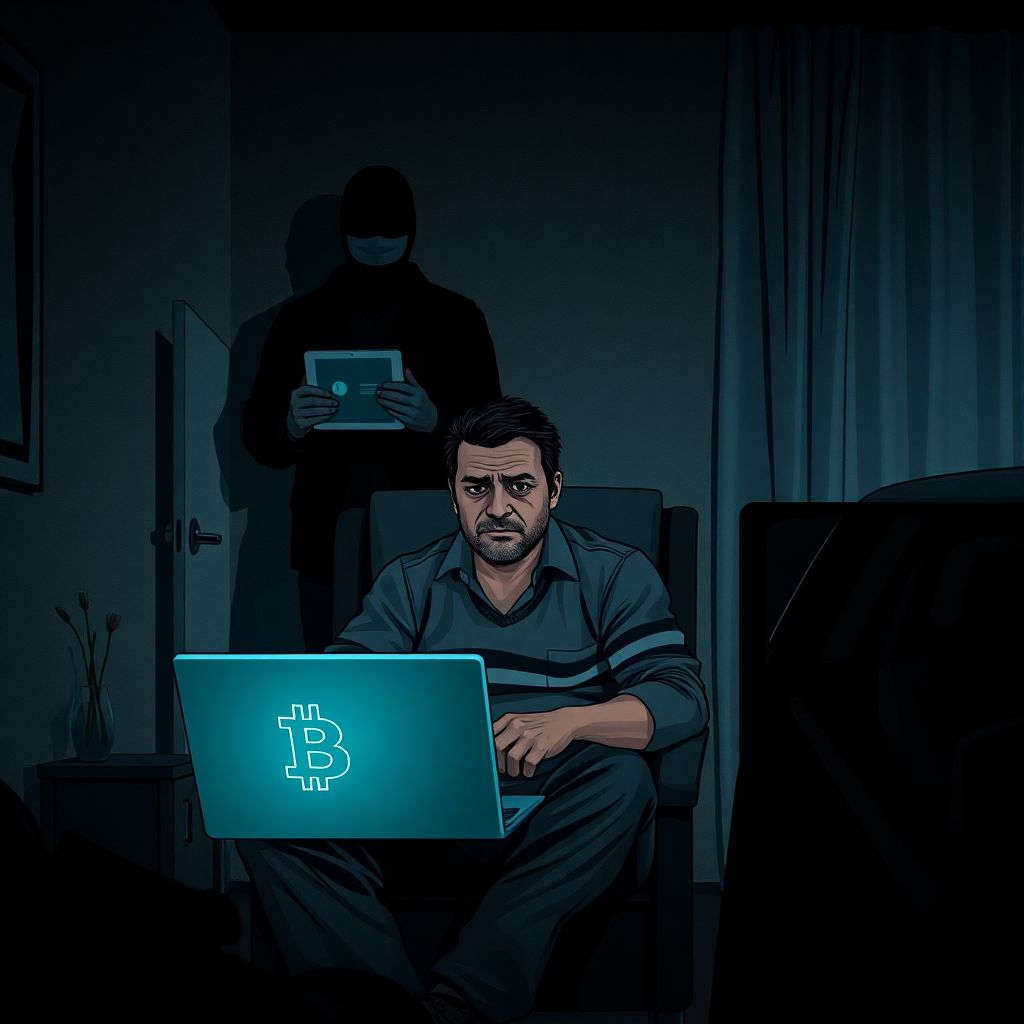
The Grisliest Bitcoin and Crypto Wrench Attacks That Shocked 2025
Crypto’s march into the financial mainstream in 2025 came with a darker companion: a surge in violent “wrench attacks” targeting digital asset holders. As Bitcoin’s price climbed and more people stored meaningful portions of their wealth in self-custodied wallets, criminals increasingly skipped phishing emails and malware, opting instead for the most ancient exploit of all—physical force.
Security experts define a “wrench attack” as any scenario where an attacker uses violence, intimidation, or the threat of harm to force someone to reveal their private keys, seed phrases, or wallet passwords. Unlike online hacks, these assaults unfold in homes, ride shares, hotel rooms, and city streets, and they often leave long-lasting psychological scars.
Jameson Lopp, CTO of security firm Casa, tracks publicly known wrench attacks in an open database. For 2025 alone, at least 65 such incidents have been documented—a number that almost certainly underestimates the true scale, given how many victims never go public out of fear, shame, or safety concerns.
Below is a look at some of the most harrowing cases that dominated headlines in 2025, followed by practical lessons for anyone holding crypto.
The Kidnapping of a Ledger Co-Founder
One of the most jarring incidents involved a co-founder of hardware wallet maker Ledger. The executive was reportedly kidnapped and held under duress in an attempt to force access to wallets believed to contain substantial holdings.
For attackers, this was the ultimate “go straight to the source” strategy: if someone helped build one of the most widely used self-custody devices on the planet, they might also control or know how to reach large sums of digital assets. The incident highlighted a grim reality—being closely associated with crypto infrastructure can paint a target on your back, even if your personal operational security is strong.
Waterboarding and Sexual Assault in Canada
One of the most disturbing wrench attacks of the year unfolded in Canada, where assailants subjected a victim to prolonged torture, including waterboarding and sexual assault, in an attempt to force the transfer of crypto funds.
This case shattered any lingering illusion that wrench attacks are typically limited to a quick beating or a threat with a weapon. It underscored how far some criminals are willing to go once they believe a victim controls a large, easily movable digital fortune. For law enforcement, it became a stark example of how crypto-related crime can intersect with extreme forms of violence and abuse.
Drugged and Abducted in a Fake Ride Share
Another chilling pattern that surfaced in 2025 involved attackers using fake ride-share pickups to identify and isolate crypto holders. In one widely reported case, a victim was abducted and drugged after entering what they thought was a legitimate Uber-style ride.
The kidnappers allegedly targeted the individual because they were known in local circles as a successful crypto trader. Once incapacitated, the victim was coerced—under the influence of drugs and threat of violence—into unlocking wallets and authorizing transfers. This style of attack weaponized both digital-era convenience and old-school kidnapping tactics.
Torture in New York City
In New York City, a particularly brutal case saw a crypto holder kidnapped and tortured over an extended period. The attackers seemed to operate on the assumption that “everyone in crypto is rich,” demanding large sums and refusing to accept that the victim’s holdings were limited.
The urban setting of the assault was especially unnerving. It proved that wrench attacks are not confined to remote locations or developing regions; they can happen in the middle of one of the world’s wealthiest, most surveilled cities. It also raised questions about how well prepared major metropolitan police forces are to handle crimes where the loot is invisible, borderless, and can be moved through mixers and cross-chain protocols in minutes.
A Vienna Man Tortured and Set on Fire
Perhaps the most grotesque crypto-related crime of 2025 took place in Vienna. A local man, believed by his attackers to control significant digital assets, was tortured and ultimately set on fire. The case stunned even seasoned investigators and became a macabre reference point in debates about crypto and personal safety.
The brutality of the assault underlined that once a victim is physically in the hands of determined criminals, technical safeguards like multi-signature wallets, hardware devices, and cold storage can be severely undermined by raw human fear and pain.
—
Why Wrench Attacks Are Rising
Several converging trends made 2025 a tipping point:
– Higher valuations: As Bitcoin and other major coins surged, holdings that once looked like speculative side bets turned into life-changing amounts—obvious targets for extortion.
– Self-custody boom: More people moved assets off exchanges and into self-managed wallets, shifting the “attack surface” from companies with security teams to individuals at home.
– Public visibility: Crypto wealth is often flaunted on social media, through NFT purchases, flashy lifestyles, or trading boasts. Criminals rarely need advanced intelligence tools when victims self-identify online.
– Global liquidity: Stolen crypto can be laundered or moved across borders faster than most traditional assets, reducing the perceived risk for attackers.
All of this makes wrench attacks brutally rational from a criminal’s perspective: why struggle with complex code exploits when you can force a human to cooperate?
The Psychological Toll on Victims
Beyond financial loss, survivors of wrench attacks often face severe trauma:
– Long-lasting fear about being targeted again if they still hold any assets
– Guilt about having handed over funds belonging to partners, clients, or DAOs
– Reluctance to report incidents, worrying about tax scrutiny or regulatory questions
– Nightmares, anxiety, and hypervigilance in everyday situations—especially around home security and travel
This mental fallout is rarely captured in crime statistics but is central to understanding the true cost of these assaults.
Why Traditional Security Advice Isn’t Enough
The standard crypto security checklist—use hardware wallets, enable 2FA, never store seed phrases online—works well against hackers behind screens, but it only partially addresses wrench attacks.
When an attacker is in your living room with a weapon, the calculus changes:
– Complex setups may backfire: If your wallet architecture is too complicated to explain under stress, attackers may escalate violence, assuming you are stalling.
– “Just refuse” is not realistic: No security best practice can override a natural human instinct to preserve life and protect loved ones.
– Recovery phrases are leverage points: Even if funds are spread across multiple wallets, a single written or memorized seed phrase can unlock everything.
This gap between digital security design and real-world human behavior is exactly what attackers exploit.
Practical Steps to Reduce Wrench-Attack Risk
While no measure is perfect, several strategies can significantly lower your attractiveness as a target and limit damage if the worst happens:
1. Stop broadcasting your wealth
Avoid posting screenshots of portfolio balances, bragging about big wins, or publicly tying your real-world identity to large on-chain wallets.
2. Separate “daily spending” from “deep cold storage”
Keep small, expendable amounts in easily accessible wallets, and locate larger long-term holdings in more complex, geographically separated setups that you plausibly cannot access instantly.
3. Use plausible deniability structures
Some wallet setups allow “decoy” accounts with modest funds. Under coercion, a victim can reveal these while higher-value vaults remain inaccessible without revealing that they exist.
4. Implement social or time-based controls
Multi-signature wallets requiring approvals from multiple people—or time-delayed withdrawals—can make it clear to an attacker that immediate full access is impossible, potentially capping their expectations.
5. Treat home and travel like op-sec environments
– Avoid conducting large transactions from your primary residence.
– Rotate travel routines, accommodation choices, and transportation methods.
– Be cautious with ride-share pickups; verify plates and drivers, and avoid disclosing your occupation or holdings.
6. Prepare a crisis script
Think in advance about what you would do if threatened: which wallets you would reveal, what story you would tell about your holdings, and how you would behave to minimize escalation. This kind of mental rehearsal can reduce panic if you are ever under pressure.
The Role of Law Enforcement and Regulators
Wrench attacks expose a blind spot in how many jurisdictions think about crypto crime. Historically, focus has been on exchange hacks, scams, and money laundering. Physical extortion tied to digital assets sits at the intersection of cybercrime and violent crime, and investigative responsibilities are often unclear.
Authorities are slowly adapting by:
– Training officers and investigators on how private keys, seed phrases, and wallets work
– Building cooperation channels between cybercrime units and violent crime divisions
– Encouraging victims to report assaults even when they are unsure about regulatory implications of their holdings
Still, the pace of institutional learning lags behind the speed at which criminals test new methods.
How the Industry Is Responding
Wallet makers, security firms, and infrastructure providers spent much of 2025 rethinking their assumptions:
– Designing with coercion in mind: More products now include features like hidden accounts, emergency locks, or multi-party recovery that lower the payoff of wrench attacks.
– Education campaigns: Exchanges and wallet apps increasingly warn users that “being your own bank” includes physical risk, not just phishing and hacking.
– Risk scoring and analytics: Infrastructure providers are refining tools to flag suspicious forced transfers, especially when they involve sudden, unusual movements from long-dormant wallets.
The goal is not to make wrench attacks impossible—they never will be—but to make them less profitable and more detectable.
What 2025 Taught Crypto Holders
The wrench attacks that made headlines in 2025—from the kidnapping of a hardware wallet pioneer to torture cases in Canada, New York, and Vienna—offered a blunt lesson: as digital wealth grows, so does the incentive to attack the physical humans behind it.
For anyone holding meaningful amounts of crypto, the takeaway is clear:
– Security is not only about seed phrases and ledgers; it is about your body, your family, and your daily routines.
– Technical defenses must be paired with behavioral and physical precautions.
– The less others know about what you hold—and how you hold it—the safer you are.
Crypto was built to remove trusted intermediaries, but in doing so, it pushed individuals onto the front lines of financial security. The horror stories of 2025 are a stark reminder that sovereignty over your assets also means responsibility for your personal safety.