
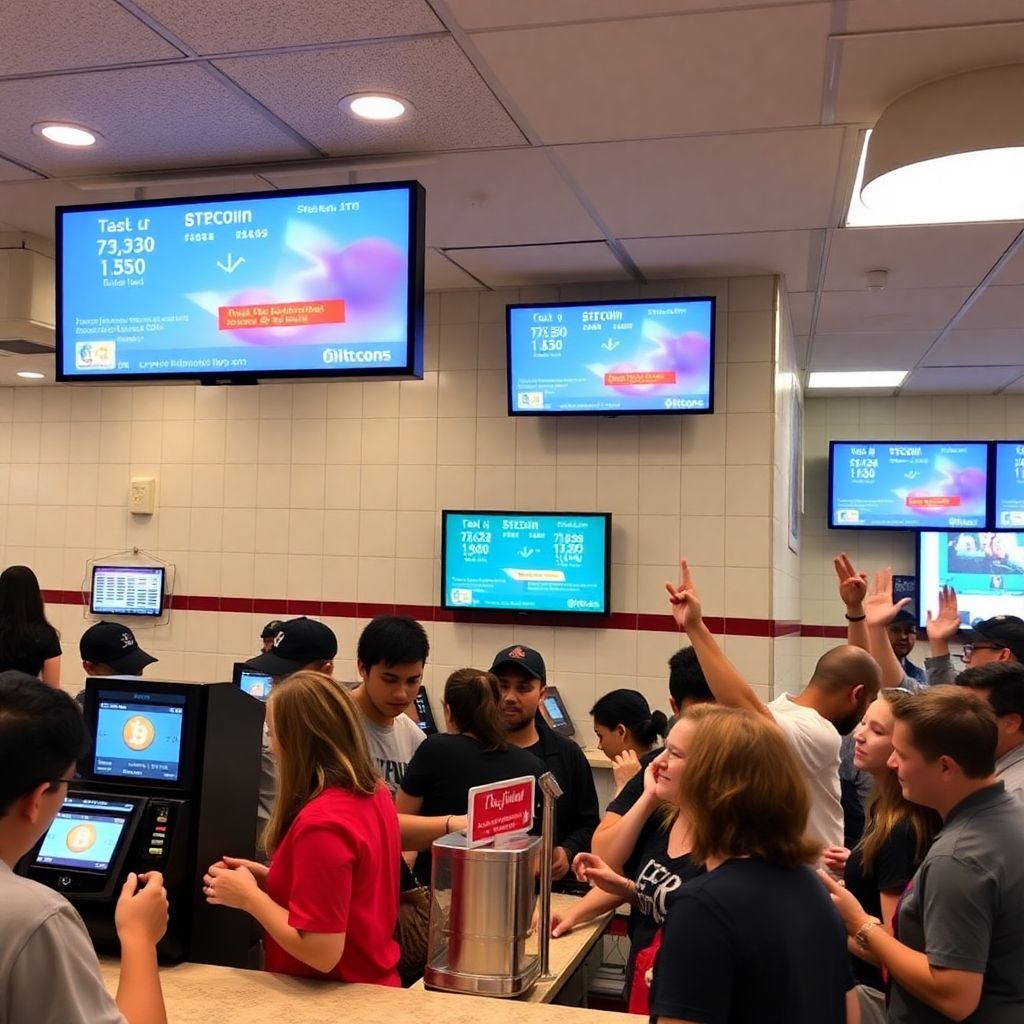
“Thank you, Bitcoiners!”: Steak ‘n Shake Says Crypto Payments Are Supercharging Sales
Nine months after turning on Bitcoin payments across its restaurants, Steak ‘n Shake claims the move is reshaping both its sales figures and its long‑term strategy. The decades‑old U.S. burger chain reports that same‑store sales have jumped sharply since customers began paying in BTC – and it is openly crediting Bitcoiners for the lift.
According to the company, locations that accept Bitcoin have seen “dramatically” higher same‑store sales compared with the period before the rollout. Internal estimates point to double‑digit growth, with recent figures hovering in the 15-18% range. In an industry where low single‑digit gains are considered a success, those numbers stand out against wider retail and restaurant trends.
Steak ‘n Shake began accepting Bitcoin in May 2025, integrating the Lightning Network at all of its U.S. locations. Customers can now pay for burgers, fries, and shakes directly with BTC via Lightning‑enabled wallets, completing transactions in seconds at the counter or drive‑thru. By design, this is not a pilot at a handful of stores – it is a chain‑wide payment option.
What makes the initiative more than a passing marketing stunt is the payments infrastructure behind it. The Lightning Network, a layer‑2 solution built on top of Bitcoin, allows for near‑instant, low‑fee transactions. Steak ‘n Shake says Lightning has cut payment processing costs by as much as 50% compared with traditional credit cards, an important edge in a sector where margins are notoriously thin and every fraction of a percent in fees matters.
Instead of automatically converting Bitcoin receipts into dollars at the point of sale, the company made a more radical decision: every satoshi it receives is moved into a dedicated Strategic Bitcoin Reserve (SBR). Over the nine months since launch, Steak ‘n Shake has steadily accumulated BTC from day‑to‑day customer purchases, topping up the reserve with periodic strategic buys in the market. The company’s latest disclosures indicate that the SBR has grown to around 15 million dollars’ worth of Bitcoin.
Management describes this reserve as the heart of a flywheel effect. The cycle works like this: customers choose to pay in Bitcoin, which drives additional foot traffic and higher sales. The increased BTC inflows expand the Strategic Bitcoin Reserve. That growing pool of Bitcoin then funds new programs, including Bitcoin‑denominated bonuses for staff and other innovation‑focused initiatives. Those perks, in turn, help attract talent, boost morale, and feed back into better customer experiences and higher volumes.
This integrated approach marks Steak ‘n Shake as an outlier in the retail world. Many brands have “tested” crypto payments only to abandon or quietly freeze them after limited adoption. In contrast, Steak ‘n Shake has embedded Bitcoin into both its operational playbook and its balance sheet strategy. It is using BTC simultaneously as a payment method, a treasury asset, and a tool for employee incentives.
The company’s leadership argues that this is not just about courting a niche demographic of crypto enthusiasts. Lower processing fees help preserve margin on every order, whether that order is a single burger or a family meal. Faster settlement times reduce chargeback risk and disputes that can plague card‑based transactions. And the publicity surrounding the Bitcoin rollout has served as a form of organic marketing, drawing curious customers who might otherwise have skipped a visit.
There is also a brand‑building dimension. By embracing Bitcoin so publicly, Steak ‘n Shake is positioning itself as a forward‑looking, tech‑friendly company within a highly traditional industry. Crypto users, particularly those who value businesses that “stack sats” instead of immediately selling them, see the chain as aligned with their ethos. That alignment can translate into repeat visits, word‑of‑mouth recommendations, and a loyal base of customers who deliberately choose the brand because it shares their view of money and the future.
For employees, the Bitcoin strategy is more than corporate messaging. A portion of the Strategic Bitcoin Reserve has been allocated to a bonus pool, from which staff can receive rewards funded directly from BTC receipts. While base wages remain denominated in dollars, these Bitcoin bonuses give workers upside exposure to a potentially appreciating asset. For some team members, this has been an introduction to digital assets and a catalyst to learn more about how Bitcoin works.
From an operational standpoint, rolling out Bitcoin and Lightning acceptance at scale required notable groundwork. Point‑of‑sale systems had to be upgraded to display QR codes and interact seamlessly with Lightning wallets. Staff were trained to handle Bitcoin payments, assist customers unfamiliar with the process, and troubleshoot basic issues. The company reports that, after an initial learning curve, transactions now flow as smoothly as conventional card swipes or tap‑to‑pay methods.
Customer behavior has also begun to show distinct patterns. The heaviest Bitcoin usage tends to appear in urban and tech‑savvy markets, and among younger demographics who already use crypto in other areas of their lives. However, the chain has noticed that once a store starts processing BTC payments, curiosity spreads quickly. Non‑crypto customers see Bitcoiners paying with their phones, ask questions, and some eventually try their first Lightning transaction at the register.
Financially, the decision to hold Bitcoin on the balance sheet introduces volatility – the value of the Strategic Bitcoin Reserve can swing significantly with market conditions. Steak ‘n Shake appears to be leaning into this risk, viewing BTC as a long‑term strategic asset rather than a short‑term speculative bet. By accumulating Bitcoin gradually through everyday sales, the company effectively dollar‑cost averages into its position, smoothing out some of the timing risk that comes from trying to “time the market.”
If the experiment continues to deliver higher sales and a growing reserve, it may become a template for other mainstream businesses. The model demonstrates how crypto can be more than a bolt‑on payment button at checkout. Instead, it can be woven into loyalty programs, employee rewards, and treasury management – turning what was once a novelty into a core component of corporate strategy.
There are, of course, challenges that any business considering a similar path must weigh. Accounting rules for digital assets are still evolving, and companies need robust internal controls to secure private keys and custody arrangements. Regulatory landscapes differ across jurisdictions, and tax implications can be complex. Steak ‘n Shake’s case suggests, however, that with careful planning and the right infrastructure partners, those hurdles can be managed rather than feared.
The competitive implications are significant. If a restaurant chain can meaningfully boost sales while lowering fees and enhancing its brand simply by accepting Bitcoin and thoughtfully using it, rivals may eventually feel pressure to respond. Early movers can capture the most engaged crypto customer base, while late adopters risk appearing out of touch to a growing segment of the market that expects digital‑native payment options.
From a macro perspective, Steak ‘n Shake’s strategy underscores a broader shift in how businesses are thinking about money itself. For decades, corporate finance has been almost entirely anchored to fiat currencies and the traditional banking system. As more companies experiment with holding and using assets like Bitcoin, that paradigm begins to stretch. Crypto stops being just an investment on a hedge fund’s balance sheet and becomes a functional part of everyday commerce – paying for wages, meals, and bonuses.
For Bitcoin advocates, Steak ‘n Shake’s experience offers a concrete proof point: when BTC is used as a medium of exchange, not just as digital gold, it can unlock new commercial dynamics. When customers spend Bitcoin at a place that actually keeps it, rather than instantly selling it, the transaction feels like a kind of partnership. Both sides are betting, in different ways, on Bitcoin’s future significance.
As the company marked the nine‑month anniversary of its Bitcoin rollout, it ended its message with a simple, enthusiastic line: “Thank you Bitcoiners!” The phrase captures the symbiotic relationship that has formed between the burger chain and its crypto‑paying customers – and hints at how traditional businesses and digital currencies might increasingly grow together in the years ahead.