
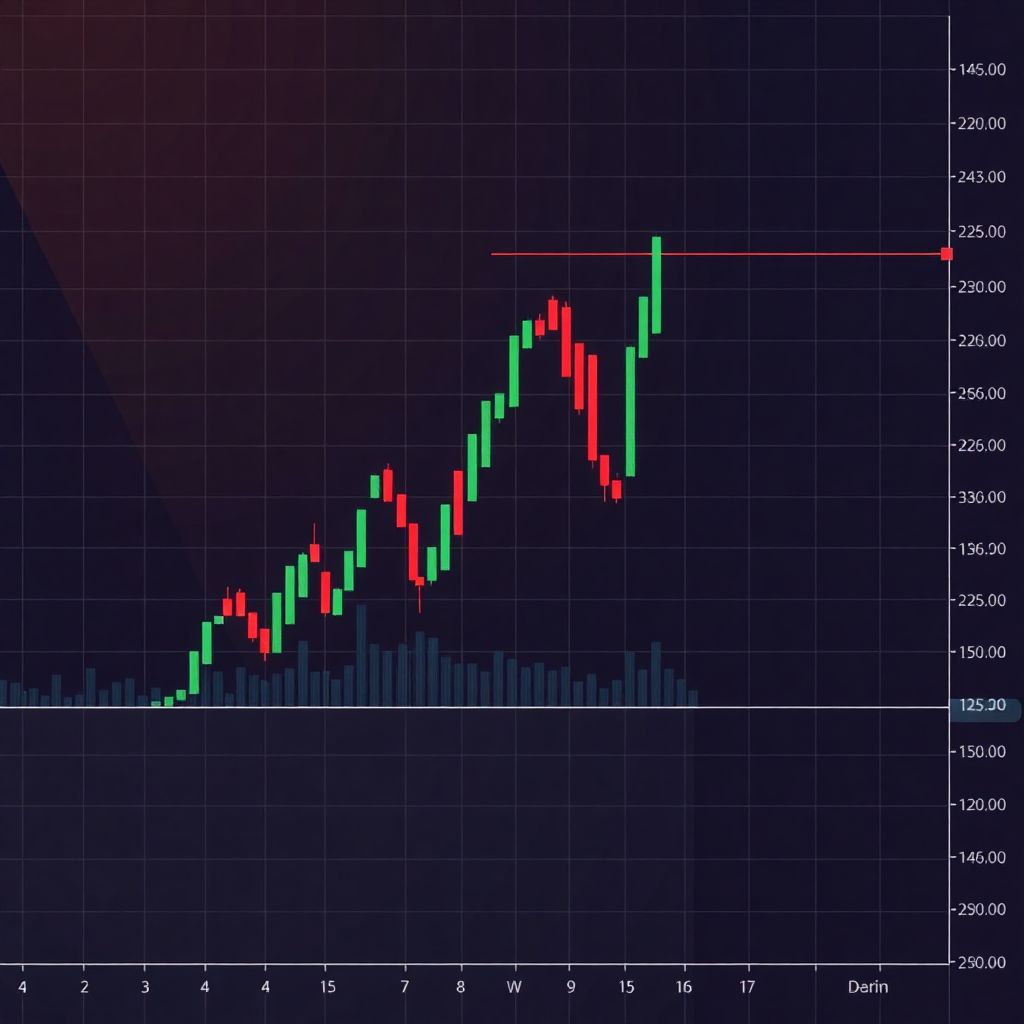
Bitcoin price stalls at range high as sellers regain control, eyeing $60,000 test
Bitcoin’s latest push toward the upper boundary of its trading range has once again been shut down by resistance, reinforcing a bearish short‑term structure and raising the risk of a deeper pullback toward the $60,000 area.
After briefly climbing into the resistance zone between roughly $69,000 and $72,000 – an area that has repeatedly capped upside since the current range formed – price momentum faded quickly. Buyers failed to sustain a meaningful test of the range high, and sellers stepped in almost immediately, forcing a rejection before any convincing breakout could develop.
This kind of shallow probe into resistance is typically a sign of fatigue, not strength. Instead of a tight consolidation under the highs that often precedes a breakout, Bitcoin showed an inability to absorb overhead supply. The failure to penetrate the resistance band suggests that large sellers or profit‑takers remain active in this region, keeping the broader market locked inside a sideways structure.
Loss of volume support shifts short‑term bias lower
The technical backdrop weakened further when Bitcoin dropped back below the Point of Control (POC) for the current range – the price level where the highest trading volume has taken place. The POC usually acts like a fair‑value magnet, reflecting a balance between buyers and sellers.
Closing decisively underneath this key level signals that the market is now accepting lower prices as the new equilibrium. That shift in acceptance tilts the short‑term bias in favor of the bears and confirms that the previous area of volume support has turned into an overhead obstacle.
At the same time, Bitcoin is now struggling to defend the midpoint of the range. Multiple four‑hour candle closes beneath this mid‑range level underline the weakening structure. Historically, sustained trading below the range midpoint often precedes a full rotation toward the range low, as price gravitates to the next major liquidity pocket.
Bearish structure: lower highs inside the range
From a structural standpoint, Bitcoin continues to print a series of lower highs while remaining trapped within its broader horizontal range. That pattern reflects a gradual loss of buyer conviction, even if the market has not yet broken down through key support.
In healthy uptrends, pullbacks are typically bought aggressively, pushing price to equal or higher highs with expanding volume. The current behavior is the opposite: each attempt to challenge resistance is being rejected earlier, with weak volume follow‑through. This combination supports the argument that upside momentum is capped until buyers can reclaim lost levels.
Markets that repeatedly fail at resistance often rotate toward the opposite side of the range in search of liquidity. If demand does not reappear quickly, those visits to support can eventually transform into breakdowns rather than simple bounces.
$60,000 remains the pivotal battleground
The next major downside level lies in the $60,000 region, which aligns with the established range low and a significant historical support band. A move back into this zone would complete another full cycle inside the current consolidation structure – from range low to range high and back again.
As long as the broader environment remains range‑bound, traders can expect these rotations between support and resistance to continue. However, every failed breakout at the top of the range marginally increases the odds that support will eventually give way, especially if macro conditions or liquidity deteriorate.
A decisive breakdown below $60,000 would represent a notable structural shift. It could unlock a new phase of bearish momentum, forcing price to explore lower demand zones and prompting a repricing of risk across the broader crypto market.
Volume and participation underscore caution
Volume dynamics currently support a cautious stance. The latest rally into the $69,000-$72,000 resistance area did not attract the kind of strong, broad‑based participation typically seen during sustainable breakouts. Instead, the move appeared driven more by short‑term speculation than by long‑horizon accumulation.
Since the rejection, trading behavior has looked defensive rather than opportunistic. Without a clear surge in buy‑side volume, the path of least resistance remains skewed toward the lower end of the range. Statistically, in such environments, continuation toward established support is more likely than an immediate reversal back to the highs.
Institutional backdrop vs. short‑term charts
The bearish tone on the short‑term chart stands in contrast to the ongoing narrative of institutional interest, ETF inflows, and long‑term integration of Bitcoin into traditional financial infrastructure. Large entities continue to build tools, products, and custody solutions around Bitcoin, reinforcing its status as a strategic asset.
However, these structural developments do not negate the shorter‑timeframe technical picture. Markets can experience sharp pullbacks and extended ranges even while long‑term adoption trends are improving. Traders need to distinguish between cyclical price swings and multi‑year fundamentals rather than assuming that institutional demand will prevent corrections.
In practice, this means that while long‑term investors may view dips as opportunities, short‑term traders still have to navigate clear resistance, weakening structure, and the risk of a move below key support.
What bulls need to reclaim
For the bullish camp to regain control of the immediate outlook, several conditions would need to be met:
– Price reclaiming and closing firmly above the range midpoint, turning it back into support.
– A sustained move back above the Point of Control, indicating that the market is once again accepting higher prices as fair value.
– A clear break of the most recent lower high inside the range, invalidating the short‑term downtrend structure.
– Rising buy‑side volume accompanying these moves, confirming that renewed demand is driving the recovery rather than a simple short squeeze.
If these signals begin to appear, the conversation could shift from “Will $60,000 hold?” to “Can Bitcoin finally challenge and break through the upper boundary of the range?”
Bearish continuation scenario
Until those bullish criteria are met, the risk remains skewed to the downside. A typical bearish path from here could involve:
1. Continued price acceptance below the range midpoint and POC.
2. Gradual grinding lower, with minor bounces failing to reclaim lost levels.
3. A test of the $60,000 support zone, where liquidity is concentrated.
4. A decisive reaction at that support: either a strong bounce that resets the range or a breakdown that opens the door to deeper targets.
If $60,000 fails convincingly, traders would likely look to prior consolidation zones and high‑volume nodes below as the next probable support areas. The psychological impact of losing such a widely watched level could accelerate selling, at least in the short run.
How traders can approach the current range
Given the present configuration, many market participants will adapt their strategies to range conditions rather than trend‑following setups. That often means:
– Waiting for price to approach clearly defined extremes (range high or range low) before entering new positions.
– Reducing position sizes in the middle of the range, where risk‑reward is less attractive and volatility can be choppy.
– Using well‑defined invalidation levels, such as a break above the latest lower high for shorts or a breakdown below $60,000 for longs targeting the range low.
– Paying attention to volume and momentum indicators to confirm or refute the signals from price structure.
For shorter‑term intraday traders, the repeated rejections at resistance and the loss of mid‑range support may favor tactical short setups into bounces, with profit targets placed closer to the lower boundary of the range.
Long‑term holders vs. short‑term sentiment
While short‑term sentiment has tilted bearish, long‑term holders often interpret these drawdowns differently. For those with multi‑year time horizons, the focus tends to be on macro trends, supply dynamics, and adoption, rather than on whether price temporarily trades below $60,000.
Nevertheless, even long‑term participants can benefit from understanding the current technical structure. Knowing where major liquidity pools and support zones lie can help in planning staged entries, setting alerts, and managing expectations around volatility.
The key distinction is time horizon: what looks like a threatening breakdown to a leveraged trader might be seen as a routine correction within a larger cycle by an investor focused on the coming years rather than the coming weeks.
Outlook: downside risk until key levels are reclaimed
In the near term, Bitcoin’s outlook remains cautious while it trades below both the range midpoint and the Point of Control. The pattern of lower highs, weak volume on rallies, and repeated rejection at resistance collectively support a bearish short‑term thesis.
As long as this configuration persists, a move toward the $60,000 support area appears increasingly probable. That zone is where the next major structural reaction is likely to unfold: either a decisive defense that keeps the broader range intact, or a breakdown that signals a deeper corrective phase.
Until bulls can reclaim lost volume support and convert resistance levels back into support, Bitcoin remains vulnerable to further downside exploration within – and potentially below – its current range.