
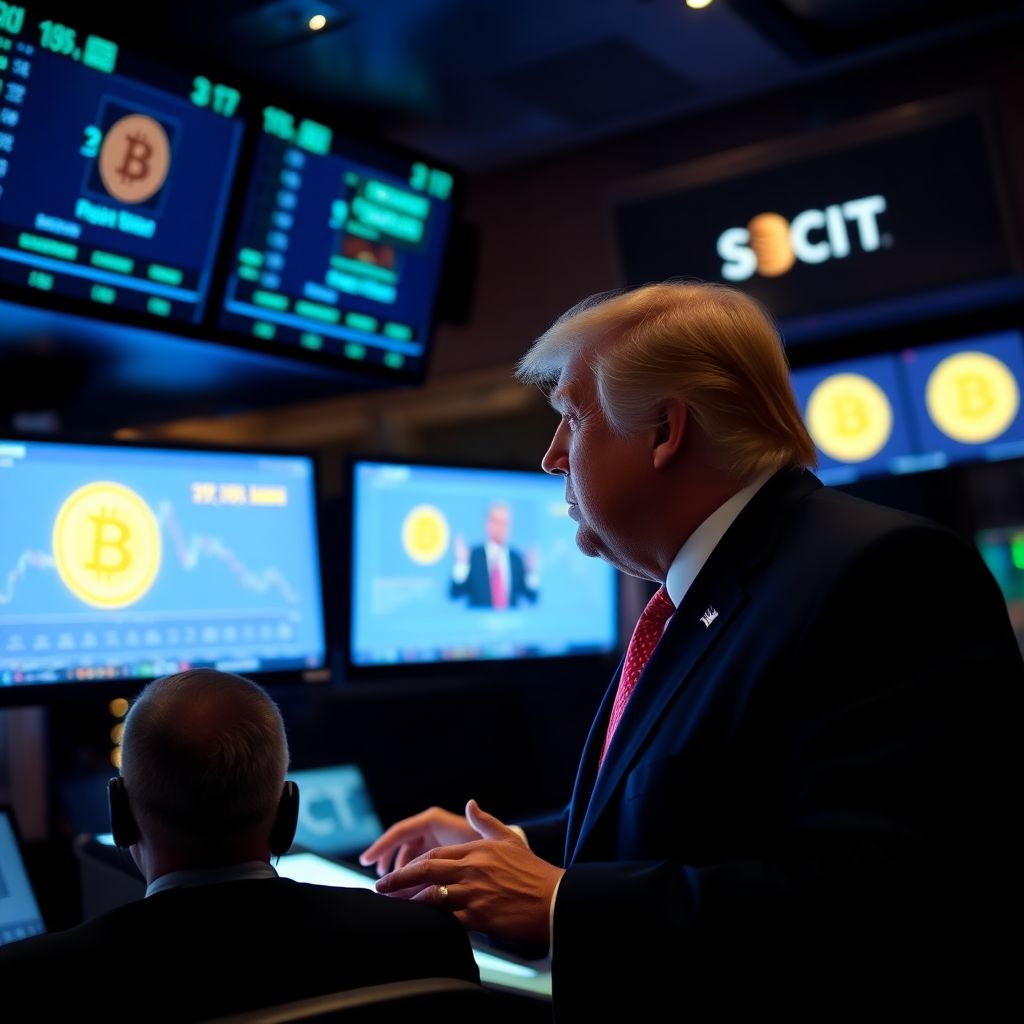
Bitcoin slips from $66K to $65K as Trump sidesteps crypto in State of the Union speech
Bitcoin edged lower after U.S. President Donald Trump delivered his State of the Union address without once referencing cryptocurrencies, undermining a wave of speculative optimism that had built up ahead of the event. Within hours of the speech, BTC slid from around $66,000 to roughly $65,000, a drop of about 1.5%, as traders unwound bets tied to a hoped‑for political endorsement.
The move added fresh weight to a warning issued earlier by Peter Schiff, the well‑known gold proponent and long‑time Bitcoin critic. Schiff had argued that Bitcoin’s pre‑speech rebound was largely fueled by expectations that Trump would make a favorable comment about the asset. In his view, the rally was driven more by political speculation than by any fundamental shift in adoption or regulation.
Schiff said that whether or not Trump uttered the word “Bitcoin,” the result would likely be the same: a sell‑off. If Bitcoin was ignored, he anticipated disappointment‑driven selling. If it was mentioned, Schiff expected traders who “bought the rumor” to “sell the news,” taking profits on a narrative that had already been priced into the market. In both scenarios, he argued, the upside was limited, while the risk of a pullback was high.
The President ultimately devoted his address to traditional policy priorities: tariffs and trade, the trajectory of tax cuts, national security concerns including the Iran nuclear issue, and the justification for a sizable defense budget. Digital assets did not feature at all. There was no direct reference to Bitcoin, nor any broader comments on cryptocurrencies, blockchain, or digital finance reform.
This silence was enough to spark short‑term volatility. Bitcoin had climbed ahead of the speech as traders wagered on a potential nod to crypto, drawing on Trump’s earlier, more open‑minded remarks about digital assets. Once it became clear that the topic would not appear in the speech, some of those speculative positions were quickly liquidated, sending the price modestly lower.
Market analysts noted that the subsequent decline was less dramatic than Schiff had projected. While his thesis about “priced‑in expectations” and profit‑taking proved directionally accurate, the scale of the move-roughly a 1.5% dip-was relatively small in the context of Bitcoin’s typical intraday swings. For long‑term holders, the episode barely registered; for short‑term traders, however, it was another reminder of how sensitive Bitcoin can be to political theater and macro headlines.
In a separate commentary, Schiff framed Bitcoin’s performance over the past several years as evidence of an asset bubble on the verge of bursting. He reiterated his long‑standing view that the cryptocurrency’s price could fall far below current levels, drawing a sharp contrast with his bullish stance on gold, which he continues to promote as the more reliable store of value.
The episode around the State of the Union highlights how deeply political narratives have become entwined with crypto market psychology. Bitcoin’s underlying protocol did not change, network activity did not suddenly collapse, and there was no major regulatory shock. Yet a single high‑profile speech, and more specifically what was not said in it, was enough to trigger a noticeable reaction in price. This is characteristic of a maturing but still sentiment‑driven market where expectations often matter as much as fundamentals.
It also underscores the growing importance of U.S. executive‑branch rhetoric for digital assets. A direct endorsement from a sitting president could be interpreted by many investors as a green light for broader institutional participation and regulatory clarity. Conversely, the absence of any comment is often read as a signal that crypto remains peripheral in the policy agenda, which can dampen speculative enthusiasm, at least in the very short term.
Historically, markets have tended to overreact to political speeches-whether it is central bank press conferences, legislative announcements, or annual addresses. Traders try to front‑run narratives, and when reality fails to match the hype, even a neutral outcome can feel like a disappointment. In Bitcoin’s case, the pre‑speech run‑up suggested that some investors were positioning for a bullish surprise. When that surprise did not materialize, the path of least resistance was to lock in gains.
At the same time, the relatively contained scale of the decline suggests that the market’s dependence on political “sound bites” is gradually decreasing. A few years ago, a high‑profile comment-or lack of comment-from a major political figure might have triggered double‑digit percentage moves. The current reaction, while noticeable, points to a broader base of participants who are less inclined to reshuffle portfolios on the back of a single speech.
For traders, this kind of event underlines the importance of understanding the “expectations vs. reality” dynamic. By the time a widely anticipated speech is delivered, markets have often already priced in the likely scenarios. Those who buy late on hype alone are typically the most exposed when expectations are not fully met. The State of the Union reaction fit this pattern: early speculators could exit with profits, whereas late entrants were more vulnerable to the minor drawdown.
For longer‑term investors, the message is different. Short bursts of volatility linked to political headlines tend to have limited impact on multi‑year trajectories. Investors focused on adoption metrics, technological development, and regulatory frameworks may see such pullbacks as noise rather than signal. In that context, a 1.5% move is more a reminder of Bitcoin’s inherent volatility than a meaningful shift in its story.
Politically, Trump’s decision not to address crypto may reflect competing priorities rather than hostility. The State of the Union is traditionally dominated by economic, security, and social policy themes that resonate with the broadest possible audience. Crypto, despite its growing footprint, still occupies a niche in national discourse compared with issues like taxes, jobs, and foreign policy. For the time being, it appears that digital assets remain more of a campaign talking point than a centerpiece of official policy messaging.
Going forward, the market will likely continue to react to clues about how the federal government intends to treat digital assets-through legislation, enforcement actions, and regulatory guidance. Concrete moves such as new rules for exchanges, clearer tax frameworks, or official stances on stablecoins and central bank digital currencies typically have more lasting impact than the tone of a speech, even if the latter can move prices in the near term.
The clash between voices like Schiff’s and crypto advocates will also persist. Skeptics argue that every rally reinforces bubble dynamics and increases the eventual downside, while proponents point to growing institutional engagement, expanding use cases, and the asset’s resilience across multiple boom‑and‑bust cycles. The market’s reaction to events like the State of the Union serves as one more data point in that broader debate about whether Bitcoin is a speculative fad or a durable new asset class.
In the immediate aftermath of the address, the takeaway is straightforward: Bitcoin’s brief slide from $66,000 to $65,000 was a textbook “expectation mismatch” move. The President did not deliver the crypto‑friendly soundbite some traders were hoping for, profit‑taking kicked in, and prices adjusted. Beyond that, the core drivers of the Bitcoin market-adoption trends, macro conditions, and regulatory developments-remain unchanged, leaving the longer‑term narrative intact despite the momentary political disappointment.