
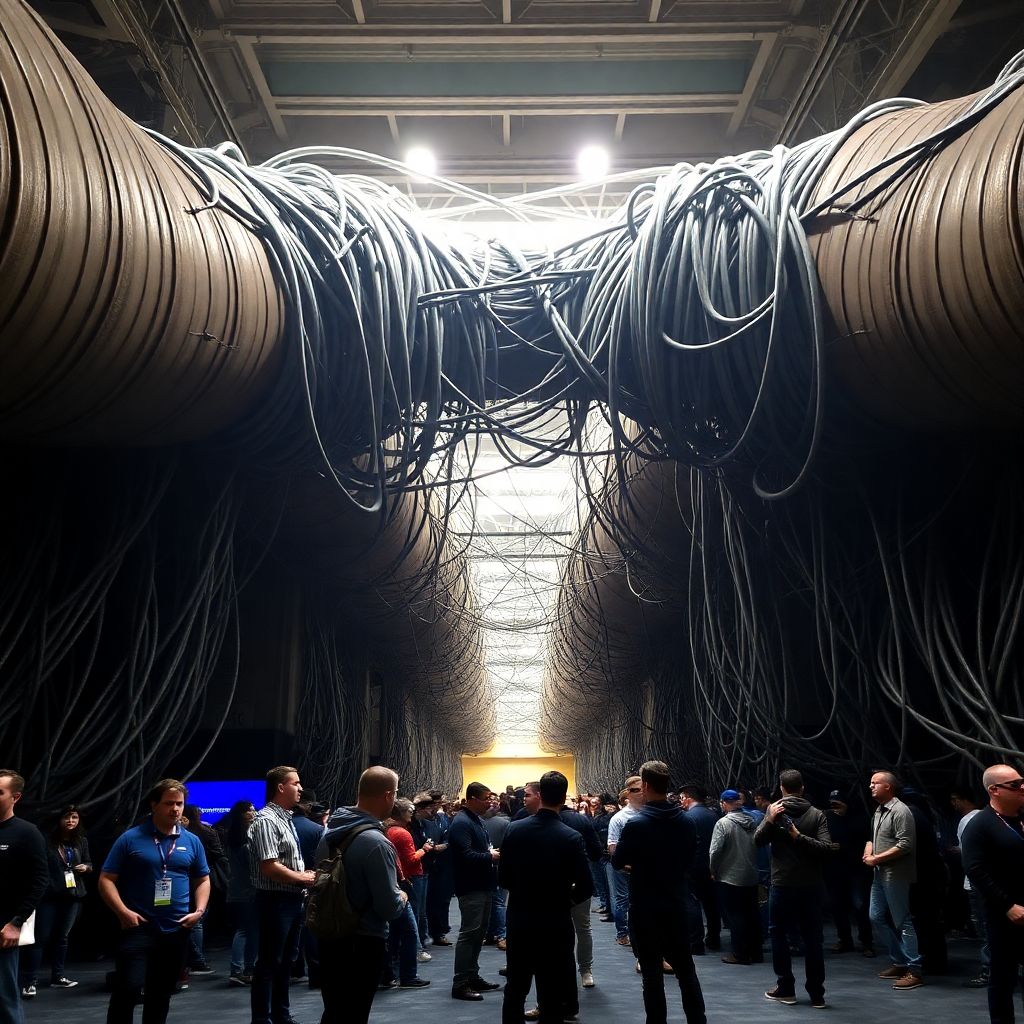
Blockchain Has Laid the Pipes-but Still Has Nothing Most People Want to Turn On
Crypto’s architects are clear-eyed about a hard truth: after more than a decade of building, blockchain apps have not broken into everyday life. That was the dominant undercurrent at this year’s ETH Denver conference, where developers tried to look past the gloomy market and confront a more uncomfortable reality-people still don’t really want what Web3 is offering.
John Paller, the founder of ETH Denver, framed it starkly. Over ten years, he argued, the industry has succeeded at building “technology and architecture and scaffolding and plumbing systems” for a financial and internet revolution. But the sector has “failed spectacularly,” in his words, at convincing ordinary users to adopt normal, day‑to‑day products built on top of that infrastructure.
Zachary Williamson, founder of the Aztec Foundation, echoed the sentiment. In his view, crypto has excelled at engineering and experimentation but fallen short on packaging that innovation into clear, compelling experiences. The tools are advanced; the user interfaces and value propositions are not.
Infrastructure First, Users Last
The pattern is easy to see. Developers have been obsessed with solving hard technical problems:
– Scaling networks to handle more transactions
– Reducing fees and latency
– Building smart contract standards and interoperability layers
– Experimenting with privacy-preserving technology
This “plumbing” is essential. Without it, the entire Web3 vision collapses. Yet that same focus has meant most of the real energy has gone into base layers, protocols, and developer tooling-things normal users never directly see.
From the perspective of someone outside crypto, much of this progress is invisible. They don’t care whether a transaction settles in 15 seconds or three minutes. They don’t distinguish between a Layer 1, a rollup, or a bridge. They just want something that makes their life meaningfully easier, cheaper, more fun, or more secure than what they use today.
The Product Gap: Why the Masses Aren’t Interested
At ETH Denver, the uncomfortable conclusion kept resurfacing: crypto still hasn’t delivered must‑have products for non‑crypto natives. Several intertwined issues keep mainstream users away:
1. No obvious “killer app”
Email, search, social media, and messaging defined earlier internet eras. In crypto, trading and speculation have been the primary drivers. That attracts traders, not the wider public.
2. Complexity everywhere
Wallets, seed phrases, chains, gas fees, bridges-every step introduces friction. Even relatively simple actions still feel fragile and intimidating.
3. Unclear value vs. Web2 alternatives
For many use cases, traditional apps are smoother and safer. Paying with a bank card, streaming music, texting friends-all of that already works well enough for most people.
4. Trust and reputation problems
High‑profile hacks, rug pulls, and scams have shaped public perception. Even legitimate projects share the same branding and language as the worst actors.
5. Volatility and financial risk
For people who just want to use an app, the idea that its core asset can swing in price daily is a feature they never asked for.
Builders Admit: We Built for Ourselves
Underlying many of these problems is a simple bias: most Web3 products have been designed for people already inside the crypto bubble. At ETH Denver, multiple speakers acknowledged that tools and apps are typically created for developers, traders, and protocol enthusiasts-not for a parent paying bills, a student managing finances, or a small business owner juggling invoices.
This inward focus leads to products that feel like technical demos or financial experiments rather than polished, user‑centric services. Features that impress engineers-composability, permissionless access, on‑chain transparency-rarely translate into intuitive, emotional “aha” moments for everyday users.
Where Crypto Has Succeeded-And Why That’s Not Enough
It would be wrong to say blockchain has achieved nothing. Within its own ecosystem, progress is undeniable:
– Decentralized finance has shown that you can recreate large parts of the banking stack without centralized intermediaries.
– On‑chain marketplaces enable global, permissionless trading around the clock.
– Infrastructure like rollups, account abstraction, and improved wallets is steadily maturing.
But most of these successes live in a closed loop: crypto users doing crypto things with other crypto users. The leap from that niche to mass adoption requires more than incremental refinement. It demands a shift in what builders are actually trying to solve.
What a Mainstream‑Ready Web3 Product Would Look Like
Conversations at ETH Denver increasingly turned toward a different question: if blockchain is ever going to matter to billions of people, what would a truly mainstream product need to deliver?
Common criteria emerged:
– Invisible blockchain: Users shouldn’t have to understand chains, tokens, or consensus. The “crypto” should be under the hood, not the selling point.
– Immediate, clear benefit: Save money. Save time. Unlock something impossible in Web2-like global asset transfer in seconds or provable digital ownership that works across platforms.
– Low cognitive load: No seed phrases, no arcane transaction flows, no guessing which network to select. Just familiar patterns-logins, contact lists, one‑click actions.
– Predictable costs: Stable pricing and minimal exposure to volatility. People don’t want to speculate just to use an app.
– Real‑world hooks: Integration with things people already do: paying rent, sending remittances, managing subscriptions, playing games, or verifying credentials.
Without these ingredients, crypto apps remain curiosities-interesting to insiders, irrelevant to almost everyone else.
The UX Problem No One Can Ignore Anymore
User experience has become the industry’s most obvious weakness. Even at ETH Denver, where attendees are among the most technically literate people in the space, frustrations were palpable: juggling multiple wallets, switching networks, dealing with failed transactions and confusing errors.
If that crowd struggles, the average user has no chance.
The next wave of development is increasingly focused on smoothing these edges:
– Smart contract wallets that allow social recovery instead of fragile seed phrases
– Gas abstraction so users don’t have to think about paying fees in native tokens
– On‑ramp and off‑ramp tools that hide complexity behind familiar payment methods
These are not glamorous protocol innovations, but they are essential if the industry wants people to interact with blockchain without feeling like they’re taking an exam.
Beyond Speculation: Searching for Real‑World Utility
Another theme emerging from the event was the need to break crypto’s addiction to speculation. For many outsiders, blockchain equals gambling: meme coins, leveraged trading, manic bull markets, and brutal crashes.
Some builders are pushing hard toward calmer, more practical applications:
– Cross‑border payments and remittances that are faster and cheaper than current rails
– Tokenized real‑world assets like bonds or property shares, making investment access broader and more liquid
– On‑chain identity and credentials to simplify verification without surrendering personal data
– Digital collectibles in games that retain value and portability beyond a single platform
If these use cases deliver consistent advantages over traditional systems, users may start caring less about the technology and more about the results-exactly what needs to happen.
Regulation, Trust, and the Credibility Gap
Mainstream adoption is not just a design challenge; it’s also a trust issue. The string of collapses, frauds, and security breaches in crypto has left regulators, institutions, and individuals wary.
For everyday users, this translates into a simple question: “Why should I risk my money or data on this new system when the old one, though imperfect, feels safer?”
At ETH Denver, the more sober voices argued that rebuilding trust will require:
– Stronger security practices and transparent audits
– Clearer, simpler communication about risks and safeguards
– Collaboration, not confrontation, with regulators to clarify rules
– Product designs that minimize user exposure to protocol risk
Until people feel that blockchain products are not just powerful but safe, the mass market will stay on the sidelines.
From Infrastructure Obsession to Product Obsession
The candid admissions from figures like Paller and Williamson mark a potential turning point. The infrastructure race isn’t over, but the marginal gains from slightly faster or cheaper base layers no longer excite people outside the industry. What’s missing is a comparable push on the product side.
For crypto to matter beyond its current bubble, the industry must reorient around questions like:
– Who exactly is this product for?
– What pain are we solving that they actually feel today?
– Why would they switch from what they’re already using?
– How do we make the blockchain aspect effectively invisible?
That mindset shift-from “build it because it’s technically possible” to “build it because someone desperately needs it”-will determine whether Web3 remains a niche financial playground or becomes part of the mainstream digital toolkit.
The Road Ahead: Harder, But Clearer
After more than a decade, one conclusion is becoming unavoidable: crypto has proven it can build robust pipes. It has not yet proven it can deliver water that people are thirsty for.
The mood at ETH Denver suggested that serious builders now accept this and are beginning to adjust. The next phase will be less about novel consensus algorithms and more about patient, unglamorous product work-user research, onboarding flows, customer support, interface design, and real‑world integrations.
If that work succeeds, future conferences may spend less time defending crypto’s relevance and more time showcasing apps that people use daily without ever realizing there’s a blockchain underneath. Until then, the industry will continue to live with the paradox its own leaders now openly acknowledge: extraordinary infrastructure, and still very few products that the wider world genuinely wants.