
Can’t-Miss Indie Games You Should Play From 2025
What counts as an “indie game” has been a running argument for years. Technically, an indie title is one that’s self-published by a studio not owned by a major publisher. By that definition, both Hades 2 and Hollow Knight: Silksong qualify—they’re created and published by independent teams without backing from a big corporate parent.
But in practice, lumping them in with tiny experimental releases feels off. These are follow‑ups to massive, beloved hits, released with built‑in fanbases, huge anticipation, and the kind of guaranteed visibility most independent creators can only dream of. Short of a total disaster at launch—a disaster that never came—those sequels were always going to succeed at some level.
On the opposite end of the spectrum is something like Blue Prince, an original puzzle game that quietly appeared on digital storefronts this spring. Before launch, practically no one outside the most plugged‑in circles knew its name. No blockbuster marketing, no giant convention reveals—just a sharp, strange, meticulously designed game that had to earn every eyeball it got through sheer craft and word of mouth.
Then there are projects like Clair Obscur: Expedition 33, which seem to embody the “indie spirit” while working at a noticeably larger scale. Developed by a core team of more than 30 people plus a roster of contractors, it operates in a middle space: not a mega‑budget blockbuster, but far beyond the stereotypical two‑person passion project. It’s proof that indie is less about headcount and more about who holds creative control and financial risk.
That tension—between budget and independence, expectation and experimentation—defines the current indie landscape. 2025 is full of games that might not dominate front‑page headlines, but they push genres in new directions, tell stories that big studios rarely risk, and deliver experiences you probably won’t find anywhere else. If you want to understand where game design is quietly evolving, these are the titles you should not skip.
Below is a curated look at standout indie games from 2025—including under‑the‑radar releases and fresh cult favorites—that deserve a spot on your playlist.
—
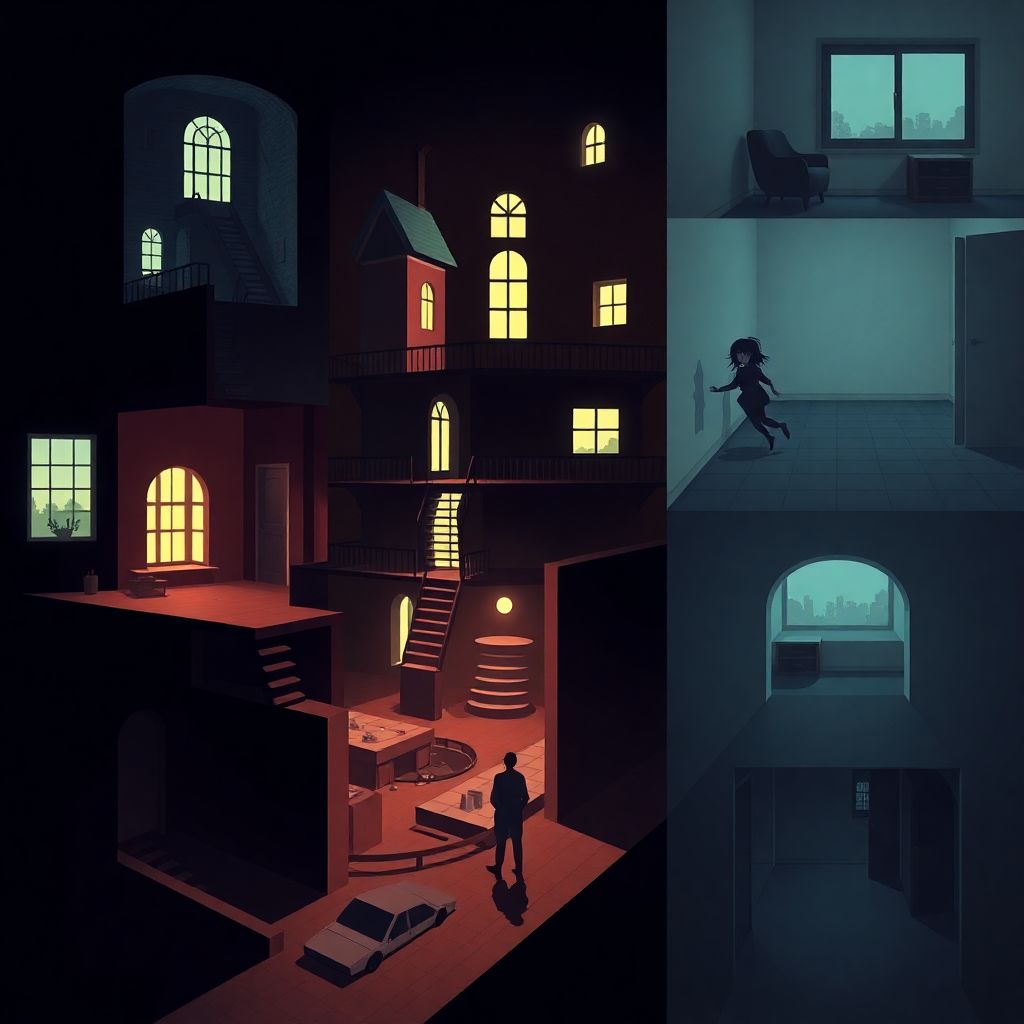
Blue Prince – A House That Rebuilds Itself Around You
Blue Prince is the kind of game that reminds you why small, focused projects matter. On the surface, it’s a puzzle game about exploring an ever‑shifting mansion one room at a time. Underneath, it’s a tense, strategic experience that constantly dares you to risk everything for one more step forward.
Each run presents you with a limited number of turns and a deck of cards, each card representing a new room. Placing a card doesn’t just reveal more of the house—it also reshapes your route, unlocks new paths, or traps you in dead ends. You’re always improvising, always adapting to the rules of this bizarre architectural puzzle box.
What makes Blue Prince feel so distinctly indie is its commitment to a singular idea executed with obsessive detail. There’s no filler content, no sprawling open world; just a tight loop of planning, discovery, and failure that slowly teaches you to read the house like a language. It didn’t launch with enormous hype, but it’s exactly the kind of design‑driven, word‑of‑mouth hit that defines modern independent gaming.
—
Ball x Pit – Precision Platforming With Personality
Ball x Pit looks simple at a glance: a minimalist, physics‑driven platformer where you guide a sphere through a gauntlet of pits, spikes, and moving hazards. But that simplicity is deceptive. The game demands an almost meditative level of focus, asking you to master momentum, angles, and timing with near‑surgical precision.
Instead of drowning players in tutorials, Ball x Pit teaches through repetition and smart level design. Early stages are forgiving, letting you understand how the ball responds to tiny inputs. Later levels escalate into intricate obstacle courses where one misjudged bounce can undo a perfect run.
Its art direction and soundtrack are just as restrained—clean shapes, bold colors, and a pulsing audio backdrop that reacts to your success and failure. This is a hallmark of many of 2025’s best indies: they don’t try to imitate big‑budget spectacle, but instead embrace clarity and identity, building something unforgettable out of a focused core mechanic.
—
Look Outside – Horror Through Observation
Look Outside trades jump scares for dread. It’s a slow‑burn psychological horror game that centers on watching the world beyond your window—and wondering how much of what you’re seeing is real.
You play from an almost fixed perspective, monitoring your surroundings, tracking small changes, and deciding when to act. The horror grows not from monsters lunging at the screen, but from subtle environmental shifts and the creeping suspicion that you’ve missed something important.
The brilliance of Look Outside lies in how it uses limited interaction to maximum effect. You’re often powerless, reduced to an observer, yet your attention is the key resource. Miss a detail, and you might alter the progression of events. Notice something no one else would, and you may uncover entire story threads hidden behind the façade of normality.
Games like this don’t need armies of artists or massive animation budgets; they need sharp design, a clear vision, and the courage to do less—but do it with conviction.
—
Luto – Grief as a Labyrinth
Luto continues the trend of narrative‑driven horror that uses emotional themes as its foundation. Rather than relying on cheap shocks, it treats grief and trauma as both story and structure. Environments twist and loop in ways that mirror the protagonist’s mental state, turning each corridor into a metaphor and each closed door into a psychological barrier.
Puzzles are woven directly into the narrative: solving them feels less like “beating a level” and more like understanding a piece of someone’s pain. Luto walks a fine line between interactive fiction and atmospheric exploration, and that blend makes it stand out among 2025’s releases.
What makes it distinctly indie is the willingness to let players sit with discomfort. The game doesn’t rush to resolution or wrap its themes in easy answers. It trusts you to endure ambiguity—and that’s something larger studios often avoid.
—
No I’m Not a Human – Identity Under a Microscope
No I’m Not a Human is part visual novel, part experimental adventure, and entirely preoccupied with the question of what it means to be a person in a world obsessed with labels.
You navigate branching conversations, conflicting memories, and unreliable perceptions, constantly forced to decide how your character presents themselves—to others and to themselves. The game toys with genre expectations, occasionally breaking its own interface, rewriting prior scenes, or confronting you with contradictions that demand reinterpretation.
Rather than relying on photorealistic graphics, it uses stylized art and sharp writing to carry the experience. The result feels intimate and unsettling, like reading a personal diary that keeps changing each time you open it. This kind of narrative experimentation thrives in the indie space, where smaller teams can take formal risks without chasing mass‑market clarity.
—
Schedule I – A Dark Satire of Systems and Control
Named after the strictest category of controlled substances, Schedule I is a grim, systems‑heavy management sim that turns bureaucracy into a horror story. You play a low‑level functionary in an opaque institution, responsible for classifying, controlling, and sometimes erasing anything deemed dangerous.
Mechanically, it’s about forms, stamps, resource allocation, and policy decisions. Thematically, it’s about how systems strip away nuance and humanity. As you progress, the lines between “safety,” “order,” and “abuse” blur. You’ll be forced to choose between obeying rules, bending them, or quietly sabotaging them from within.
This is the kind of politically charged, mechanically dense experience that rarely comes out of major publishing pipelines. Its indie DNA is visible in its refusal to soften its satire or simplify its ethics for the sake of broader appeal.
—
The Drifter – Neo‑Noir in a Gritty Point‑and‑Click Shell
The Drifter revisits the classic point‑and‑click adventure format with a grim, pulpy story about a man pulled back into a violent conspiracy after years on the run. From its washed‑out color palette to its grimy urban environments, it oozes atmosphere.
The game leans on strong writing, moody music, and carefully framed scenes rather than flashy action. Each dialogue choice nudges you deeper into a web of secrets and betrayals, and the puzzles are grounded in the world—less about abstract logic and more about understanding people and places.
In 2025, when so many games chase boundless open worlds, The Drifter is a reminder of how powerful a tightly controlled, story‑first experience can be. Its modest scope allows the developers to polish every line and every shot, the way an indie film director might obsess over each frame.
—
Wanderstop – Cozy on the Surface, Haunting Underneath
Wanderstop sells itself as a cozy respite: you manage a teahouse in a strange, magical world, chatting with travelers, brewing drinks, and decorating your space. But beneath the gentle surface is an exploration of burnout, purpose, and the cost of always being “on.”
Your protagonist is a former adventurer trying to step away from conflict, yet the world keeps drifting in through the teahouse door. Regulars carry their own burdens, events from the outside creep closer, and you’re repeatedly asked whether rest is something you can actually choose—or just another role you’re temporarily playing.
The game’s strength lies in its rhythm. Quiet stretches of crafting, conversation, and routine are occasionally interrupted by moments that reframe everything you’ve been doing. It’s both comfort food and quiet critique, a combination that feels distinctly modern‑indie.
—
Where Hades 2 and Hollow Knight: Silksong Fit In
Even as smaller titles push boundaries, it’s impossible to ignore juggernaut sequels like Hades 2 and Hollow Knight: Silksong in any discussion of 2025’s indie scene. On paper, they’re indie: self‑published, controlled by their creators, made without a big corporate owner calling the shots.
But their position in the market is radically different from something like Blue Prince or Look Outside. They arrive with legions of fans, broad media coverage, and massive day‑one visibility. For many players, they are the face of indie gaming—slick, deeply polished, and comfortably familiar in brand, if not always in mechanics.
Their success, though, helps keep attention on the broader space. When someone falls in love with a headline‑grabbing indie sequel, they’re more likely to go hunting for other independent games that scratch a similar itch or take bolder risks. That creates room for stranger projects to find an audience.
—
The Changing Meaning of “Indie”
As teams like the one behind Clair Obscur: Expedition 33 grow to 30‑plus core members and bring in outside contractors, the old mental image of a lone developer in a spare bedroom becomes increasingly outdated. Many of 2025’s most exciting “indie” games look and sound like smaller AA productions, even though they remain independent in ownership and creative control.
Budget, headcount, and production values are no longer reliable markers. Some one‑person projects look astonishingly polished thanks to accessible tools, while larger teams deliberately embrace lo‑fi aesthetics to match their themes. What really separates an indie release now is how decisions are made: who carries the risk, who reaps the rewards, and who gets to say “no” to trends, monetization schemes, or design fads.
This freedom shows in the 2025 lineup. From the ruthless precision of Ball x Pit to the melancholic introspection of Luto and the biting satire of Schedule I, these games feel unfiltered. They’re not trying to be everything to everyone. They’re trying to be exactly what their creators want—even if that means confusing, confronting, or deeply unsettling some players along the way.
—
How to Approach 2025’s Indie Essentials
If you’re looking to dive into this year’s can’t‑miss indie games, a good strategy is to mix comfort with experimentation:
– Pick one “big” indie like Hades 2 or Hollow Knight: Silksong as your anchor.
– Add a mechanically focused title such as Ball x Pit or Blue Prince for a pure gameplay challenge.
– Include at least one narrative‑heavy game like No I’m Not a Human, The Drifter, or Luto.
– Round things out with something tonally unusual—Look Outside for quiet horror, Wanderstop for reflective coziness, or Schedule I for systemic, political storytelling.
Taken together, they offer a clearer picture of where independent development is headed: away from tidy genre boxes and toward hybrid experiences that feel deeply personal, even when built by teams of dozens.
The label “indie” may be harder to pin down than ever, but 2025’s standout games share one thing: they’re driven by vision first. If you care about where the medium is going next, these are the projects you truly can’t afford to miss.