
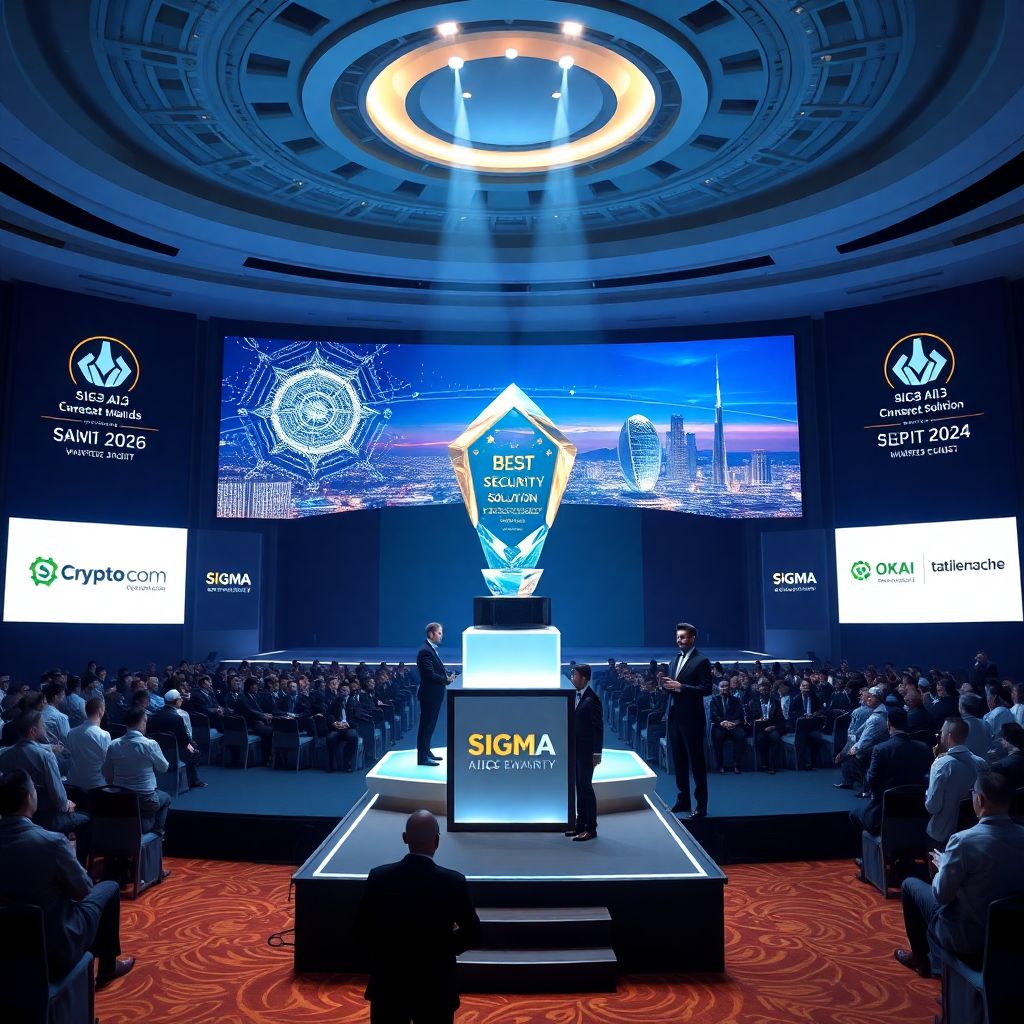
CertiK wins “Best Security and Compliance Solution 2026” at SiGMA AIBC Eurasia Awards
Web3 security provider CertiK has been named the winner of the “Best Security & Compliance Solution 2026” at the SiGMA AIBC Eurasia Awards, held on February 10, 2026. The recognition highlights the company’s growing role in strengthening security, regulatory alignment, and institutional trust across the crypto and broader digital asset ecosystem.
The SiGMA AIBC Eurasia Awards, jointly organized by SiGMA and AIBC, celebrate leading companies in digital innovation across the Eurasian region. The event brings together projects and enterprises working in artificial intelligence, blockchain, web3 infrastructure, and security and compliance technologies. Within this competitive field, CertiK’s win underscores how central security has become to the sustainable growth of digital finance and on-chain economies.
The judging and selection of CertiK for the “Best Security & Compliance Solution 2026” award reflect the firm’s sustained work in pushing the crypto industry toward higher standards of professionalism, transparency, and regulatory compatibility. Rather than treating security as an afterthought, CertiK has positioned it as a core pillar for institutional adoption and long‑term industry development.
Alongside CertiK, several prominent web3 and digital asset players were also recognized at the Eurasia Awards. Winners included well-known names such as Crypto.com, OKX Wallet, Avalanche, and Cointelegraph. Their inclusion illustrates how the regional ecosystem is maturing, with infrastructure, trading platforms, media, and security providers all playing complementary roles in the web3 stack.
The award arrives during a period of deliberate expansion for CertiK in the Middle East. Following the opening of its Abu Dhabi office in 2025, the company has been steadily building a localized presence to meet the rapidly accelerating demand for web3 and digital asset security in Gulf and broader Middle Eastern markets. According to the firm, a targeted regional recruitment campaign is underway, aimed at forming teams that understand both advanced security engineering and local regulatory expectations.
In the Middle East, CertiK has shifted its emphasis toward what it describes as “institutional-level” security offerings. This approach is tailored to major financial and corporate entities—such as banks, sovereign wealth funds, and multinational enterprises—that require digital asset operations to be protected under standards comparable to those used in traditional finance. The strategy combines sophisticated engineering tools with layered defense architectures designed to withstand advanced, coordinated threats.
In practice, this institutional model does not only involve smart contract auditing or code review. It extends to risk monitoring, continuous on-chain surveillance, and scenarios that factor in cross-platform vulnerabilities, liquidity risks, and systemic exposure. For large organizations managing substantial digital asset portfolios or building tokenized financial products, such a model is increasingly seen as a prerequisite rather than an optional extra.
Since establishing its Abu Dhabi branch, CertiK has deepened its engagement with regional authorities. The firm has collaborated with regulators, contributed to roundtable discussions on frameworks for virtual asset activities within the Abu Dhabi Global Market (ADGM), and aligned its services to help shape safer digital asset markets. Through its Skynet Enterprise platform, CertiK offers local regulators and institutions a suite of security and monitoring tools intended to detect anomalies, assess risks, and anticipate the potential fallout of incidents before they can spiral into broader market disruptions.
According to the company, its technology supports regulators and policymakers in understanding how abnormal events—such as protocol exploits, liquidity shocks, or governance attacks—could affect individual companies and the wider financial system. By providing early warning signals and structured risk analysis, CertiK argues that its tools contribute to both security compliance and responsible innovation within the evolving digital economy.
The recognition at SiGMA AIBC also highlights a broader industry trend: security and compliance are no longer viewed as obstacles to innovation but as enabling frameworks. As more institutional investors, asset managers, and traditional financial institutions explore tokenization, stablecoins, and on-chain settlement, they increasingly expect risk controls comparable to those in conventional markets. Firms like CertiK are stepping into this space by translating complex, often opaque web3 risks into language and metrics that risk committees, regulators, and boards of directors can understand.
In regions such as the Middle East, where governments and regulators are actively positioning themselves as global hubs for digital assets, the demand for credible, technically robust security and compliance solutions is especially acute. Jurisdictions that can demonstrate they are both innovation‑friendly and tightly regulated are more likely to attract serious capital, long-term projects, and high‑quality talent. CertiK’s expansion into Abu Dhabi and its cooperation with local regulators align with this strategic positioning and suggest that security providers will be central players in shaping on‑chain financial infrastructure.
Beyond regulatory collaboration, CertiK’s presence in Eurasia and the Middle East reflects a shift in how security is integrated into project lifecycles. Instead of engaging auditors only at the final stages before launch, more teams are beginning to embed security considerations into protocol design, tokenomics, and governance structures from the outset. This preventative mindset—supported by ongoing monitoring and post‑deployment analytics—reduces the probability of catastrophic failures and helps protect users against the kinds of exploits that have historically undermined trust in the crypto sector.
The award also underlines the growing importance of compliance in a distributed, borderless environment. With multiple jurisdictions advancing their own virtual asset regulations, companies operating globally must navigate increasingly complex expectations around know-your-customer procedures, market integrity, reporting, and consumer protection. Security and compliance providers that can bridge technical analysis with regulatory insights are positioned to become key partners for both private sector actors and public institutions.
For enterprises and financial institutions considering expansion into web3, the recognition of CertiK’s work at SiGMA AIBC can be read as a signal that the market is maturing. On-chain finance is gradually moving away from the narrative of speculative chaos and toward a model that emphasizes infrastructure, resilience, and long‑term value creation. Building this kind of ecosystem requires not only innovative products but also robust defenses against operational, technological, and governance risks.
From a user perspective, the presence of specialized security and compliance firms may gradually reshape expectations. Users—whether retail or institutional—are likely to become more discerning about which platforms and protocols they trust, paying closer attention to audit practices, monitoring coverage, and regulatory posture. Awards that highlight leading security providers may indirectly influence how capital and liquidity flow across the industry, as more participants seek out platforms that can demonstrate verifiable protections.
Looking ahead, recognition such as the “Best Security & Compliance Solution 2026” may also encourage further investment into security research and development. As new paradigms emerge—such as cross‑chain interoperability, real‑world asset tokenization, and increasingly complex DeFi architectures—the attack surface will continue to expand. Firms operating in this domain will need to refine their tools, evolve their methodologies, and anticipate threats that may not yet be widely understood.
At the same time, collaboration between security specialists, regulators, and industry builders is likely to deepen. Joint initiatives, regulatory sandboxes, and structured dialogue can help ensure that security solutions do not merely react to incidents but play a formative role in designing safer market structures. The experience of companies like CertiK, which operate at the intersection of technical security and regulatory frameworks, may be especially influential in shaping emerging best practices.
Disclaimer: The information provided in this article is for educational and informational purposes only and should not be interpreted as financial, investment, or legal advice. Neither the publisher nor the author endorses any specific product or service mentioned. Individuals and institutions should conduct their own independent research and due diligence before making any decisions related to digital assets, financial services, or security solutions.