
Creator Capital Markets: How Pump.fun Rewired Streaming in 2025
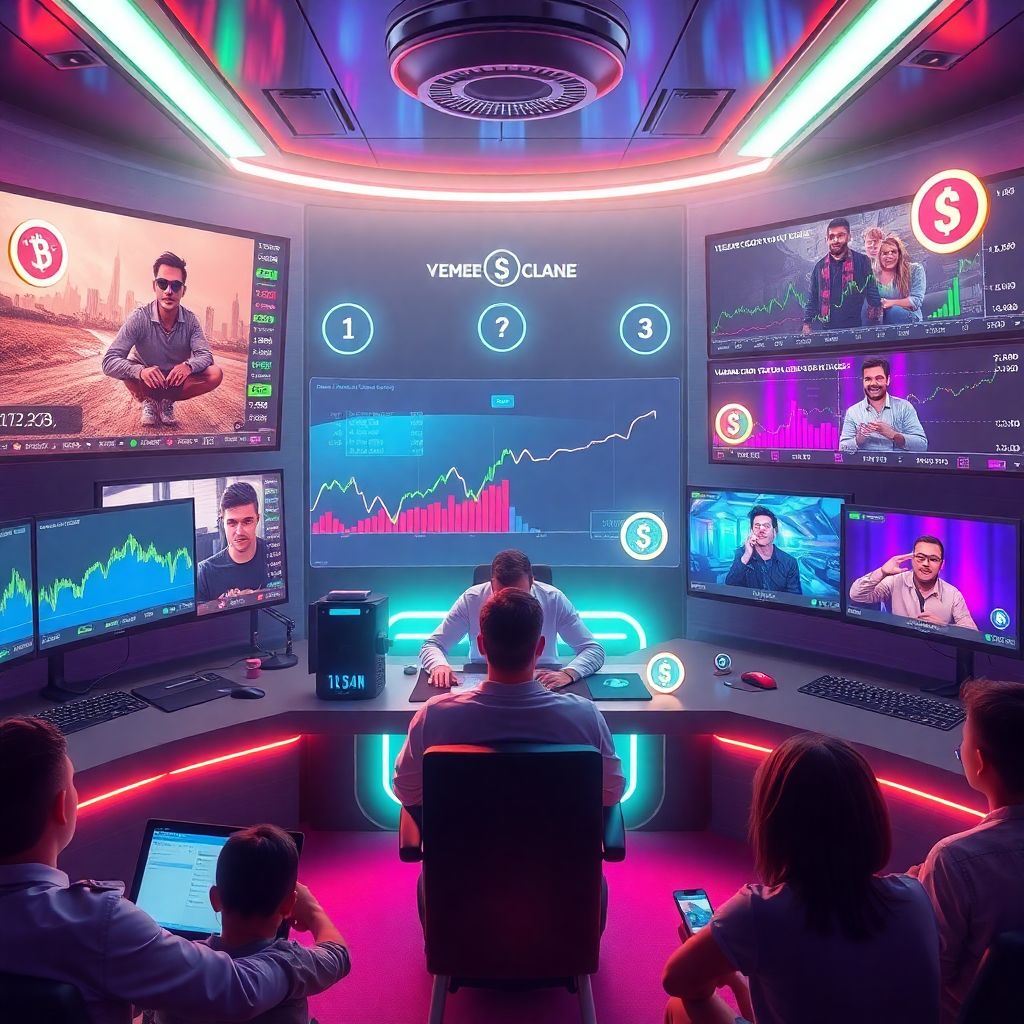
By 2025, a new phrase entered the crypto and media vocabulary: “creator capital markets.” The idea took shape around Pump.fun, a Solana-based meme coin launchpad that decided its future wasn’t just about token launches—it was about turning livestreamers into mini-capital markets of their own.
The concept was simple but radical: instead of audiences just tipping or donating to their favorite creators, viewers could buy and trade crypto tokens tied to those creators and their content. In theory, fans weren’t just supporting a stream—they were buying a stake in its future. If a creator took off, their token might, too.
This stood in sharp contrast to the traditional streaming model. On platforms like Twitch or TikTok, most monetization comes from ads, subscriptions, and donations. Viewers give; platforms and creators receive. There’s emotional upside for fans but almost no financial upside. Pump.fun’s model flipped that power dynamic: viewership became speculation; fandom became investment.
From Chaos to Strategy: Pump.fun’s Streaming Reset
Ironically, Pump.fun didn’t arrive at this model in a straight line. A year earlier, its first attempt at livestreaming had gone so badly that the company was forced to shut the feature down. In 2024, chasing virality and token pumps, creators filled the platform with dangerous stunts and outright reckless behavior to attract traders and boost coin prices.
The economic incentives were obvious: extreme content drew more attention, more buyers, and higher token valuations. The social cost was just as clear. Streams became a race to the bottom, and Pump.fun was left with a brand problem and a moderation crisis. The livestreaming tab disappeared.
When the feature returned in April 2025, it was carefully controlled. Only about 5% of users got access initially, paired with new, stricter community guidelines and a beefed-up moderation system. Rollout was deliberately slow, with the company looking to avoid a repeat of 2024’s chaos. This time, Pump.fun wanted livestreaming to be the backbone of a new economic engine—not a reputational liability.
“Kill Facebook, TikTok, and Twitch. On Solana.”
By mid-2025, the company’s ambitions were no longer subtle. In July, Pump.fun publicly declared that its goal was nothing less than to replace the biggest social and streaming platforms—only this time, anchored to Solana. The message was not just marketing bravado. Behind the scenes, the platform was reengineering the financial plumbing of how creators got paid.
The term “creator capital markets” became the internal and external framing for this ambition. Every streamer could be seen as their own micro-cap stock, with their audience acting like both fanbase and investor pool. If a creator had a big moment, their token could spike. If their content dried up, so could liquidity.
Pumped Fees, Pumped Earnings
The turning point came in September, when Pump.fun dramatically restructured its fee model. Instead of treating creators as just one more participant in the trading ecosystem, the platform redirected a much larger share of transaction fees directly to the people running streams and launching meme coins tied to their content.
The effect was explosive. On some days, Pump.fun paid out over $4 million in creator fees, according to on-chain analytics. That reshaped behavior overnight. Streamers who previously needed to sell their own token holdings to make money could now earn simply by generating volume: more trades on their token meant more fee revenue, without having to dump their own bags.
In practice, this turbocharged virality. Creators launched meme coins around events, stunts, challenges, or ongoing narratives. If they hit the right cultural nerve and trading volume surged, they could pull in tens of thousands of dollars in just a couple of days. Suddenly, every stream was a potential IPO moment.
The Return of Risky Incentives
But the new model carried an old problem. The fastest way to drive trading volume was still to do something outrageous enough to capture attention across social feeds. It didn’t take long for creators to realize that controversy, danger, or extreme spectacle reliably outperformed safe, steady content in terms of on-chain volume.
The platform found itself facing a familiar dilemma. From a pure numbers perspective, the system was working: user engagement rose, tokens churned, and creator earnings hit new highs. But the content that performed best often pushed the boundaries of safety and taste. As a result, both the company and industry observers were forced to ask: can you truly build a sustainable “creator capital market” without structurally incentivizing risky behavior?
This tension—between financial upside and content responsibility—became the central question of Pump.fun’s second streaming era.
Experimental Formats: The Rise of Basedd House
Even as the incentives raised eyebrows, Pump.fun began funding more structured experiments in creator-led content ecosystems. One of the most prominent was Basedd House, launched by crypto influencer Jake “SolJakey” Hillhouse two months after the updated streaming feature rolled out.
Basedd House assembled a group of rising internet personalities under one roof—a frat-style creator house with weekly episodes and ongoing storylines. Each “character” in the house was tied to a separate meme coin, turning interpersonal drama and shared experiences into tradable narratives. New stars emerged from the experiment, including offbeat personality Iseem and crypto-focused rapper Whish.
Pump.fun directly financed the project, underscoring how seriously it took the idea of incubating creator franchises. Instead of passively hosting content, the platform acted like a venture investor in a hybrid of reality TV, performance art, and on-chain speculation.
Going Viral, On-Chain
Beyond organized projects like Basedd House, the summer of 2025 saw a wave of viral moments that made it clear Pump.fun had tapped into something emotionally raw in its audience.
One streamer, Leland King Fawcette, used Pump.fun as his broadcasting base while racing through all 50 U.S. states, clocking the second-fastest recorded time according to endurance tracking communities. His journey blended travel documentary, endurance sports, and live token speculation: as milestones were hit, tokens pumped.
Another user known as Ricken set out to say the words “Pump fun” one million times on stream, a marathon of repetition that became both performance and meme. Elsewhere, a father-to-be livestreamed the birth of his child and then named her “Solana” in homage to the blockchain that underpinned the entire ecosystem.
Individually, these events could be dismissed as internet stunts. Collectively, they illustrated a new kind of relationship between creator, audience, and market: life events turned into liquidity events, milestones into charts, emotions into volume.
Paying the Clip Economy
To widen its reach, Pump.fun took an unconventional stance on the clip ecosystem that typically surrounds livestreaming platforms. Instead of expecting creators to manage teams of editors and pay them from their own pockets, Pump.fun began directly compensating people for posting clips of its top streamers.
This inversion of the standard model was framed as a bet on “stimulating social activity.” The logic was that a healthy clipping culture fuels discoverability, which in turn drives more trading and higher creator earnings. By underwriting the distribution layer, Pump.fun aimed to jumpstart a self-reinforcing loop: more clips, more eyeballs, more market activity, more fees—some of which cycled back to creators.
In effect, the platform tried to turn not just creators but also curators and amplifiers into participants in the broader creator capital market.
Hardware, Contracts, and the Professionalization Push
As streaming metrics climbed, Pump.fun doubled down again—this time on infrastructure and talent acquisition. The company began sending “streamer backpack” kits to creators, complete with mobile streaming equipment to boost production quality and make always-on broadcasting easier.
At the same time, it quietly hired a team of recruiters tasked with bringing in established creators from more traditional platforms. One of these recruiters, Alec Strasmore—a former assistant to musician Post Malone—described a pipeline where Pump.fun offered contracts to content makers who were used to monetizing via brand deals, ads, and centralized platforms.
The pitch was straightforward: on Pump.fun, you’re not just renting an audience from a platform; you’re building a tradable micro-economy around yourself. For some creators, that meant a chance to escape opaque ad algorithms and build a more direct relationship between work, attention, and revenue.
How Creator Capital Markets Actually Work
Under the hood, Pump.fun’s approach to creator capital markets can be broken down into a few core mechanics:
1. Tokenized Identity or Events
Each creator or key storyline is associated with a meme coin. Sometimes these coins are tied to a single spectacle (a challenge, a marathon, a major life event); other times they represent the creator’s broader persona.
2. Liquidity Driven by Attention
As viewers watch and talk about a stream, they may buy or trade the creator’s coin. Social buzz translates directly into on-chain activity—every mention, clip, or meme is a potential catalyst for volume.
3. Fee Sharing and Revenue Streams
Every trade on Pump.fun generates fees. After the September restructuring, a significantly larger portion of those fees flow directly to creators. That means creators are rewarded not only when prices rise, but whenever there is trading activity at all.
4. Speculative Fandom
Fans are no longer just cheering for their favorite creators to “make it”—they are economically incentivized to promote, share, and support them, because their own holdings may appreciate if the creator breaks out.
This fusion of social capital and financial capital is what gives “creator capital markets” their power—and their volatility.
The Upside: New Paths to Creator Independence
For many creators, especially those overlooked by traditional platforms, Pump.fun’s model offered a rare kind of leverage. Instead of fighting opaque algorithms and racing for ad revenue crumbs, they could build tight-knit, financially aligned communities.
A niche musician, for example, could launch a coin tied to an album release livestream. Early supporters might benefit if that artist later explodes in popularity. A travel streamer could attach tokens to a multi-country journey, with rewards or access gated by holdings. In each case, the creator shares upside with their earliest believers, transforming fans into something closer to partners.
This aligns incentives in ways traditional platforms rarely do. When fans are also investors, they have a built-in reason to evangelize, clip, translate, remix, and spread a creator’s work across the internet.
The Downside: Volatility, Speculation, and Ethical Lines
The same dynamics that make creator capital markets powerful also make them fragile. The pressure to keep volume high can push creators toward gimmicks or controversy. When income depends on daily chart activity, slow, thoughtful content looks like a financial risk.
There’s also the question of speculative harm. Many viewers are not professional traders; they are fans swept up in the moment. If a creator’s token collapses after a hype cycle, supporters can be left holding steep losses. That blurs the line between “supporting a creator” and “buying into a risky financial product,” especially in a space where disclaimers are easily ignored.
Then comes the question of authenticity. If every emotional moment, personal crisis, or milestone can be tokenized, does that erode the sincerity of the creator–audience relationship? Or does it simply make visible the commercial layer that has always existed under online performance?
The Industry’s Bigger Question
By the end of 2025, Pump.fun had firmly positioned itself at the center of this debate. Its streaming reboot, fee overhaul, and aggressive push into creator incubation proved that crypto-native livestreaming could generate real money and real cultural moments. But it also resurfaced hard questions about how much risk—and what kind of content—a platform is willing to incentivize in pursuit of growth.
As other companies study Pump.fun’s experiment, they face a choice: adopt similar models and accept the speculative, sometimes chaotic behavior that comes with them, or search for ways to decouple creator earnings from the kind of extreme virality that destabilizes communities.
The rise of “creator capital markets” in 2025 didn’t just reshape streaming economics; it forced the entire creator economy to confront what happens when every moment can be watched, traded, and turned into a chart. Whether that future becomes empowering or exploitative will depend on how platforms like Pump.fun evolve their incentives—and whether they can build markets that reward not just stunts and spectacle, but sustainable creativity.