
Crypto Markets Stabilize Amid Shutdown Resolution, But Fear and Liquidity Concerns Linger
As of November 13, the cryptocurrency market is tentatively finding its footing following weeks of turbulence. The end of the 43-day U.S. government shutdown has offered a degree of short-term relief, though overall sentiment remains tense. Market participants are navigating a fragile recovery, with Bitcoin (BTC), Ethereum (ETH), and XRP all showing mixed performance as macroeconomic pressures continue to weigh heavily on the ecosystem.
President Donald Trump’s signing of a temporary budget bill on November 12 marked the official end of the government closure that began on October 1. This legislative move prompted the reopening of federal agencies and restored access to key economic data, which had been suspended during the shutdown. While the resolution brought a breath of fresh air to financial markets, it is widely considered a stopgap measure, with the next funding deadline looming on January 30, 2026.
At the time of writing, the total cryptocurrency market capitalization has slipped by 0.6% over the past 24 hours, though it is showing early signs of stabilization. Bitcoin has dropped 1.4%, trading at $101,843, while Ethereum edged up 0.5% to $3,465. XRP outperformed with a 2.8% gain, reaching $2.46, whereas Solana dipped 0.7% to $153. Despite these modest shifts, investor sentiment remains deeply cautious.
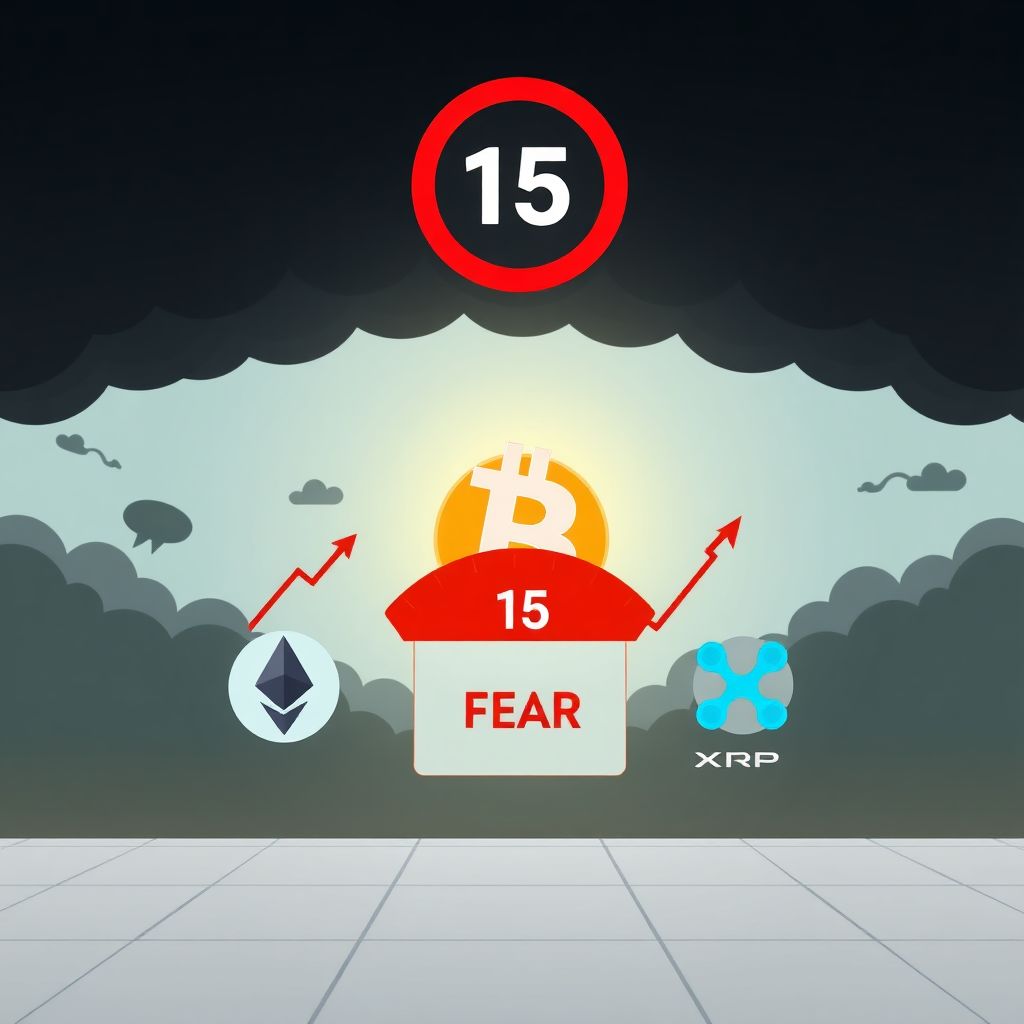
This caution is reflected in the Crypto Fear & Greed Index, which has plummeted to 15—its lowest point since April—indicating a state of extreme fear among market participants. According to CoinGlass, 24-hour liquidations surged by 26% to $569 million, while total open interest declined slightly by 0.6% to $142 billion. The average Relative Strength Index (RSI) across major cryptocurrencies is holding at 45, suggesting that markets may enter a consolidation phase before initiating any significant trend reversal.
One of the key factors contributing to the recent volatility has been the disruption in liquidity caused by the government shutdown. Treasury repo rates rose by 18–22 basis points during the closure, as banks opted to hoard cash amid the uncertainty. Additionally, the delay in releasing vital economic indicators such as October’s Consumer Price Index (CPI), Producer Price Index (PPI), retail sales figures, and nonfarm payrolls left the Federal Reserve operating without critical data, effectively placing it on a “data-dependent” pause.
Market expectations for a Federal Reserve rate cut in December have shifted dramatically—from a 92% probability before the shutdown to just 58% now. Meanwhile, Bitcoin’s 30-day realized volatility has soared to 78%, the highest level observed since the collapse of FTX. This heightened volatility has made the market exceptionally sensitive to headlines, with even minor news events triggering sharp price swings.
Institutional activity has also taken a hit. The Securities and Exchange Commission (SEC) experienced furloughs during the shutdown, delaying approvals for several crypto ETF applications. As a result, institutional capital inflows have stagnated, and appetite for risk has waned significantly. The correlation between Bitcoin and the Nasdaq has jumped to 0.88, highlighting the growing interconnectedness between crypto markets and traditional equities. This rising correlation also reflects how institutional investors are treating Bitcoin more like a tech stock than a hedge or alternative asset.
Despite the temporary resolution of the shutdown, underlying issues continue to hamper market momentum. The recent liquidity crunch has cooled investor interest in key growth sectors such as tokenization and real-world asset digitization. While stablecoins have managed to hold their value, more speculative areas like AI-based tokens and meme coins have suffered sharp declines. Open interest across the market remains 20% below recent highs, signaling a persistent lack of conviction.
Analysts caution that without sustained progress on regulatory clarity and long-term legislative support for the crypto sector, short-term volatility is likely to persist. While the end of the shutdown has allowed markets to breathe, it has not resolved the deeper structural and macroeconomic headwinds facing digital assets.
Looking ahead, the crypto market will keep a close eye on upcoming economic releases, including the delayed CPI and jobs data, which could influence the Federal Reserve’s next move. Any signs of inflationary pressure or labor market weakness may further complicate the Fed’s decision-making process and, by extension, affect crypto valuations.
In the meantime, retail and institutional traders are expected to remain on the sidelines, waiting for stronger signals before re-entering the market in full force. The return of ETF approval processes and regulatory developments could serve as catalysts, but only if accompanied by broader investor confidence.
Additionally, market observers are noting the increasing significance of geopolitical developments and their impact on risk assets. With global uncertainty still high, crypto may continue to behave more like a risk-on asset, moving in tandem with global equities rather than acting as a hedge.
Industry leaders are also renewing calls for policy frameworks that would support innovation while protecting investors. Proposals for clearer definitions of digital assets, updated tax codes for crypto transactions, and streamlined ETF approval pathways are once again gaining traction in policy circles.
In conclusion, while the end of the U.S. government shutdown has brought a temporary sense of relief to crypto markets, the path to recovery remains uncertain. Lingering liquidity issues, regulatory delays, and macroeconomic instability continue to cloud the outlook. For now, investors are bracing for continued volatility and preparing for potential shifts as more data and policy decisions emerge in the weeks ahead.