
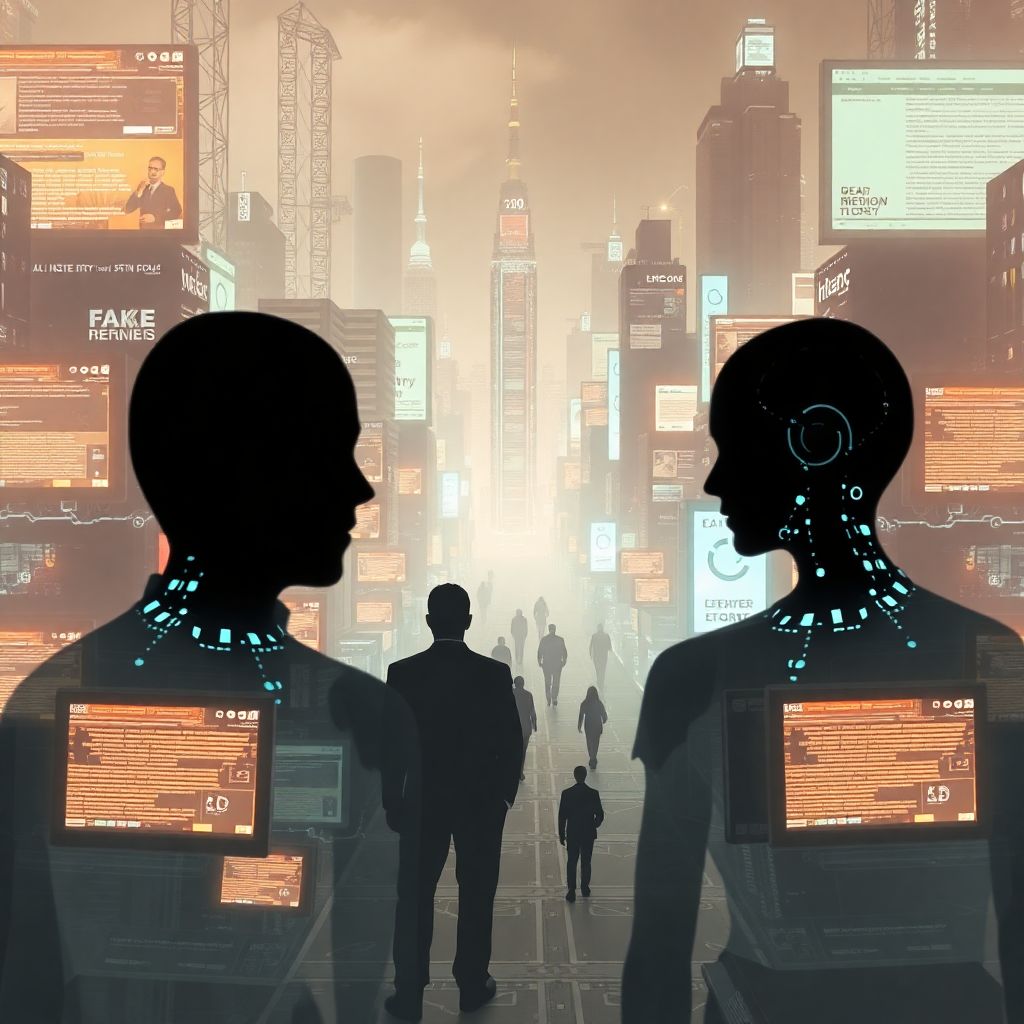
Dead Internet Theory Resurfaces Amid AI Content Explosion
The internet, once a vibrant hub of human interaction and creativity, is undergoing a radical transformation. Increasingly, experts and digital researchers are expressing concern that large parts of the web no longer reflect genuine human behavior. Instead, they’re being shaped, populated, and manipulated by artificial intelligence systems and bots — a phenomenon strikingly similar to what’s described in the so-called “Dead Internet Theory.”
This theory, which originated in obscure corners of the internet several years ago, posits that a significant portion of online content today is no longer created by people. Instead, it’s the work of algorithms, AI models, and automated agents posing as humans. Initially dismissed as a conspiracy or fringe theory, it’s now gaining traction in mainstream discussions — thanks to the exponential rise in generative AI technologies.
The Shift From Human to Machine-Generated Content
Recent studies and traffic analytics reveal a startling trend: bots now generate more internet traffic than human users. These aren’t just simple spam bots or search engine crawlers — we’re talking about sophisticated AI systems capable of writing blog posts, generating artwork, simulating conversations, and even engaging in social media debates. Platforms like Reddit, X (formerly Twitter), and Facebook are increasingly cluttered with content created by non-human agents.
What makes this shift more concerning is how seamless and convincing these AI-generated messages have become. With the rapid advancement of large language models and deep learning techniques, machines can mimic human speech patterns, tone, and emotion with uncanny accuracy. As a result, distinguishing real human voices from synthetic ones is becoming harder by the day.
Consequences for Digital Trust
The implications are profound. If much of what users encounter online isn’t created by real people, how can we trust the authenticity of digital interactions? Online reviews, personal blog posts, news comments, and even entire news articles could be generated by AI. This erosion of trust threatens the foundation of the internet as a space for genuine communication and shared knowledge.
Moreover, the proliferation of AI-generated content raises ethical and societal questions. For example, if a product receives thousands of glowing reviews, but most are written by bots, consumers are being misled. In political contexts, AI can be weaponized to sway public opinion, fabricate consensus, or amplify polarizing narratives — all without human involvement.
A Growing Echo of the “Dead Internet”
When the Dead Internet Theory first appeared on forums like 4Chan and Macintosh Café, it was largely dismissed as digital paranoia. But now, even respected technologists are beginning to take these ideas more seriously. The line between human and machine-generated content has blurred to the point where it’s often impossible to tell the difference without advanced tools.
AI-generated music, art, and video content are also flooding platforms like YouTube, TikTok, and Spotify. These creations are not only competing with human artists but sometimes outperforming them in engagement. With algorithms favoring content that drives clicks and watch time, there’s a real incentive to fill the internet with AI-made material.
The Rise of Autonomous AI Agents
Further accelerating this trend is the emergence of autonomous AI agents — programs that can perform complex tasks online with little to no human input. These agents can write emails, conduct customer service chats, write social media posts, and even initiate conversations in forums. As they evolve, they could run entire websites or simulate communities without any real human presence.
This raises the possibility that entire corners of the internet — blogs, forums, comment sections — may already be populated largely by AI entities interacting with one another, creating the illusion of human activity.
The Role of Algorithms in Sustaining the Illusion
Social media algorithms are designed to promote content that generates engagement, regardless of its origin. This creates a feedback loop where AI-produced content that performs well gets more visibility, encouraging creators — human or otherwise — to use AI to stay competitive. In many cases, humans unknowingly interact with AI-generated content, amplifying its reach and influence.
On platforms like X and Instagram, viral posts often trace back to AI-driven content farms that churn out thousands of posts daily. Even interaction metrics such as likes, shares, or comments can be artificially inflated using botnets, further distorting perceptions of popularity and relevance.
Implications for Search Engines and Knowledge Discovery
Search engines are also vulnerable. With AI-generated websites producing endless low-quality but keyword-optimized content, search results are increasingly polluted. Users searching for answers to genuine questions often land on AI-written blog posts that lack depth, originality, or factual accuracy. This degrades the informational value of the internet and undermines its usefulness as a research tool.
Some analysts predict that if this trend continues, search engines will have to fundamentally rethink their algorithms or risk becoming unusable due to the sheer volume of synthetic content.
Can We Detect AI Content?
There is growing interest in tools that can detect AI-generated material. Startups and academic institutions are racing to develop detectors that analyze text patterns, metadata, and linguistic nuances. However, AI continues to evolve rapidly, and detection methods are often a step behind. Many AI models can now mimic human idiosyncrasies, including spelling mistakes, stylistic quirks, and emotional language.
Watermarking AI content — embedding hidden signals that indicate machine authorship — is one proposed solution. But adoption has been slow, and such methods can be bypassed or removed. Moreover, not all AI developers agree on the need for transparency.
The Future of a Partially Synthetic Web
It’s becoming clear that the internet is transitioning from a purely human-driven space to one where machines play an increasingly dominant role. This new digital landscape is not entirely negative — AI tools can enhance productivity, democratize content creation, and provide new forms of entertainment. But if left unchecked, the balance may tip too far, leading to an internet that feels hollow, manipulated, and disconnected from genuine human experience.
To preserve the integrity of the web, platforms, developers, and users must work together to set ethical standards, improve transparency, and prioritize authenticity. Otherwise, we may soon find ourselves in a digital echo chamber — rich in content, but devoid of meaning.
What Can Users Do?
For the average internet user, awareness is the first step. Being skeptical of too-good-to-be-true reviews, questioning viral posts, and using AI-detection tools can help navigate the increasingly synthetic web. Supporting platforms and creators that emphasize transparency and human creativity will also be key in maintaining a healthy digital ecosystem.
Final Thoughts
The Dead Internet Theory might have started as a fringe idea, but today’s internet trends lend it a surprising degree of plausibility. As AI continues to evolve and proliferate, the challenge will be to ensure that the web remains a space where real human voices are heard — not drowned out by the hum of the machines.