
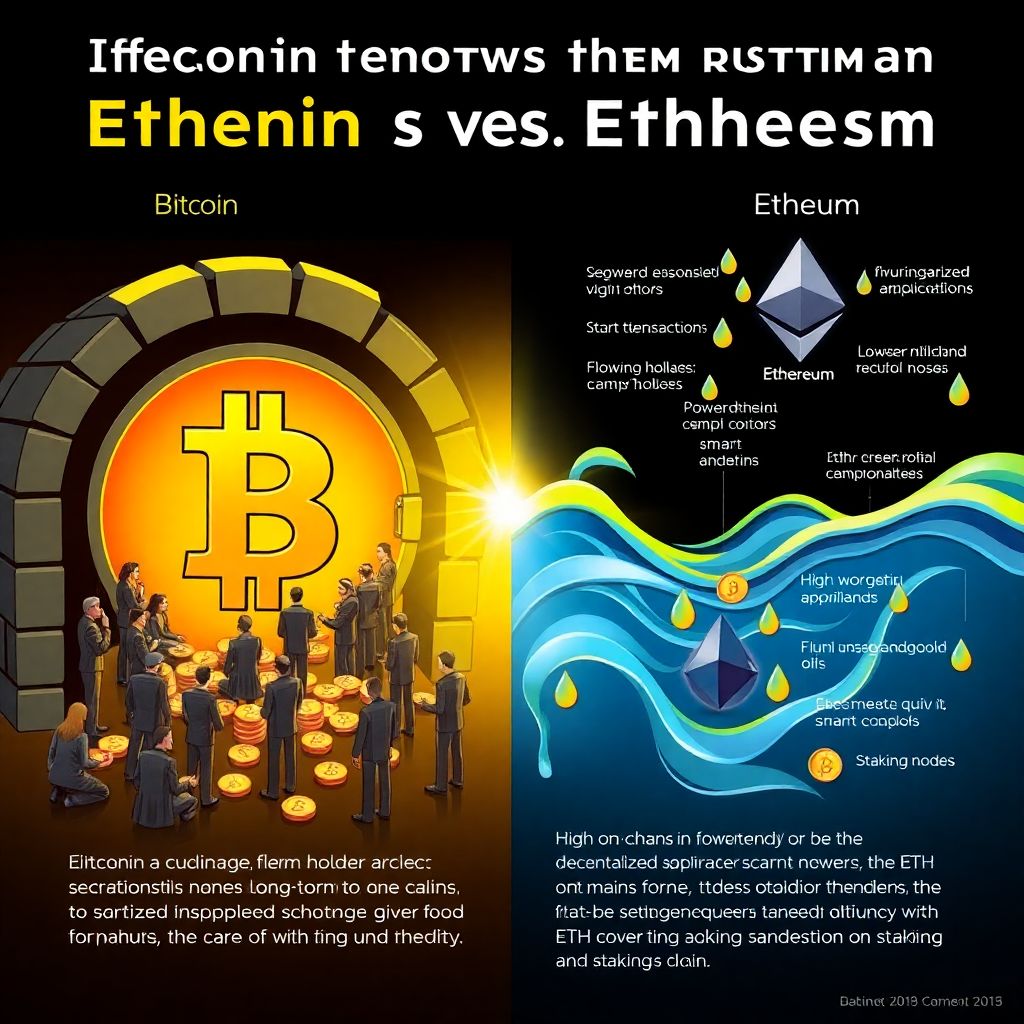
Ethereum investors appear significantly more inclined to trade or transfer their holdings compared to their Bitcoin counterparts, according to a fresh analysis from blockchain analytics firm Glassnode. The report highlights a fundamental behavioral divergence between holders of these two major cryptocurrencies: while Bitcoin is increasingly treated as a long-term store of value, Ethereum is frequently utilized within decentralized applications, smart contracts, and staking mechanisms—prompting higher turnover.
The data, collected prior to the latest cryptocurrency market downturn, reveals that Bitcoin continues to exhibit low transaction frequency. This aligns with its reputation as “digital gold”—an asset hoarded rather than spent. Glassnode notes that BTC holders tend to accumulate and retain their coins over extended periods, with supply steadily shifting towards long-term storage. This pattern underscores Bitcoin’s role as a digital savings instrument, where investor behavior mirrors traditional wealth preservation strategies.
Ethereum, on the other hand, functions more like “digital oil.” Its utility within the Ethereum network—as gas for transactions, collateral in DeFi protocols, and a medium for staking—results in much higher on-chain activity. This active use case means ETH is more often moved, sold, or locked in smart contracts, making it a more fluid asset in comparison to Bitcoin’s conservative holding trend.
Glassnode’s assessment suggests that Bitcoin investors are exhibiting “diamond hands” tendencies—industry jargon for holders who resist selling despite volatility—while ETH holders demonstrate a greater readiness to engage with the asset. This could be attributed not only to Ethereum’s functional role in its ecosystem but also to the demographic and strategic differences between the user bases of each network.
The report also outlines the increasing concentration of Bitcoin in long-term holding wallets. These wallets, defined by a lack of outbound transactions over a significant period, now account for a growing portion of total BTC supply. This shift further cements Bitcoin’s status as a passive investment vehicle rather than a transactional one.
In contrast, Ethereum’s movement patterns reflect a more dynamic environment. The popularity of staking through Ethereum 2.0, the rise of layer-2 solutions, and the growth of decentralized finance all encourage ETH usage rather than dormancy. As of recent data, a significant percentage of Ethereum’s circulating supply is either staked, used as collateral, or actively involved in liquidity provision.
This behavioral divergence may also influence market volatility. Since Bitcoin is less frequently moved, its price action may be more sensitive to sudden large transactions or macroeconomic events. Ethereum, owing to its higher liquidity and usage, might exhibit more consistent, albeit more frequent, price fluctuations.
Furthermore, Ethereum’s transition to proof-of-stake has altered its monetary dynamics, introducing mechanisms like burning a portion of gas fees (EIP-1559), which affects supply in a deflationary direction. This has added new layers of complexity to ETH’s value proposition, making it not just a utility token but also an appreciating asset under certain market conditions.
Investors should consider these usage patterns when building crypto portfolios. Bitcoin’s role as a hedge or store of value may appeal to risk-averse or long-term investors, while Ethereum’s active participation in the broader Web3 and DeFi ecosystems might attract those seeking exposure to innovation and higher yield opportunities.
Moreover, institutional behavior also reflects this divide. Many corporations and funds that have added Bitcoin to their balance sheets view it as a strategic reserve asset, similar to gold. Meanwhile, Ethereum is more often seen in venture-style investments, powering scalable applications and smart contract platforms.
Understanding the distinction between holding behaviors can also inform regulatory perspectives. Bitcoin’s relative stasis may support its classification as a commodity by some authorities, while Ethereum’s multifunctional role could complicate efforts to categorize it under existing financial frameworks.
In summary, while both Bitcoin and Ethereum are foundational pillars of the crypto economy, their holders treat them in fundamentally different ways. Bitcoin represents a digital vault—an asset largely untouched once secured. Ethereum, conversely, is a dynamic workhorse—constantly in motion, fueling a growing array of decentralized systems. These differences reflect not just technological design, but also evolving narratives around value, utility, and financial strategy in the digital age.