
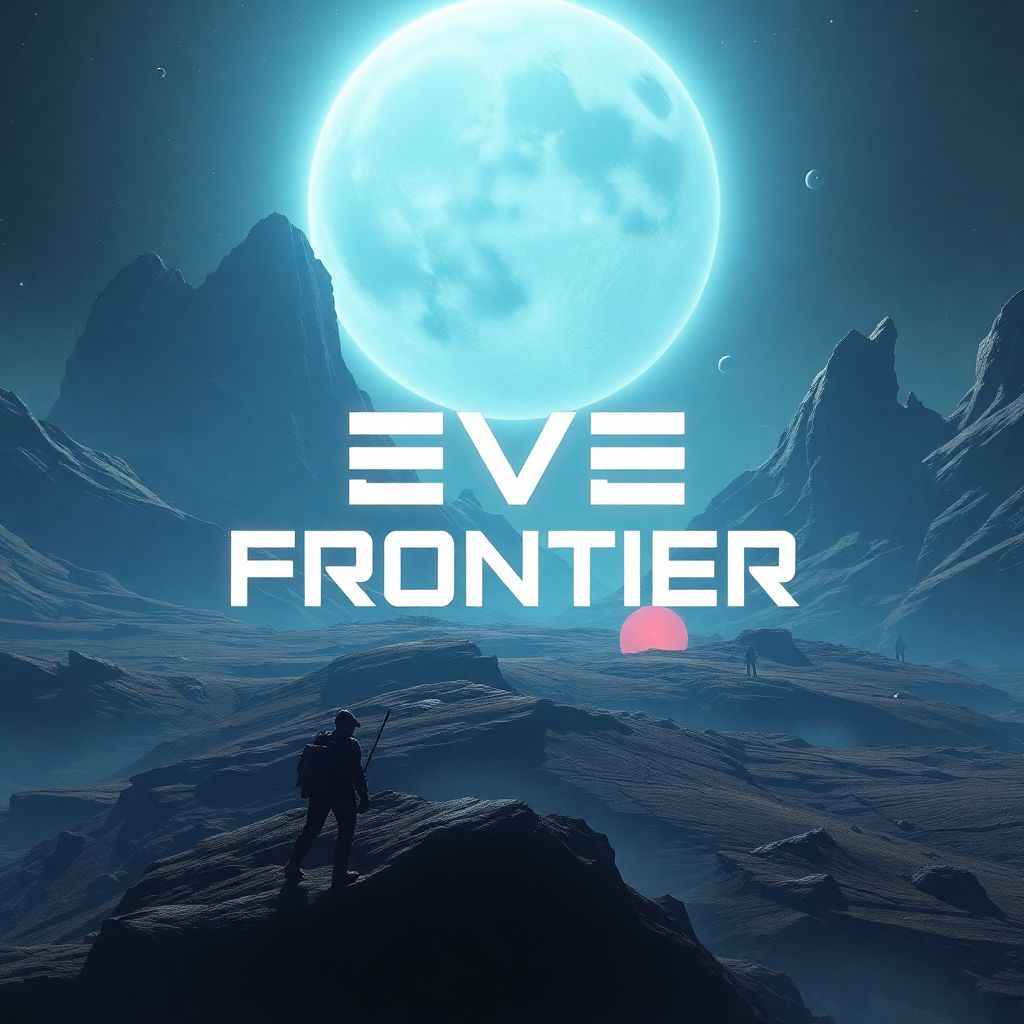
Eve Frontier, the sci-fi survival game and offshoot of the iconic MMO Eve Online, is making a strategic pivot by moving from the Ethereum-based Redstone gaming network to the Sui blockchain. According to developer CCP Games, this shift isn’t driven by monetary incentives or grants. Instead, it stems from a shared long-term vision between the studio and Sui’s team around the philosophical future of digital worlds and persistent gaming experiences.
The transition to Sui is expected to take place over the coming months. Since Eve Frontier remains in its testnet phase, current players won’t need to manually transfer assets or deal with complex migrations. The game’s roadmap will remain intact, with the move serving to expand the possibilities of its development rather than altering its direction.
According to CCP Games, the decision to move platforms was heavily influenced by Sui’s robust technical infrastructure and the team’s alignment with CCP’s ambition to create a “forever game”—a persistent, evolving virtual universe that continues to grow and adapt over time. The Sui blockchain, developed by Mysten Labs, is known for its high throughput, low latency, and scalability, all of which are critical for supporting large-scale gaming environments.
By leveraging Sui, Eve Frontier will gain access to enhanced features that were previously limited or unavailable on Ethereum. These include more seamless onboarding for new users, reduced transaction costs, faster processing speeds, and a more developer-friendly environment for implementing complex in-game mechanics. This opens up opportunities for dynamic gameplay systems, including real-time asset interactions and deeper integration of NFTs and digital ownership.
Unlike Ethereum, which can become congested and expensive during periods of high network activity, Sui’s architecture is built to scale horizontally, which helps maintain performance regardless of user volume. This makes it particularly suitable for gaming use cases, where responsiveness and reliability are essential.
CCP Games also emphasized that partnering with Sui allows them to experiment with new economic models tailored for gaming. These models could include tokenized in-game economies, player-driven marketplaces, and decentralized governance mechanisms that give players a say in the game’s evolution. Such systems align with blockchain’s promise of empowering users and promoting transparency.
While Ethereum has long been the dominant platform for blockchain gaming, its limitations—especially in terms of gas fees and scalability—have led many developers to explore alternatives. The migration of Eve Frontier to Sui is part of a broader trend where game creators seek out layer-1 protocols that offer purpose-built solutions for interactive content and immersive digital experiences.
In addition to technical and philosophical alignment, Sui’s focus on onboarding non-crypto-native users is another key advantage. The platform offers smoother wallet integrations, abstracted blockchain elements, and user-friendly interfaces that reduce friction for gamers unfamiliar with Web3. This is especially important for CCP Games, which aims to attract both traditional gamers and blockchain enthusiasts to Eve Frontier.
The move also signals CCP’s broader commitment to innovation in the gaming space. With nearly two decades of experience in developing complex virtual worlds, the studio is leveraging blockchain not just as a trend, but as a foundational layer for its next generation of games. Eve Frontier’s shift to Sui could set a precedent for how AAA-style games embrace decentralized technologies while maintaining high-quality user experiences.
As Eve Frontier begins its porting process to Sui, more technical details and gameplay enhancements are expected to be announced. Players and developers alike are watching closely, as this transition could demonstrate how blockchain infrastructure choices can significantly impact a game’s scalability, economic structure, and community engagement.
In summary, the migration of Eve Frontier from Ethereum to Sui is a calculated move grounded in long-term vision rather than short-term incentives. It reflects a broader industry evolution where game developers prioritize platforms that support rich, scalable, and user-centric virtual worlds. For CCP Games, this change represents a step toward realizing a persistent digital universe—one that seamlessly blends gameplay, ownership, and community in a way that traditional infrastructures have struggled to support.