
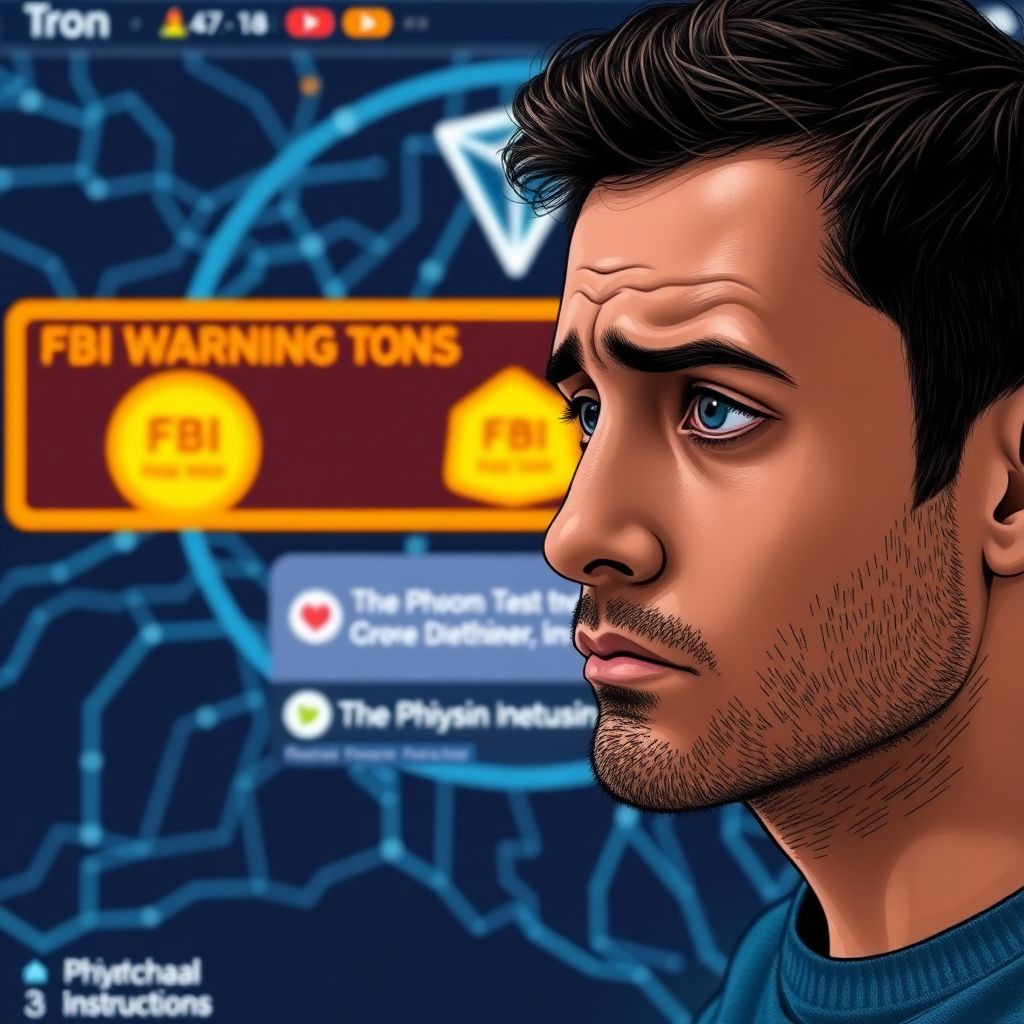
Fake tokens masquerading as official FBI assets are circulating on the Tron blockchain, and U.S. authorities are warning users not to fall for the scheme.
According to the FBI’s New York Field Office, scammers are issuing tokens on Tron that falsely appear to be connected to the bureau. When viewed in a blockchain explorer, these tokens display an alarming message claiming the recipient’s wallet is under federal investigation and demanding that they comply with “anti-money laundering” requirements.
The instructions tell users to visit an external website and submit personal information through an online form, supposedly to verify their identity or prove that their funds are legitimate. In reality, the site is controlled by criminals attempting to harvest sensitive data that can be used for identity theft, account takeovers, or further fraud.
The FBI’s New York office explicitly urged Tron users to treat any such token as malicious. It cautioned people to be wary of any asset that claims to be sent by the FBI or another law enforcement entity and to ignore all instructions attached to it. Most importantly, recipients are advised not to provide any identifying information to any website referenced by such tokens.
These fraudulent tokens typically contain the FBI name and branding in their metadata to create the illusion of legitimacy. The on-chain message asserts that the recipient’s wallet is being monitored for suspicious transactions and implies that failing to comply with the requested steps could result in asset freezes, criminal charges, or other penalties. The entire setup is designed to pressure victims into acting quickly, before they have time to verify whether the contact is genuine.
The scam exploits a common misconception about how law enforcement interacts with the public. In practice, federal agencies do not open cases or conduct official investigations by silently pushing tokens into random crypto wallets and demanding that people fill out forms on obscure websites. Any unsolicited on-chain “notice” claiming to represent a regulator or police force should be treated as a major red flag.
Tron’s low fees and high transaction throughput make it easy and inexpensive for scammers to broadcast large numbers of these fake tokens to many addresses. Because anyone can issue a token on the network, bad actors can freely create assets that mimic the names or logos of well-known institutions, hoping that at least some recipients will panic and follow the instructions.
The attack is an example of a broader trend: impersonation scams that blend traditional social engineering with blockchain mechanics. In the past, criminals have pretended to be bank employees, tax authorities, or tech support agents. Now they are taking advantage of token standards and block explorers to insert fake “official notices” directly into users’ transaction histories and asset lists.
For Tron users, the immediate risk is not the token itself-it cannot seize funds or directly control a wallet-but the off-chain actions it attempts to trigger. The damage occurs when a user clicks through to the linked website and reveals private data such as full name, address, government ID numbers, exchange account credentials, seed phrases, or other sensitive information.
There are several practical steps users can take to protect themselves:
– Treat any unsolicited token, especially one claiming to be from a government agency or major institution, as suspicious by default.
– Never enter wallet seed phrases, private keys, or exchange passwords into websites reached via random tokens or on-chain messages. Legitimate organizations will never ask for those.
– Independently verify any supposed contact from law enforcement using official channels, not links embedded in tokens or messages.
– Use wallet settings or portfolio tools that allow hiding or filtering spam tokens, reducing the chance of interacting with them by mistake.
– Enable strong security on related accounts (email, exchanges, authentication apps) so that even if some data is exposed, attackers have a harder time compromising funds.
It is also important to understand that simply receiving a token on Tron (or any other network) does not mean your wallet has been “hacked” or singled out. Blockchains are public, and addresses can be targeted in bulk based on visible activity or even generated randomly. The presence of a token with an intimidating message is not evidence that the FBI-or any real agency-is investigating you.
For developers and infrastructure providers within the Tron ecosystem, this type of scam underscores the value of clear labeling and user education. Wallets and explorers can help by marking obviously fraudulent or spoofed tokens as suspicious, warning users when assets claim to be from government bodies, and explaining that real investigations do not unfold through token airdrops.
The incident also highlights a tension in open blockchain systems: the same openness that enables innovation and permissionless finance also allows scammers to cheaply reach huge audiences. Network-level censorship of scam tokens is difficult without undermining neutrality, so the primary defenses remain user awareness, better interfaces, and clear public guidance from authorities and platforms.
From a regulatory and law enforcement perspective, fake “FBI tokens” are yet another reminder that crypto fraud increasingly mirrors traditional scams, simply adapted to new rails. Instead of phishing emails or robocalls, victims now encounter fake compliance demands embedded in their wallets. The core tactic, however, remains the same: manufacture urgency and fear, then funnel the target toward a website or channel controlled by criminals.
If you discover such a token in your Tron wallet, the recommended response is straightforward: do not click the attached links, do not complete any forms, and do not attempt to “appeal” or “verify” anything through the channels provided by the token. You can safely ignore or hide the asset, and if you are concerned, consult with a trusted security professional or contact relevant authorities using verified contact information.
As blockchain adoption grows, scams will continue to evolve in creativity and sophistication. Staying safe increasingly depends on understanding not only how to use a wallet, but also how real institutions actually operate. Verified agencies do not send legal threats through random token drops, they do not ask for private keys, and they do not demand compliance via anonymous web forms. Remembering that distinction can be the crucial line between calmly ignoring a fake FBI token-and becoming the next victim of a very modern form of fraud.