
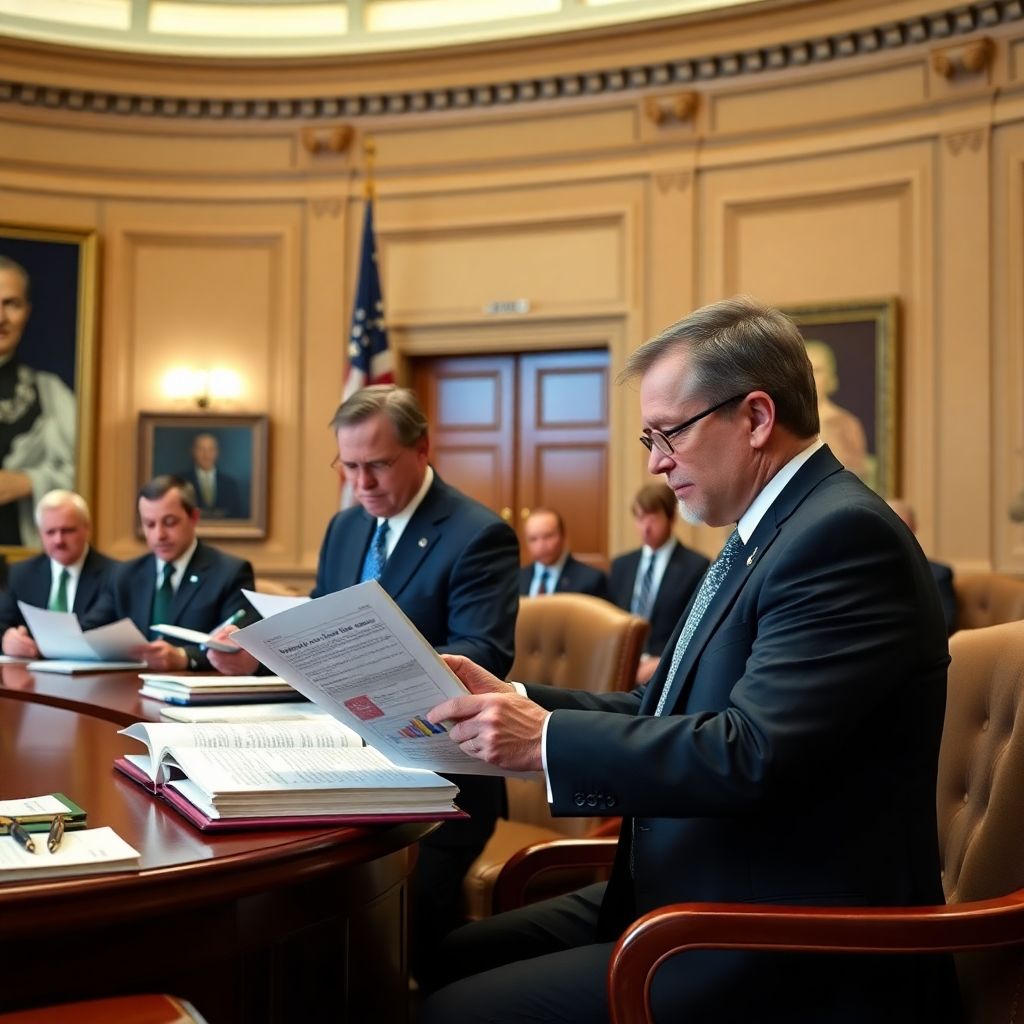
Fed Seeks to Lock In Shift Away From ‘Reputational Risk’ in Bank Oversight
The Federal Reserve has taken a major formal step toward reshaping how it supervises banks, proposing to permanently strip the concept of “reputational risk” from its rulebook and replace it with a narrower focus on concrete, quantifiable financial risks.
The central bank has opened a 60‑day public comment period on the proposal, signaling its intent to enshrine a policy change it first previewed last year: examiners should no longer lean on broad, subjective judgments about a bank’s reputation when assessing its safety and soundness. Instead, they are to concentrate on clearly measurable threats such as credit, liquidity, and market risk.
Vice Chair for Supervision Michelle Bowman framed the move as an effort to reduce ambiguity and subjectivity in the supervisory process. She argued that relying on a bank’s perceived reputation has injected inconsistency into exams and, crucially, pulled attention away from the financial metrics that genuinely bear on whether an institution is stable and well managed.
According to Bowman, the “reputational risk” standard is inherently vague and difficult to apply consistently across institutions. In her view, that fuzziness has allowed supervisory decisions to vary too widely from one examiner to another, sometimes based on personal judgment rather than clearly articulated, objective criteria. By contrast, core financial risks-how likely loans are to default, whether a bank has enough liquidity to withstand stress, how exposed it is to market swings-can be modeled, monitored, and debated using data.
The proposal comes amid intense political and industry scrutiny of how regulators influence which customers banks are willing to serve. For years, banks have complained that regulators can exert informal pressure behind closed doors, warning that certain lines of business carry “reputational risk” and might draw scrutiny in future exams-even if those activities are legal and properly managed.
In that context, the Fed’s shift is being interpreted by many in the digital asset world as a direct response to accusations of “Operation Choke Point 2.0”-the claim that regulators have leaned on banks to avoid providing services to crypto companies, not through explicit rules, but through supervisory hints and reputational warnings. By codifying that reputational considerations should not drive supervisory decisions, the Fed is trying to draw a clearer line between lawful but controversial activities and genuine threats to safety and soundness.
Supporters of the change argue that it will make it harder for regulators to quietly discourage banks from serving certain industries-whether that’s cryptocurrency firms, firearm manufacturers, legal cannabis businesses, or other politically sensitive sectors. They contend that if regulators believe a particular activity is unsafe, they should have to say so explicitly and point to tangible risk channels, rather than relying on the more nebulous charge that it might “look bad” or attract criticism.
At the same time, the Fed is not saying that banks can ignore public perception altogether. A damaged reputation can still hurt earnings, trigger deposit outflows, or undermine counterparties’ confidence-channels that can ultimately translate into financial risk. Under the new framework, however, examiners would need to connect those dots and show how a reputational issue feeds into measurable financial vulnerabilities, rather than treating reputation as its own standalone category of supervisory concern.
The stakes are particularly high for crypto banking access. In recent years, several banks that were active in digital assets-most notably Silvergate and Signature-collapsed or exited the space, intensifying fears that the traditional financial system was closing its doors to crypto firms. Industry groups have argued that murky regulatory expectations, including warnings about reputational risk, made many banks hesitant to onboard even well‑capitalized, compliant crypto clients.
If adopted and consistently applied, the Fed’s new stance could give banks more room to make their own business judgments about whether to service crypto companies, as long as they can demonstrate robust risk controls. Banks that decide to work with exchanges, stablecoin issuers, or blockchain infrastructure providers would still need to manage AML and sanctions obligations, custodial risks, deposit concentration, and volatility in crypto markets-but they could no longer be marked down simply because the business is seen as controversial.
However, the change is not a green light for unrestricted crypto-banking integration. Other elements of the regulatory framework remain very much in place: banks must still comply with consumer protection laws, anti‑money laundering rules, capital and liquidity requirements, and any crypto‑specific guidance issued by their primary regulators. The Fed’s proposal narrows one avenue for informal pressure, but it does not remove supervisors’ ability to act when there is a demonstrable risk to a bank’s balance sheet or compliance posture.
For lawmakers, the proposal increases pressure to clarify in statute how far regulators can go in shaping banks’ customer bases. Some members of Congress have pushed for explicit prohibitions on using informal guidance or exam comments to target lawful industries. Others worry that tying regulators’ hands too tightly could limit their ability to react to emerging threats or reputational events that rapidly become financial problems, such as social‑media‑driven bank runs.
From a risk‑management standpoint, banks now face the task of translating this policy shift into practice. Many institutions have internal “reputational risk” frameworks embedded in their governance processes, committee charters, and product‑approval mechanisms. Those frameworks will likely need to be reframed in terms of specific financial and legal risks: instead of asking, “Will this harm our reputation?”, boards and risk managers may be pushed to ask, “Could this lead to deposit flight, legal liability, funding stress, or regulatory sanctions-and how do we quantify and mitigate that?”
For crypto firms seeking or maintaining banking relationships, the two‑month comment period is an important window. They can use it to articulate the specific ways in which reputational arguments have constrained access to basic banking services: difficulties opening operating accounts, limits on payment rails, reluctance to provide custody or settlement services, or sudden “de‑risking” decisions that cut off long‑standing relationships with little explanation. By detailing those experiences, they aim to nudge the Fed toward final rules that are clear enough to shift supervisory culture, not just the text of the manual.
Investors and market participants will be watching how the Fed responds to comments and how quickly it moves to finalize the rule. A strong final rule that removes reputational risk as a standalone supervisory category could be interpreted as a sign that regulators are more willing to allow banks to engage with emerging sectors like digital assets, provided they can demonstrate solid risk controls. A weaker or heavily qualified final rule might suggest that the door to informal pressure remains partially open.
In parallel, banks will continue to calibrate their appetite for crypto exposure based on broader factors: the health of the digital asset market, enforcement trends from other agencies, and the evolution of stablecoin and tokenization use cases within traditional finance. Even with reputational risk formally downgraded, many risk committees may move cautiously, preferring to build experience through limited, tightly controlled pilots before scaling up.
Ultimately, the Fed’s effort to formally drop “reputational risk” from its supervisory lexicon is less about endorsing any particular industry and more about reshaping how regulatory power is exercised. By insisting that supervisory concerns be tied to demonstrable financial channels, the central bank is trying to make oversight more predictable, rule‑bound, and transparent. For banks and crypto firms alike, the next challenge will be testing whether that principle holds when it collides with the messy realities of market shocks, political controversy, and public opinion.