
Google’s Gemma Is Already Gemini-Like-Now Gemopus Makes It Think Like Claude Opus
If you’ve paid attention to the local‑AI ecosystem, the name Qwopus probably rings a bell. That open model attempted a bold trick: capture the reasoning style of Claude Opus 4.6 and compress it into Alibaba’s Qwen, so anyone could run a Claude‑like assistant on their own machine at no licensing cost. Against expectations, it worked well enough that many people started treating Qwopus as a pocket‑sized Opus clone.
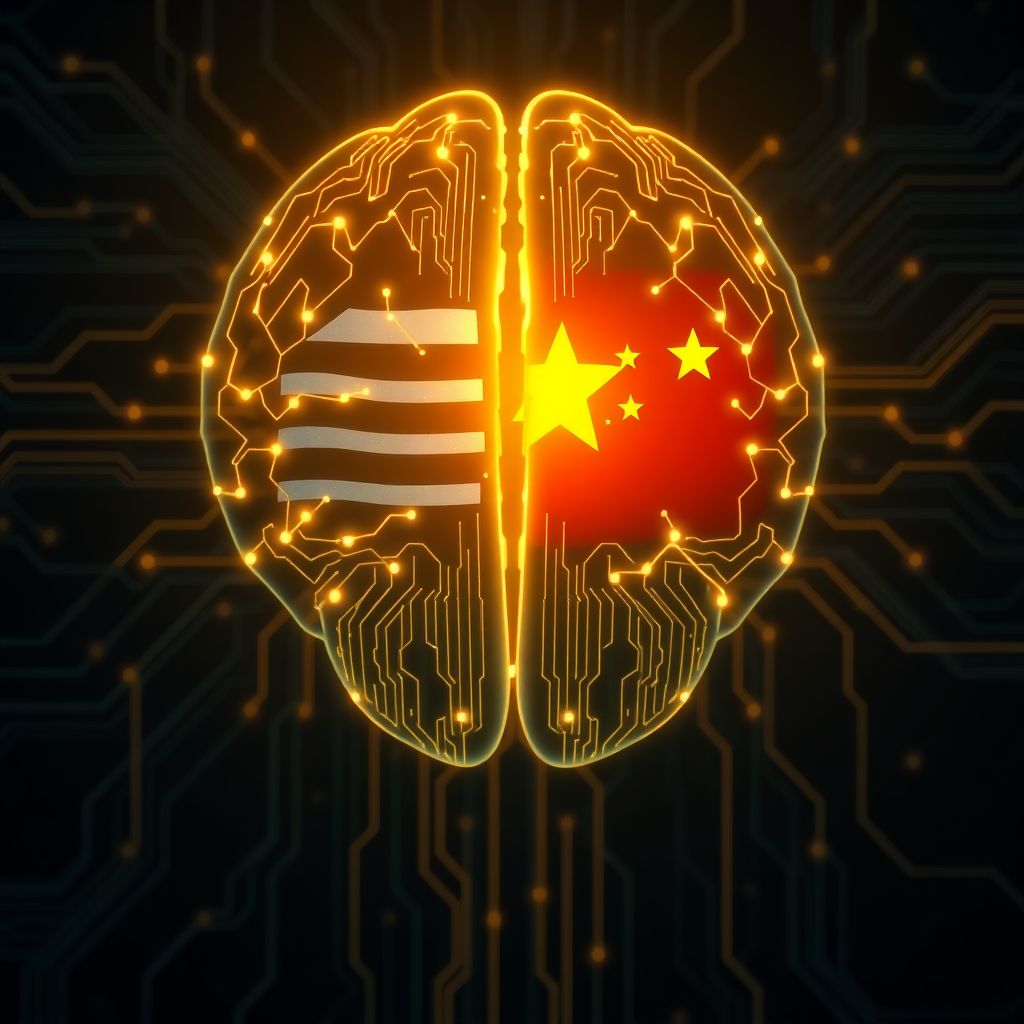
But there was always a catch: Qwen is a Chinese‑developed model. For some users, especially in the U.S. and Europe, that raised questions about governance, supply chain, and geopolitical risk. The core idea-frontier‑level reasoning on consumer hardware-was appealing, yet the foundation model made some uneasy.
The pseudonymous developer behind Qwopus, known as Jackrong, took that criticism seriously. His new answer is Gemopus: a family of fine‑tuned models that mimic Claude Opus’s reasoning style, this time built on top of Google’s open‑source Gemma 4. Same core ambition, very different base: an all‑American AI stack that you can run locally on everything from a high‑end workstation to an aging “potato” PC.
From Qwopus to Gemopus: Same Vision, New Foundations
Conceptually, Gemopus picks up where Qwopus left off. The goal is still to distill what people like about Claude Opus-its structured reasoning, deliberate chain‑of‑thought style, and strong performance on complex tasks-into a model you can actually own and operate yourself.
The difference is the substrate. Instead of piggybacking on Qwen, Gemopus fine‑tunes Google’s Gemma 4, an open model family that already behaves a lot like a cut‑down Gemini when it comes to language capabilities. In other words, Gemma gives you a Gemini‑adjacent base; Gemopus pushes it further to approximate Opus‑like reasoning on top.
For users who care about jurisdiction and provenance, that’s a big psychological shift. You get a model from a U.S. company, published under a transparent open‑source license, then tuned by an independent developer to behave more like one of the best proprietary assistants on the market.
Two Flavors of Gemopus: Light and Heavy
The Gemopus lineup is split into two main variants to cover different hardware budgets and use cases.
– Gemopus‑4‑26B‑A4B is the larger, more capable option. It’s described as a Mixture‑of‑Experts (MoE) model, a design where different “expert” subnetworks specialize in different kinds of tasks, and the model selectively routes tokens through them. The aim is to deliver higher‑end reasoning while keeping actual compute requirements in check compared to a dense model of similar quality. Think of this as the version you reach for if you have a reasonably powerful GPU or a strong CPU setup and you care most about depth of thinking.
– A smaller Gemopus variant targets modest machines-laptops, mini‑PCs, and the kind of desktops many people jokingly call “potato PCs.” This edition is optimized for efficiency: more aggressive quantization, tighter memory footprints, and a focus on staying responsive even without top‑shelf hardware. It’s not trying to beat cloud‑scale models; it’s trying to be good enough for most daily tasks while staying entirely local.
The two‑tier approach mirrors what the broader AI industry is doing: one track for performance enthusiasts and developers pushing the limits, another for everyday users who just want a competent local assistant without upgrading their whole rig.
Why People Want Claude‑Style Reasoning Locally
Claude Opus has built a reputation for being methodical, cautious, and strong at multi‑step reasoning. Users like it for:
– Complex coding and debugging
– Long‑form writing and editing
– Careful, step‑by‑step problem solving
– Ethical and safety‑aware responses
Trying to “distill” those behaviors into an open model is less about copying exact weights and more about guiding a different model family to adopt similar habits: structured breakdowns of problems, explicit intermediate reasoning, and better handling of ambiguity.
Gemopus leans into that. Its training signal is designed so that, when asked to reason, it behaves more like a thoughtful collaborator than a fast‑talking autocomplete engine. For people who already enjoy Claude but want something offline, Gemopus is positioned as the closest you can get without touching a proprietary API.
Gemma Already Feels Like Gemini-Gemopus Pushes It Further
Google’s Gemma line surprised many observers when it launched because, out of the box, it already felt like a smaller cousin of Gemini: strong language understanding, decent reasoning, and relatively clean safety behavior for an open model.
By fine‑tuning Gemma 4 with Opus‑style reasoning traces and prompt patterns, Gemopus effectively layers one personality and reasoning framework on top of another. You end up with a model that:
– Inherits Gemma’s broad language competence and safety scaffolding
– Adds a more deliberate, Opus‑inspired reasoning rhythm
– Remains small enough to run outside the data center
This is part of a wider trend: powerful but compact open models that can be reshaped by fine‑tuning to resemble whichever proprietary assistant users currently admire-Gemini, Claude, or otherwise.
All‑American AI and the Geopolitics of Open Models
Under the marketing jokes about “all‑American DNA,” there’s a serious subtext. AI models are increasingly viewed as strategic infrastructure. For enterprises, governments, and even individual power users, the origin of the base model matters:
– Legal exposure: Companies want models built under regulatory regimes they understand.
– Data governance: They care about who trained, hosted, and maintained the model.
– Supply‑chain trust: There’s growing scrutiny over AI developed under foreign jurisdictions perceived as adversarial or opaque.
By moving from a Chinese base model (Qwen) to a Google one (Gemma), Gemopus positions itself as more palatable for users who factor politics and compliance into their tooling choices. It won’t matter to everyone, but for a sizable slice of the market, that swap is decisive.
What Running Gemopus Locally Actually Buys You
Gemopus is not just about national origin or nerd bragging rights; it fundamentally changes how you can work with AI day‑to‑day:
– Privacy by default: Your prompts, documents, and code never have to leave your machine.
– Predictable costs: There are no per‑token API fees; your “bill” is electricity and hardware depreciation.
– Full controllability: You can chain, script, or modify the model as you like, without waiting for a platform’s feature roadmap.
– Offline resilience: On a laptop or small PC, you can keep working with advanced AI tools even with poor or no connectivity.
For developers, that also means reduced legal and architectural complexity. You can ship an app with a model bundled or documented, rather than forcing users to sign up for yet another cloud service.
Trade‑Offs: You Don’t Get Opus for Free
Despite the bold branding, it’s important to keep expectations calibrated. Gemopus is inspired by Claude Opus; it is not Claude Opus.
– It will generally lag behind top‑tier commercial models on the hardest benchmarks, especially those that lean heavily on massive pretraining or proprietary data.
– It may hallucinate more often on niche facts or domain‑specific knowledge.
– Safety behavior, while guided by fine‑tuning, won’t perfectly mirror the rigor of a large, well‑funded commercial safety pipeline.
What you get in return is sovereignty: the ability to run something in the same conceptual league as Opus, on your own terms, with code and weights you can inspect and manipulate.
How Gemopus Fits Into the Broader Local‑AI Movement
Gemopus is one more data point in a pattern that’s now hard to ignore:
– Big tech companies release capable open models (Gemma, Llama, etc.).
– Independent developers fine‑tune them to mimic the personalities, reasoning styles, and guardrails of flagship proprietary assistants.
– Users mix and match these community‑driven builds instead of relying on a single cloud provider.
In that ecosystem, Gemopus slots in as the “Claude‑flavored” option on a Google base model, complementing other projects that pursue “Gemini‑flavored” or “GPT‑like” behavior using different foundations. Over time, it’s plausible that users will think less in terms of vendor brands and more in terms of open “reasoning profiles” they can swap in and out.
Practical Use Cases: Where Gemopus Makes Sense
For many people, Gemopus can already replace or supplement cloud models in concrete workflows:
– Developers and engineers: Code explanation, refactoring suggestions, test generation, and local prototyping without uploading proprietary repositories.
– Writers and analysts: Drafting articles, reports, and documentation with sensitive or embargoed material that can’t touch external servers.
– Researchers and students: Working through math, logic, or conceptual problems step by step, with a model that’s tuned to be more reflective and less glib.
– Small businesses: Customer‑support drafting, internal knowledge Q&A, or policy writing without paying for API volume or exposing internal docs.
If you value the feel of Claude’s reasoning but live in a context where sending data to remote servers is unacceptable, Gemopus is aimed directly at you.
The Bigger Picture: Gemini, Claude, and the Future of “Model Personalities”
Projects like Gemopus also raise an interesting question: when base models like Gemma can be made to behave like Gemini or Claude through fine‑tuning, where does the real differentiation lie?
The emerging answer seems to be:
– Base models provide raw capabilities and efficiency.
– Fine‑tunes define personality, safety stance, and reasoning style.
– Tooling and ecosystem decide how productive you can actually be with all of the above.
In that world, the line between “Gemini‑like” and “Claude‑like” blurs. Gemma 4 already acts like a mini‑Gemini; Gemopus teaches it to think more like Opus. Tomorrow, another developer might shape it to mimic a completely different assistant. Users win, because they gain freedom to choose the blend that best fits their values, hardware, and workloads.
Gemopus is one of the clearest signs yet that high‑end reasoning is no longer exclusive to proprietary clouds-and that with the right fine‑tune, Google’s Gemma doesn’t just resemble Gemini; it can convincingly echo Claude Opus, too, all from the comfort of your own machine.