
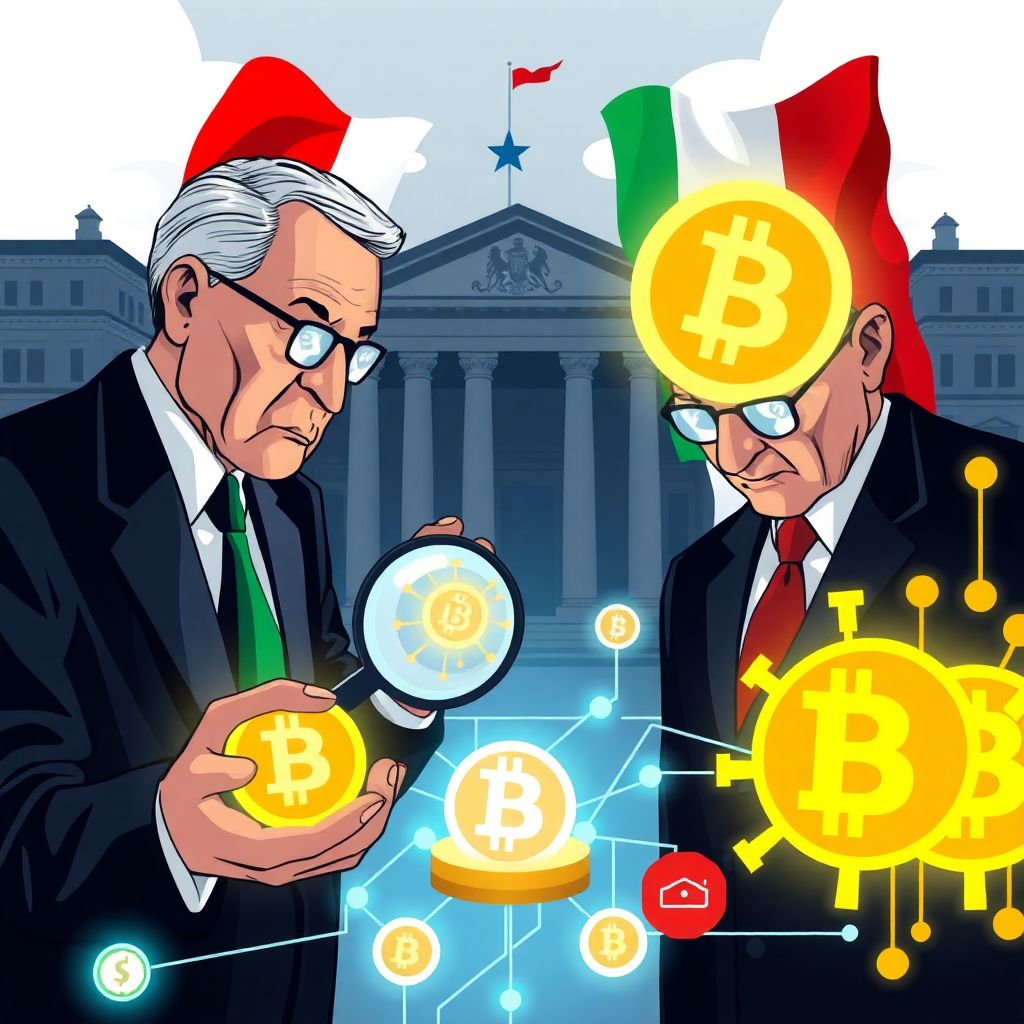
Italy launches ‘in‑depth’ probe into crypto risks as oversight gaps widen
Italy has kicked off a far‑reaching review into how exposed everyday savers are to cryptocurrencies, stepping up scrutiny just as digital assets become more deeply woven into the traditional financial system.
The initiative, described as an “in‑depth review,” focuses on retail investors’ direct holdings of crypto as well as their indirect exposure through investment products and financial intermediaries. It comes months after Italy’s central bank cautioned that the growing integration of crypto into mainstream markets could trigger systemic problems if left unchecked.
At the center of the effort is the Macroprudential Policy Committee, a high‑level body that brings together the governor of the Bank of Italy, supervisors for insurance and pension funds, and senior officials from the Ministry of Economy and Finance. In a statement on Thursday, the committee warned that risks are increasing due to “growing interconnections with the financial system and regulatory fragmentation at the international level.”
According to the Ministry of Economy and Finance, which formally launched the review, authorities will evaluate how well Italian households are protected when they buy digital assets directly on platforms, or gain exposure indirectly via funds, structured products, derivatives, or insurance‑linked offerings tied to crypto markets. The goal is to identify weaknesses in investor safeguards before the sector becomes too large or interconnected to manage safely.
A key concern flagged by officials is the patchwork of rules that currently governs crypto markets globally. While the European Union is rolling out a harmonized framework for digital assets, many countries outside the bloc still operate with minimal or inconsistent oversight. This regulatory fragmentation, Italian policymakers argue, can create blind spots that allow risky products or actors to slip through the cracks and still reach European investors.
For Italy, the timing is critical. On one hand, digital assets are steadily gaining ground among retail traders, fintech platforms, and even some traditional financial institutions exploring tokenization and blockchain‑based services. On the other, the memory of past market crashes, exchange collapses, and stablecoin scares remains fresh, underscoring how quickly losses can spread when confidence evaporates.
Regulators are particularly focused on channels where crypto markets intersect with banks, payment institutions, asset managers, and pension funds. Indirect exposure can be less visible than outright crypto purchases, yet still pose significant risks. For example, a conventional investment fund that allocates a portion of its assets to digital tokens, or a structured note that tracks the price of a major cryptocurrency, may leave savers exposed without them fully understanding the underlying volatility.
The review is expected to map these connections in detail, examining where leverage is building up, how collateral is being valued, and whether existing capital and liquidity buffers are sufficient if crypto prices swing abruptly. Supervisors will also look at operational risks, such as how institutions handle custody of digital assets, cybersecurity threats, and the resilience of the platforms they rely on.
Investor protection sits at the heart of the exercise. Italian authorities want to know whether current disclosure rules adequately explain the complexity and potential downside of crypto investments, especially for unsophisticated retail buyers. They are likely to consider whether products marketed to the general public should be subject to stricter suitability tests, caps on leverage, or clearer warnings about the possibility of total loss.
The probe also reflects a broader European unease that crypto activity can easily flow across borders, exploiting regulatory loopholes. Even if one jurisdiction tightens its rules, platforms and issuers can relocate or route services via less‑regulated hubs, while still targeting investors in stricter regions through digital channels. Italy’s review will therefore examine how domestic rules interact with upcoming European standards, and where additional national measures might be needed.
Another area under scrutiny is the role of so‑called “stable” digital assets and tokenized instruments that aim to mirror traditional financial products. While these instruments are often presented as safer or more predictable than conventional cryptocurrencies, they can still harbor liquidity, governance, and counterparty risks. If they are widely integrated into payment systems or used as collateral in lending, instability in their value could reverberate through the broader financial system.
As part of the review, officials are expected to analyze past episodes of market turmoil, including sharp crypto price declines and well‑publicized failures of platforms and issuers. By reconstructing how losses propagated and which safeguards failed, regulators hope to anticipate similar patterns in the Italian context and design more robust defenses.
The outcome of the process may feed into several policy directions: tougher requirements for firms offering crypto services in Italy, stricter risk‑management expectations for banks and asset managers dealing with digital assets, new reporting obligations to improve data on household exposure, and targeted investor education campaigns to highlight the specific dangers of highly volatile or opaque products.
While the authorities insist they are not seeking to ban innovation outright, the message from Rome is clear: as crypto moves from the fringes toward the financial mainstream, it will be treated less like a speculative niche and more like a potential source of systemic risk. The “in‑depth” review of retail exposure is the latest sign that Italy intends to be in an aggressive supervision phase, rather than waiting for the next crisis to expose the vulnerabilities of an evolving market.