
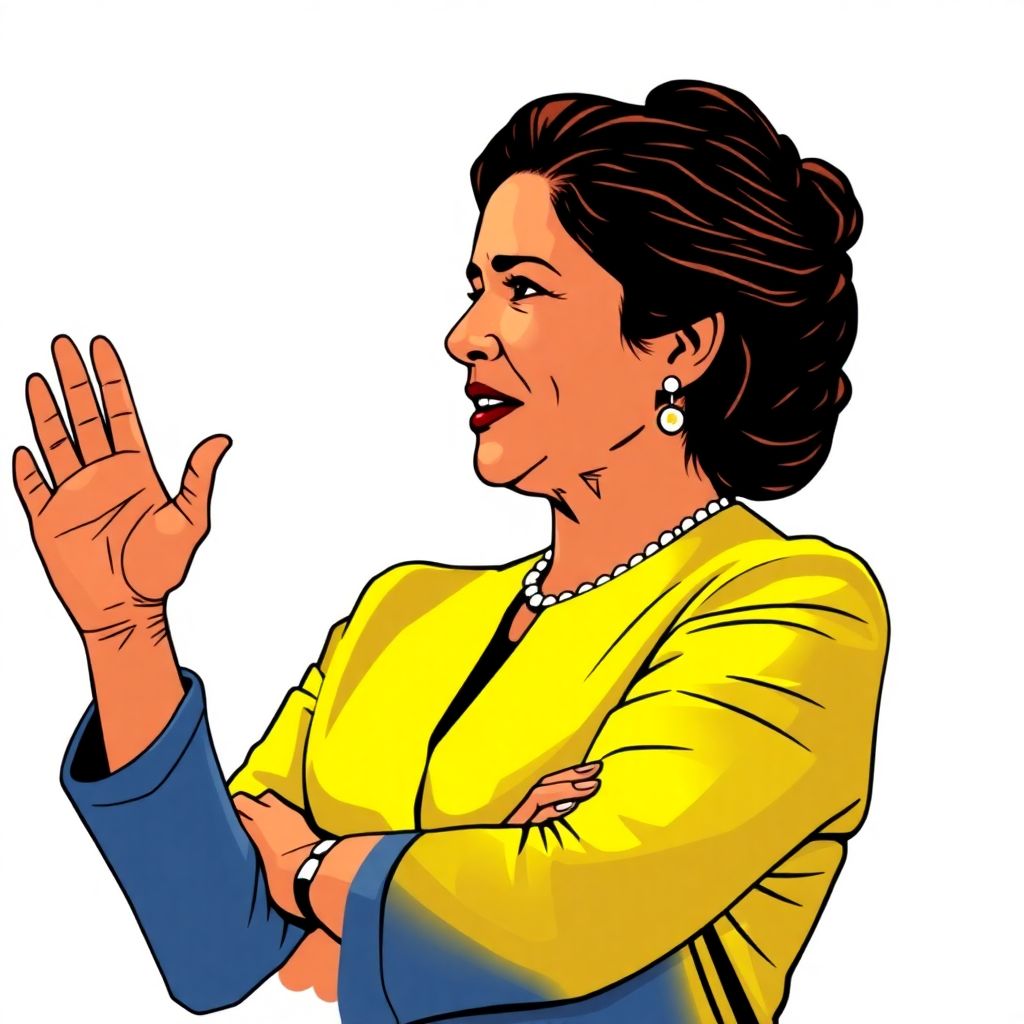
María Corina Machado, the Venezuelan opposition leader recently honored with the 2025 Nobel Peace Prize, is not only a symbol of democratic resistance in Latin America but also a vocal advocate for Bitcoin. Known for her long-standing opposition to the authoritarian regime in Venezuela, Machado has highlighted the role of cryptocurrency—particularly Bitcoin—as a critical tool for economic survival and political defiance in a nation plagued by hyperinflation and government-controlled financial repression.
In a 2024 interview, Machado described how Bitcoin emerged as a “vital means of resistance” for Venezuelans, offering an alternative to the collapsing national currency and the state’s tightening grip over financial systems. According to her, while Venezuela is rich in natural resources and once benefited from soaring oil prices, the country was nonetheless driven into economic ruin by systemic corruption, widespread embezzlement, and reckless monetary policies, including rampant money printing.
Machado explained that Bitcoin became a beacon of hope for many citizens seeking to protect their wealth. In a nation where the bolívar has lost much of its purchasing power, digital assets offer the ability to store value, transact across borders, and bypass government-imposed restrictions. She emphasized that Venezuelans, particularly those active in the opposition, see Bitcoin not just as a speculative asset, but as a foundation for rebuilding economic freedom in a future democratic Venezuela.
Her comments underscore a broader trend where people living under authoritarian regimes increasingly turn to decentralized technologies to reclaim autonomy over their finances. With traditional banking systems often weaponized against dissenters—through asset freezes, surveillance, and arbitrary restrictions—cryptocurrencies provide a lifeline for activists, journalists, and everyday citizens alike.
Machado’s embrace of Bitcoin is not merely symbolic. It reflects a growing recognition that financial sovereignty is inseparable from political freedom. In her vision, a reformed Venezuela would integrate technologies like blockchain to foster transparency, reduce corruption, and ensure fair access to financial tools for all citizens.
The political significance of this stance cannot be overstated. By aligning herself with Bitcoin, Machado sends a message that transcends economics—it’s a declaration of resistance against centralized control and a call for empowerment through technology. Her advocacy resonates with similar movements around the world, where dissidents and marginalized communities have adopted cryptocurrencies as a form of digital defiance.
Beyond Venezuela, Machado’s endorsement contributes to the ongoing debate over Bitcoin’s role in global human rights. Figures such as whistleblowers, exiled politicians, and civil society organizations have increasingly turned to crypto to fundraise, organize, and operate outside the reach of oppressive regimes.
Moreover, this development highlights the potential for Bitcoin to serve as a stabilizing force in regions affected by conflict or economic instability. While critics often focus on the volatility and speculative nature of cryptocurrencies, their utility in crisis zones paints a different picture—one of resilience, accessibility, and decentralized empowerment.
Machado’s Nobel Peace Prize win comes at a time when the intersection of technology and human rights is more relevant than ever. Her recognition not only honors her political struggle but also lends legitimacy to the tools she champions. It affirms that financial innovation can be a form of peaceful resistance and that true peace is not just the absence of war but the presence of justice, freedom, and dignity.
In the context of Venezuela, where inflation has reached triple digits in recent years, and basic goods are often priced in dollars or cryptocurrencies rather than the local currency, Bitcoin’s decentralized nature enables citizens to escape the worst effects of monetary collapse. Peer-to-peer crypto platforms and mobile wallets have become increasingly popular, especially among younger generations and tech-savvy entrepreneurs.
Machado has also pointed out that Bitcoin’s borderless nature allows Venezuelans forced into exile to send remittances home with less friction and fewer fees than traditional banking systems. This has created informal financial networks that operate independently of the state, often serving rural or underserved communities that are typically excluded from formal financial institutions.
Her stance also inspires a reconsideration of Bitcoin’s potential role in rebuilding post-authoritarian states. In a future democratic Venezuela, blockchain could be deployed not only for currency but also for secure voting systems, transparent government spending, and land registry reforms—applications that could restore trust in institutions long eroded by corruption.
As Venezuela moves toward a possible political transition, Machado’s dual advocacy for democratic reform and financial decentralization positions her as a bridge between political resistance and technological innovation. Her leadership signals a future where freedom is not just political, but also economic—and where tools like Bitcoin play an integral role in achieving both.
In summary, María Corina Machado’s support for Bitcoin is more than a personal belief—it is a strategic and ideological alignment with a broader movement seeking to redefine freedom in the digital age. Her Nobel Peace Prize win amplifies this message on the world stage, serving as a powerful reminder that technology, when used wisely, can be a force for liberation and lasting peace.